Deconstructing the Antique: A Structuralist Manifesto for SS26
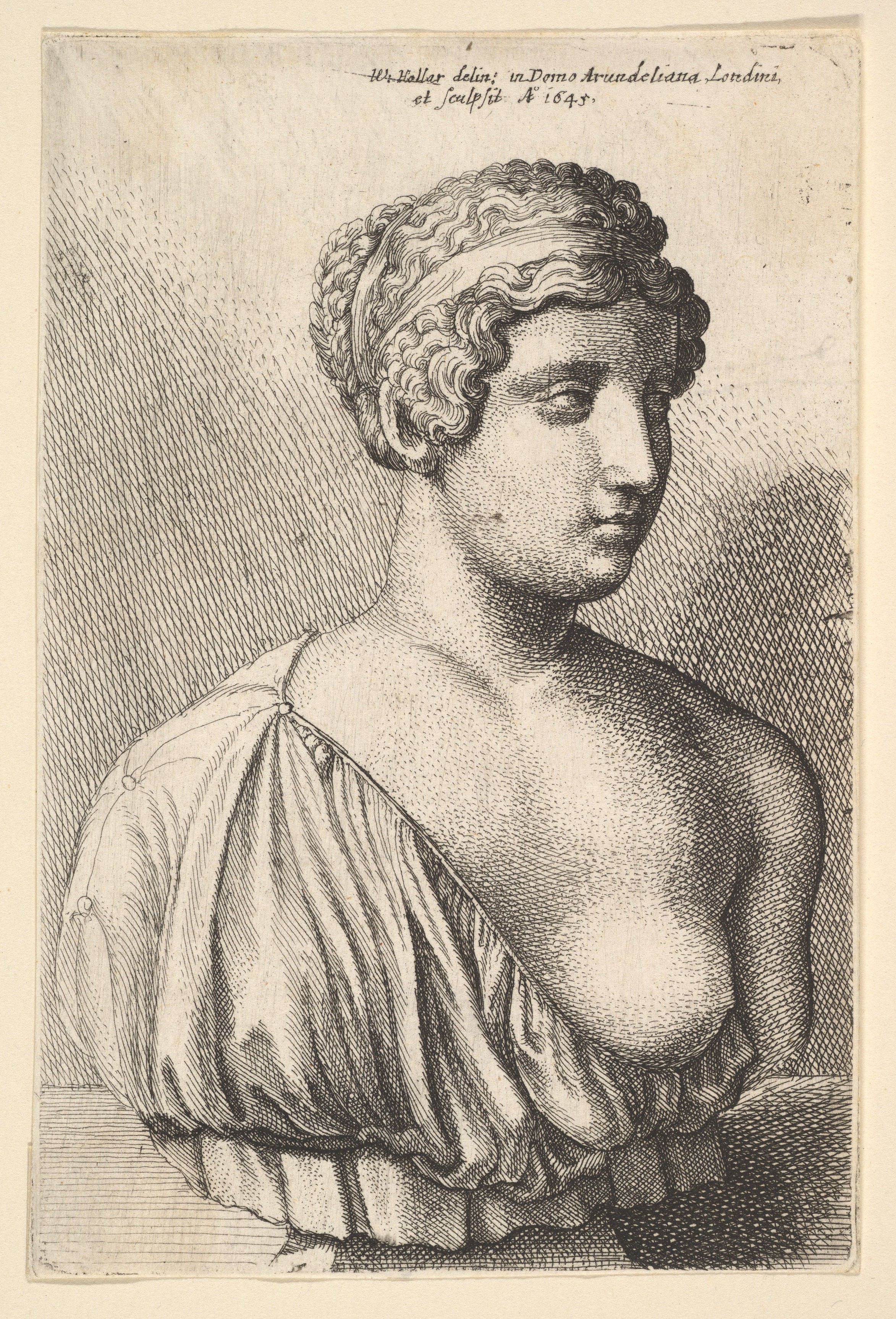
The intersection of antiquity and futurism has long been a fertile ground for avant-garde fashion, but rarely has the dialogue been rendered with such surgical precision as in Zoey Fashion Laboratory’s latest standalone study. Drawing from an antique bust of a woman—its origins nebulous, its provenance belonging to a “Global Frontier” that transcends geography—the laboratory has produced an etching of profound conceptual depth. This first state of two is not merely a preparatory sketch; it is a manifesto. For SS26, the bust becomes a crucible for futuristic silhouettes and structural innovation, challenging the very notion of garment architecture as a static, historical artifact. This analysis dissects the etching’s formal vocabulary, its material dialectic, and its implications for a new sartorial order.
The Bust as Architectural Blueprint
The antique bust, typically a symbol of classical harmony and idealized proportion, is here violently reinterpreted. The etching does not replicate the bust’s form; it extracts its latent tensions. The silhouette is no longer a draped or fitted contour but a fractured, volumetric assembly. The bust’s neck, shoulders, and torso are dissected into angular planes, reminiscent of early 20th-century Cubist sculpture, yet rendered with a digital-era precision. The resulting futuristic silhouette is a study in negative space: a shoulder line that juts outward like a cantilevered balcony, a waist that is not cinched but implied through a void between structural panels. This is not about clothing the body; it is about architecting a new body—one that exists in dialogue with its own absence.
The etching’s “first state” status is critical. It captures the moment of genesis, before refinement or commercial compromise. The lines are raw, almost violent, suggesting a process of excavation rather than construction. For SS26, this translates into garments that appear unfinished or in transition, as if the fabric itself is still being shaped by an invisible force. The bust’s classical drapery is replaced by structural innovation: seams that do not follow the body’s natural curves but instead create new axes of tension, like geodesic domes or tensile bridges. This is the core of Zoey’s methodology—treating the human form as a site of engineering, not mere adornment.
Material Dialectics: Etching as Fabrication
The medium of etching itself informs the material language of the collection. Etching is a subtractive process—acid bites into metal, leaving grooves that hold ink. This deconstructive aesthetic is mirrored in the proposed fabrics for SS26. Imagine laser-cut leathers with abraded edges, or organza that has been chemically treated to dissolve in controlled patterns. The bust’s first state becomes a metaphor for material innovation: fabrics that are not woven but “etched,” where each cut or burnish is a deliberate act of removal. The result is a textile that feels both ancient and hyper-modern, like a fossilized future.
The etching’s global frontier origin adds a layer of hybridity. The bust is not Greek, Roman, or Renaissance; it is a composite, a fragment from a civilization that never was. This allows Zoey to bypass historical specificity and instead focus on universal structural principles. The silhouette becomes a lingua franca: a shoulder pad that echoes both samurai armor and space-age bubble helmets, a skirt that flares like a 1950s ball gown but is constructed from carbon-fiber webbing. The futuristic element lies in the synthesis—a garment that cannot be pinned to any one era or culture, existing instead in a perpetual, unresolved present.
The Body as a Site of Tension
Central to this study is the reconceptualization of the female body. The antique bust typically celebrates a passive, idealized femininity. Zoey’s etching subverts this by emphasizing structural innovation that resists the body’s softness. The bust’s neck is elongated into a rigid collar that stands away from the skin, creating a literal and metaphorical distance between the wearer and the object. The torso is encased in a futuristic silhouette that resembles exoskeletal armor—not for protection, but for provocation. This is not a garment for comfort; it is a garment for dialogue.
The etching’s first state quality—its rawness—implies a process of becoming. For SS26, this translates into garments that are modular or transformable. A jacket might be worn as a cape, then reassembled into a harness; a skirt might be detached into separate panels that hover around the body via hidden boning or magnetic closures. The structural innovation is not in the fabric alone but in the system of the garment. The bust’s static, eternal pose is replaced by a dynamic, mutable wardrobe—one that acknowledges the contemporary woman’s need for agency and reinvention.
Conclusion: The Etching as a Prophecy
Zoey Fashion Laboratory’s etching of an antique bust is far more than a preparatory study. It is a prophetic document for SS26, outlining a future where futuristic silhouettes are born from deconstructive processes, and structural innovation is a form of storytelling. The first state of the etching captures the moment before the garment is fully realized—the moment of pure potential. This is the laboratory’s greatest strength: its ability to find the future in the fragment, the avant-garde in the antique.
As the fashion industry hurtles toward a future of digital fabrication and sustainable materials, this study reminds us that the most radical innovations often emerge from a dialogue with the past. The bust is not a relic; it is a blueprint. And in its etched lines, we see the silhouette of a new era—one where the body is not draped but constructed, where fabric is not worn but inhabited. For SS26, Zoey Fashion Laboratory has not just designed a collection; it has proposed a new structural ontology. The first state of the etching is now the first state of fashion itself.