Velvet Deconstruction: An Avant-Garde Analysis for Zoey Fashion Lab
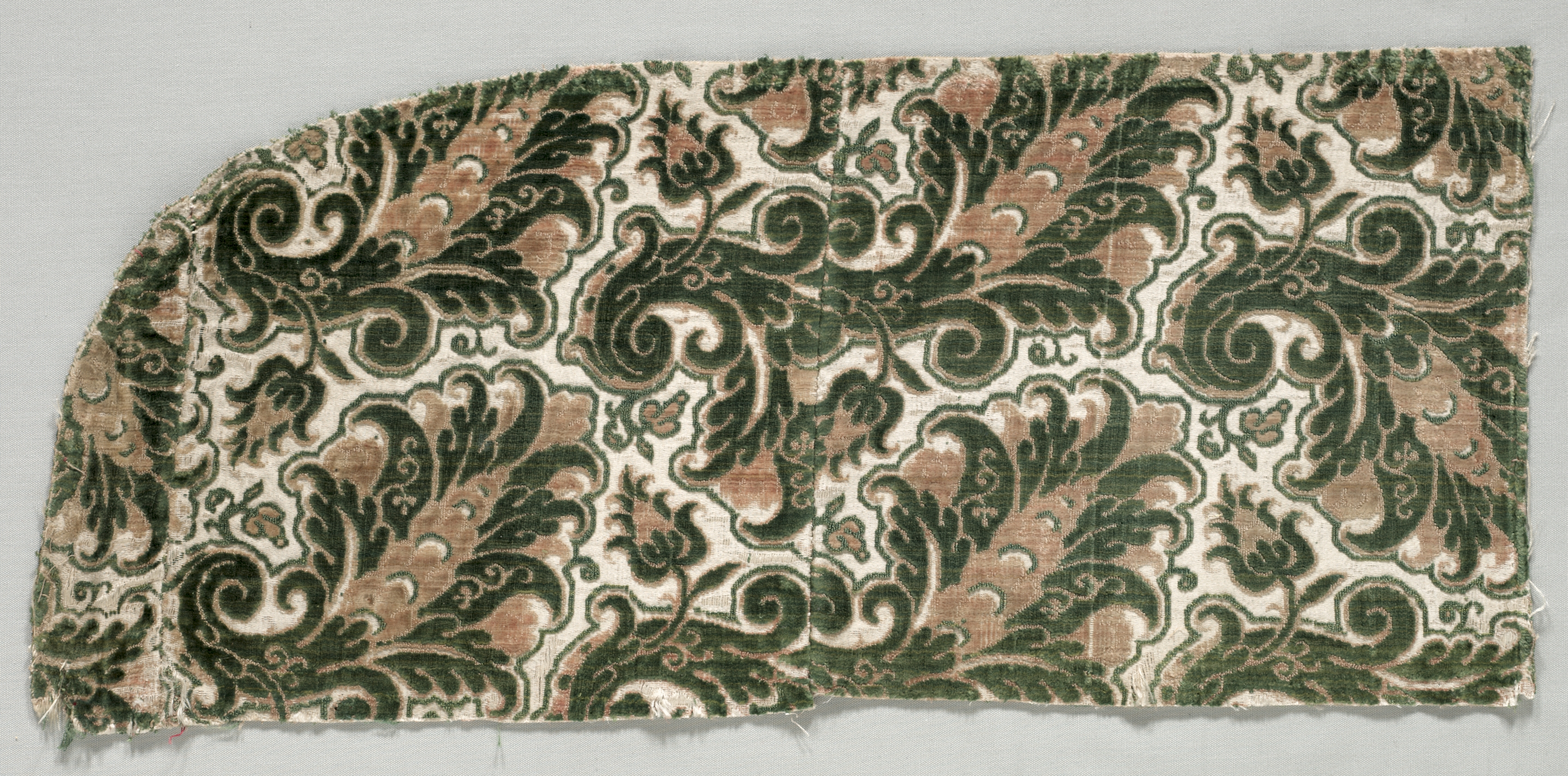
As the Chief Fabric Deconstructionist for Zoey Fashion Lab, I present this analysis of velvet, a fabric whose historical and technical complexity offers a rich substrate for avant-garde innovation. Originating in 17th-century Italy, velvet was a symbol of opulence and power, woven from silk and meticulously crafted to reflect light in ways that mimicked the depth of precious stones. Today, we deconstruct this legacy through the lens of a "New DNA Strand"—a conceptual framework that reimagines velvet not as a static textile, but as a living, mutable entity capable of evolving into radical, avant-garde forms. This analysis examines velvet's technical foundations—cut, uncut, and voided—and proposes how these elements can be disrupted, reassembled, and recontextualized to create garments that challenge conventional fashion paradigms.
Historical Context: 17th-Century Italian Velvet as a Cultural Artifact
In 17th-century Italy, velvet was more than a fabric; it was a statement of political and religious authority. Produced in cities like Florence, Venice, and Genoa, velvet was woven from silk—often imported from China—and dyed with costly pigments such as cochineal for crimson or indigo for deep blue. The fabric's pile, created by looping threads over wires and cutting them, produced a dense, lustrous surface that absorbed and reflected light with dramatic effect. This technical mastery was reserved for the elite: church vestments, courtly robes, and ceremonial furnishings. The voided technique, where areas of the pile are omitted to create patterns against a flat ground, allowed for intricate designs—often floral or geometric—that reinforced narratives of wealth and divine right.
For Zoey Fashion Lab, this history is not a relic but a provocation. The 17th-century velvet's association with hierarchy and ornamentation provides a tension that avant-garde design can exploit. By deconstructing these cultural codes, we can strip velvet of its historical baggage and reimagine it as a medium for subversion—a fabric that once signified conformity now becomes a tool for rebellion.
Technical Foundations: Cut, Uncut, and Voided Velvet
Cut Velvet: This is the classic form, where loops of thread are sliced to create a soft, plush pile. The cut ends produce a shimmering surface because light scatters off the individual fibers. In 17th-century Italy, cut velvet was reserved for the most luxurious garments, as the process was labor-intensive and required precise skill. For avant-garde applications, cut velvet can be manipulated through laser-cutting, chemical etching, or selective abrasion to create uneven, distressed surfaces that challenge the fabric's pristine reputation. The pile can be partially sheared or left in varying lengths to produce a topographical texture—like a landscape of decay and renewal.
Uncut Velvet: Also known as terry velvet, this variant retains the loops without cutting them. The result is a more matte, absorbent surface with a subtle sheen. Uncut velvet was historically used for less formal garments or as a base for voided designs. In deconstruction, the loops can be pulled, stretched, or chemically relaxed to create irregular, organic forms. Imagine a garment where some loops are left intact while others are crushed or melted, producing a tactile contrast that evokes both fragility and resilience. This technique aligns with the "New DNA Strand" concept, where the fabric's structure is treated as a mutable code.
Voided Velvet: This technique involves weaving areas with no pile, creating a pattern of raised velvet against a flat ground. Historically, voided velvet allowed for intricate designs without the need for embroidery. In avant-garde hands, voiding can be used to create negative space—literal voids in the garment that reveal the body or underlying layers. By strategically omitting pile, we can generate patterns that appear to dissolve or emerge, like a digital glitch rendered in fabric. This approach subverts the traditional emphasis on fullness and opulence, instead embracing absence as a design element.
The New DNA Strand: Reimagining Velvet as a Living System
The "New DNA Strand" is a conceptual framework that treats velvet not as a finished product but as a dynamic system capable of mutation. This strand is composed of three core principles: malleability, interactivity, and transience. Malleability refers to the fabric's ability to be reshaped through heat, pressure, or chemical treatment. Interactivity involves embedding responsive elements—such as thermochromic dyes or conductive threads—that change color or texture in response to environmental stimuli. Transience embraces impermanence, allowing the fabric to degrade, fray, or transform over time, creating a narrative of wear and evolution.
For cut velvet, the New DNA Strand could involve applying a heat-reactive resin to selective pile areas. When exposed to body heat or ambient temperature, these areas would stiffen or soften, altering the garment's silhouette. Uncut velvet might incorporate loops that are chemically programmed to unravel at specific triggers, creating a garment that "blooms" or "withers" over the course of a day. Voided velvet offers the most radical potential: by using a digital jacquard loom, we can program voided patterns that shift with the wearer's movement, creating a kinetic interplay of light and shadow. This transforms the garment into a living interface—a second skin that responds to its environment.
Avant-Garde Applications: From Deconstruction to Reconstruction
Avant-garde fashion thrives on disruption, and velvet's historical rigidity provides a perfect counterpoint. Consider a deconstructed velvet gown where cut pile is selectively burned away using a laser, leaving charred edges that contrast with pristine sections. This evokes both decay and rebirth, aligning with the New DNA Strand's emphasis on transience. Alternatively, a jacket made from uncut velvet could feature loops that are pulled and twisted into three-dimensional forms—like organic sculptures attached to the body. These forms could be stiffened with a biodegradable polymer, allowing them to stand away from the garment, creating a silhouette that defies gravity.
Voided velvet can be used to create garments that appear to dissolve into the body. Imagine a dress where the voided areas form a gradient—dense pile at the shoulders that gradually thins to bare silk at the hem. This mimics the digital effect of a pixelated image, where the fabric's presence fades into absence. For maximum impact, combine voided velvet with LED fibers woven into the flat ground. The lights would illuminate the voided patterns, making them glow from within, while the pile remains dark. This creates a dynamic, almost holographic effect that challenges the viewer's perception of depth and texture.
Conclusion: Velvet as a Catalyst for Avant-Garde Innovation
Velvet, in its 17th-century Italian form, is a fabric of contradictions: opulent yet restrictive, timeless yet bound to its era. Through the lens of the New DNA Strand, we can deconstruct these contradictions and reconstruct velvet as a medium for avant-garde expression. By manipulating cut, uncut, and voided techniques, we can create garments that are not merely worn but experienced—textiles that breathe, mutate, and decay. Zoey Fashion Lab stands at the forefront of this evolution, using deconstruction not as an end but as a beginning. The velvet of the future is not a relic of the past; it is a living strand of DNA, ready to be rewritten.