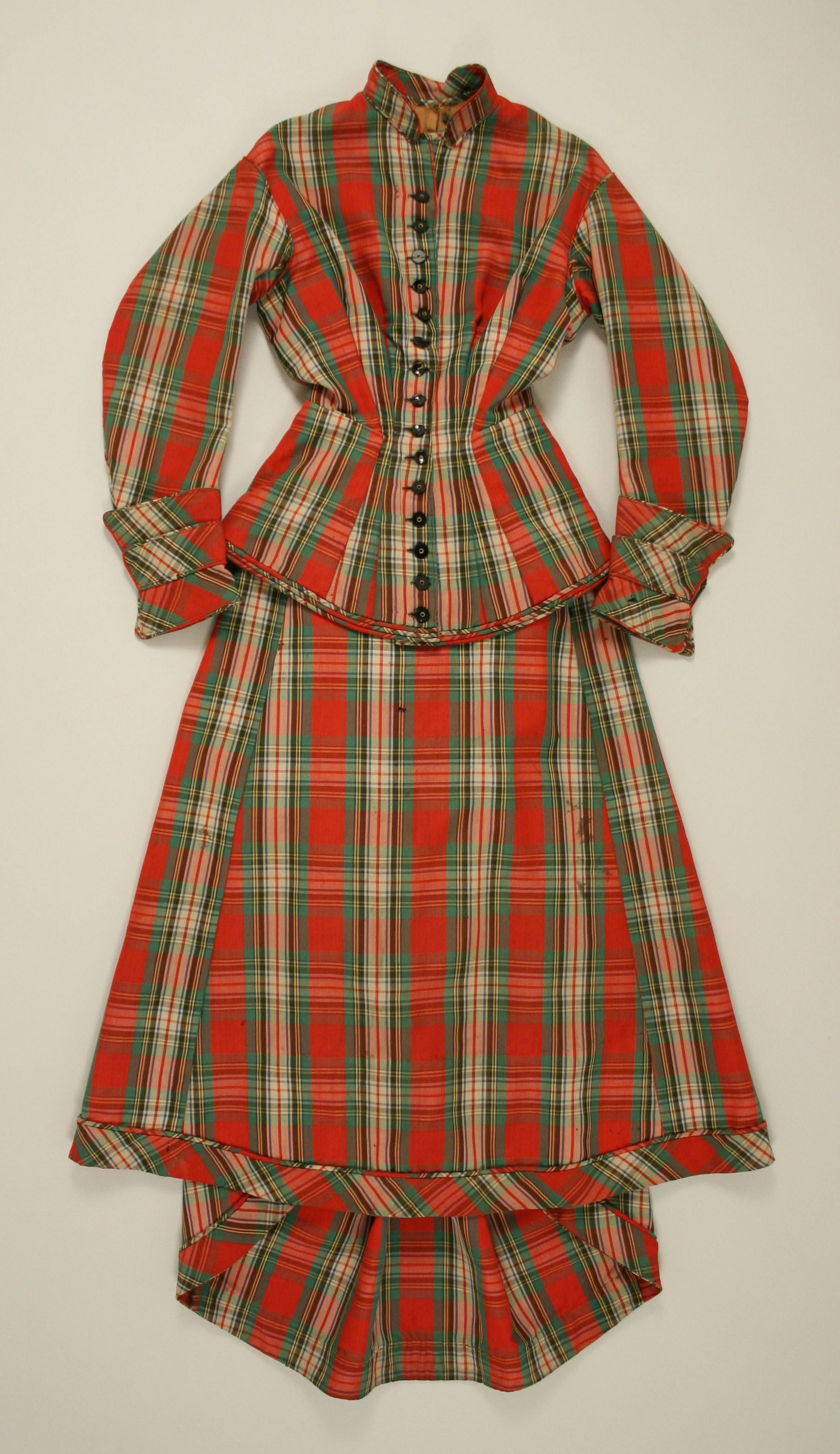
Deconstructing the American Wool Dress: A Futurist Manifesto for SS26
In the lexicon of avant-garde fashion, the dress is often perceived as the most conservative of garments—a vessel for tradition, femininity, and historical drapery. Yet for Zoey Fashion Laboratory’s SS26 collection, the American wool dress is radically reimagined as a site of structural rebellion and futuristic silhouette. This analysis dissects the garment through the lens of deconstructive aesthetics, material subversion, and architectural innovation, positioning wool—a material synonymous with heritage and warmth—as the protagonist in a narrative of cold, computational precision.
Material Alchemy: Wool as a Computational Substrate
The choice of American wool is not nostalgic but strategic. In the context of SS26, wool is stripped of its pastoral associations and treated as a high-performance substrate for structural innovation. The fiber’s inherent memory, thermal plasticity, and tensile strength are exploited through advanced felting and laser-etching techniques. The result is a fabric that behaves less like cloth and more like a biomimetic shell—capable of holding sharp, non-Euclidean folds while maintaining a fluid hand. The wool is not merely draped; it is programmed. The garment’s surface is inscribed with micro-perforations and heat-set creases that create a topography of light and shadow, transforming the dress into a living interface between body and environment.
Futuristic Silhouettes: The Asymmetric Tension of the Unstable Form
The SS26 wool dress abandons the conventional A-line, sheath, or trapeze. Instead, it adopts a silhouette best described as asymmetric tension—a system of opposing vectors that destabilize the viewer’s gaze. The bodice is constructed from a single, continuous spiral of wool felt, wrapped around the torso in a helix that terminates in a sharp, cantilevered shoulder. The skirt is a study in controlled chaos: a series of triangular panels that are asymmetrically weighted, creating a gravitational pull that suggests motion even in stillness. One side of the hem rises to mid-thigh, while the opposite cascades to the floor, but not in a traditional mermaid or handkerchief line. Instead, the fabric is folded and locked into a geometric origami that appears to be in a state of perpetual unfolding—a garment that is never fully resolved.
Structural Innovation: The Exoskeletal Cage and the Internal Armature
The most radical departure from conventional dress construction is the integration of an internal exoskeletal armature. Hidden within the wool’s layers is a lattice of recycled carbon-fiber ribs, 3D-printed to the wearer’s specific measurements. This skeleton is not a support for the fabric; rather, the fabric is a skin stretched over the structure. The armature dictates the dress’s silhouette from the inside out, creating voids—negative spaces where the wool is suspended away from the body. These voids are not decorative; they are functional, allowing for ventilation and movement while maintaining a sculptural rigidity. The dress becomes an architectural volume, akin to a wearable pavilion, where the body is both inhabitant and structural component.
Deconstructive Aesthetics: The Unfinished, the Raw, and the Deliberate
Zoey Fashion Laboratory’s approach to deconstruction is not about destruction but about revelation. The seams are unstitched and left raw, but the frayed edges are sealed with a transparent polymer to prevent unraveling, creating a deliberate tension between the organic and the synthetic. The waistline is disrupted by a series of asymmetrical darts that do not end in a seam but are left open, revealing the carbon-fiber skeleton beneath. The neckline is a study in negative space: a single, sweeping cut that follows the curve of the clavicle but does not meet at the center, leaving a gap that exposes the collarbone and the inner lining. This is not negligence; it is a calculated display of the garment’s construction process, inviting the viewer to consider the engineering behind the aesthetic.
Color and Texture: The Monochromatic Palette of the Future
The SS26 dress is rendered in a monochromatic palette of raw, undyed wool—ranging from charcoal to bone white—interspersed with panels of iridescent metallic thread woven into the fabric. The metallic threads catch light at specific angles, creating a subtle, shifting pattern that evokes digital interference. The wool’s natural texture is contrasted with sections that have been laser-polished to a high sheen, creating a visual dialogue between the tactile, organic fiber and the cold, reflective surface. This duality is central to the collection’s ethos: the future is not a clean, sterile utopia but a negotiation between the natural and the artificial.
Contextualizing the Standalone Study: The Dress as a System
In the broader context of avant-garde couture, this dress is not a garment but a system. It is a response to the increasing hybridization of fashion, architecture, and technology. The American wool dress for SS26 rejects the notion of seasonal trends in favor of a permanent avant-garde—a design that is both timeless and futuristic. The asymmetry challenges the viewer’s expectation of balance, while the structural innovation redefines the relationship between fabric and form. The dress is a manifesto: it argues that even the most humble materials, when subjected to rigorous deconstruction and technological intervention, can produce silhouettes that are not of this era.
For Zoey Fashion Laboratory, the dress is no longer a garment; it is a proposition for how we might inhabit space, time, and the body in the near future. The SS26 wool dress is a statement of intent—a declaration that the avant-garde is not a historical style but a continuous process of material and conceptual evolution.