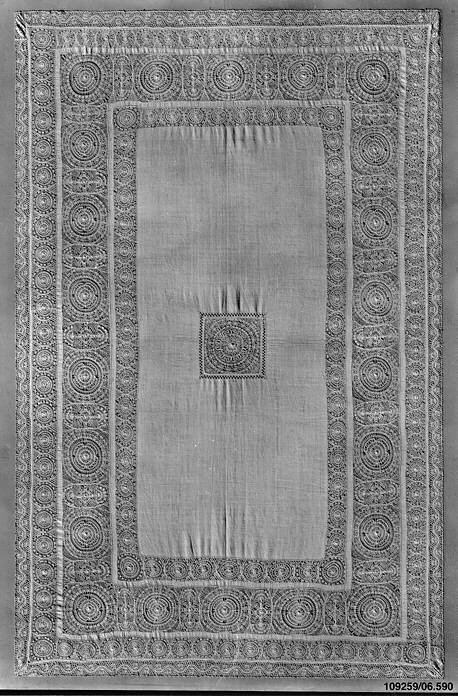
The Architecture of Absence: Deconstructing the Cover as a Futuristic Silhouette for SS26
The cover, in its most traditional sense, is a protective membrane—a shield against the elements, a layer of modesty, or a final flourish of decoration. Yet, within the deconstructive ethos of Zoey Fashion Laboratory, the cover is no longer a passive surface. For the SS26 season, we dismantle this archetype, reimagining it as a dynamic, structural entity defined by absence, transparency, and radical asymmetry. Drawing from the Global Frontier—a speculative landscape where geography dissolves into digital and physical hybridity—this analysis explores how the cover, executed in drawnwork, becomes a manifesto for a new corporeal architecture.
Drawnwork as a Language of Structural Innovation
Drawnwork, a technique historically associated with embroidery and lace, is here liberated from its decorative past. Instead, it functions as a geometric scaffold—a matrix of threads that simultaneously reveals and conceals. For SS26, the cover is not a solid plane but a lattice of tension and release. The drawnwork is engineered to create negative space, where the absence of fabric becomes a compositional element. This is not mere transparency; it is a deliberate fragmentation of the silhouette. The cover is no longer a barrier but a filter, allowing the body to emerge as a fragmented, digital-like entity. The garment’s architecture is defined by its gaps, its voids, and its strategic points of intersection.
Consider a cover that begins as a high-neck collar, woven from metallic threads, then dissolves into an open, airy mesh across the shoulders. The drawnwork is calibrated to create gradients of opacity—dense at the structural anchor points (shoulders, hips, spine) and ethereal at the extremities. This technique mimics the computational logic of a 3D wireframe, where the garment is rendered as a series of vectors rather than a solid form. The result is a silhouette that is both armored and ephemeral, a paradox that defines the avant-garde.
The Futuristic Silhouette: Asymmetry and the Floating Cover
The cover for SS26 rejects the symmetrical, enveloping forms of the past. Instead, it embraces a directional asymmetry that challenges the viewer’s perception of balance. One shoulder is exposed, the other encased in a cascading drape of drawnwork that extends into a train. The cover is not a single piece but a series of overlapping, detachable modules. A single sleeve may be elongated into a wing-like structure, while the opposite side is cropped to the bicep, creating a dynamic visual tension. This asymmetry is not arbitrary; it is a response to the Global Frontier’s influence—a world where bodies are no longer bound by gravity or geography, but exist in a state of perpetual motion and recalibration.
Key to this silhouette is the floating cover. Panels of drawnwork are suspended from the shoulders, held away from the body by internal, invisible stays or pneumatic structures. The cover does not cling; it hovers. This creates a negative space between garment and skin, a void that suggests the body is both present and absent. The drawnwork’s open structure allows light to pass through, casting ever-shifting shadows on the wearer’s form. This is not a cover that hides; it is a cover that frames a narrative. The silhouette is a projection, a hologram of identity in a world where physical boundaries are obsolete.
Materiality and the Tactile Future
The drawnwork for SS26 is executed in a hybrid of biodegradable polymers and recycled metallic fibers. The polymers are extruded into ultra-fine threads, then woven into patterns that mimic neural networks or topographical maps. The metallic fibers provide structural rigidity, allowing the cover to hold its shape even when unsupported. This material palette is not chosen for aesthetics alone; it is a statement on sustainable futurism. The cover is designed to be disassembled and re-threaded, its components repurposed for subsequent seasons. The Global Frontier demands that fashion be both forward-looking and responsible, and this cover embodies that duality.
The tactile experience is equally important. The drawnwork is stiff yet pliable, creating a crinkled, almost architectural texture that catches light and sound. When the wearer moves, the threads vibrate, producing a faint, percussive rustle. This is not a silent garment; it is a sonic cover, a material that speaks to the digital hum of the frontier. The cover becomes an interface, a membrane that mediates between the body and its environment.
Contextualizing the Cover: A Standalone Avant-Garde Study
In the context of Zoey Fashion Laboratory’s SS26 collection, the cover is not an accessory or a layering piece; it is a primary architectural element. It stands alone, unmoored from traditional garment categories. It is neither a jacket, a cape, nor a dress. It is a structural intervention that redefines the relationship between the body and space. The cover’s drawnwork is a map of the wearer’s movement, a record of their kinetic energy. It is a garment that is never the same twice, as the threads shift and realign with every gesture.
This study positions the cover as a futuristic relic—an artifact from a time when fashion is no longer about covering the body, but about revealing its potential. The Global Frontier is a place of constant flux, and the cover is its most honest expression. It is a structure of absence, a silhouette of possibility, and a material testament to the deconstructive ethos that defines the avant-garde. For SS26, the cover is not a boundary; it is a beginning.