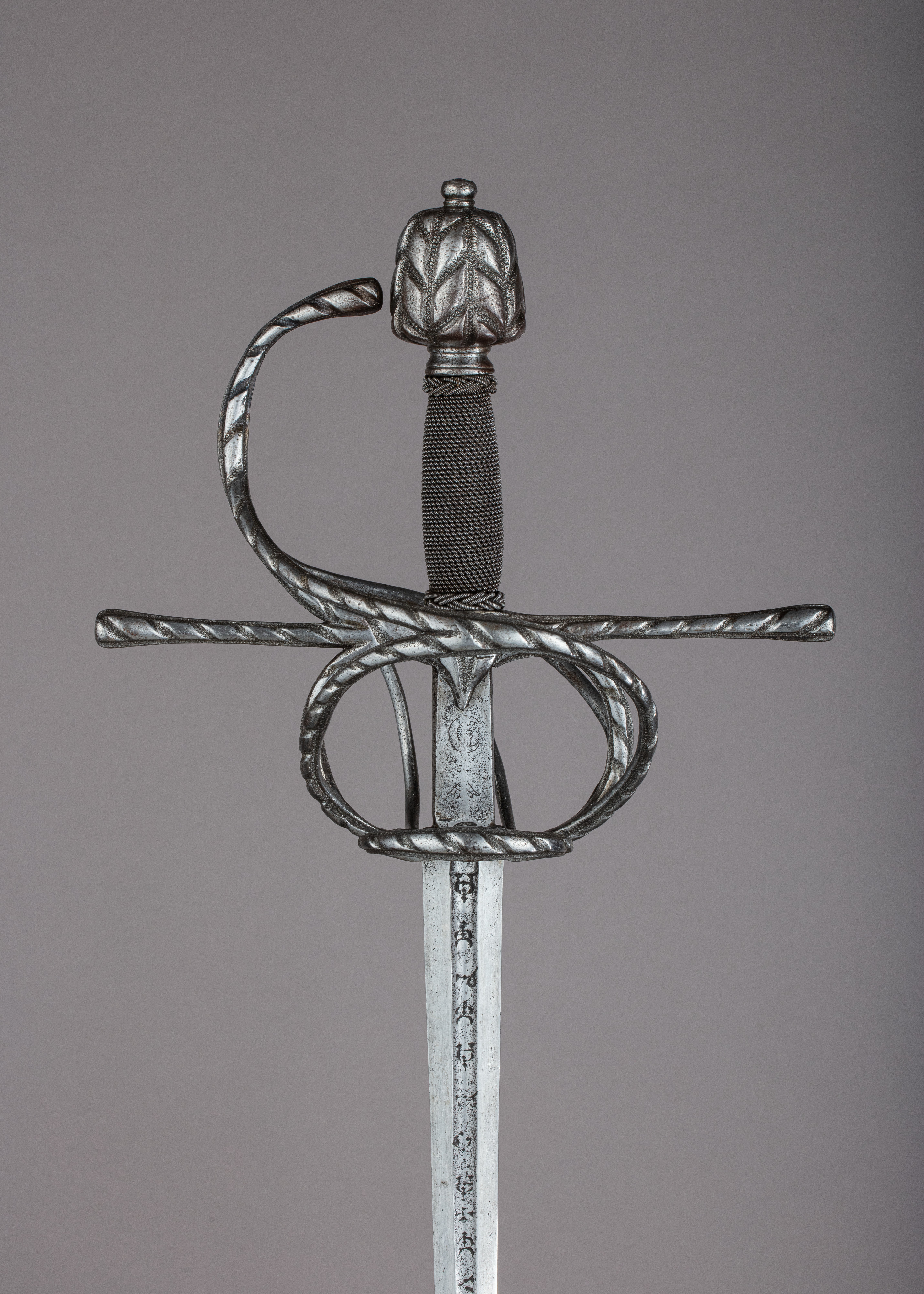
The Rapier Unsheathed: A Structural Lexicon for SS26 Avant-Garde Couture
The rapier, a slender, sharply pointed sword originating in 16th-century Spain, is not merely a weapon of historical combat; it is a blueprint for architectural tension, linear precision, and aggressive elegance. For Zoey Fashion Laboratory’s SS26 collection, this artifact transcends its martial origins, offering a radical vocabulary for futuristic silhouettes and structural innovation. In an era where fashion oscillates between digital deconstruction and tactile rebellion, the rapier’s geometry—its rigid spine, its fluid guard, its lethal point—provides a counterpoint to soft draping and organic forms. This analysis dissects the rapier as a standalone avant-garde study, extracting three core principles: linear tensile architecture, asymmetric counterbalance, and metallic surface as second skin. These principles will redefine the SS26 silhouette through a lens of deconstructive futurism, where the garment becomes a wearable instrument of precision and threat.
Linear Tensile Architecture: The Spine as Structural Anchor
The rapier’s blade is a study in controlled linearity—a single, unyielding line that dictates movement and balance. In SS26 couture, this translates into tensile structural systems that replace traditional seams with tension cables, carbon-fiber rods, or laser-cut steel inserts. Imagine a gown where the spine is not a hidden support but an exposed, articulated exoskeleton. A central “blade” of polished stainless steel runs from the nape of the neck to the hem, bifurcating the garment into two asymmetrical halves. This spine is not decorative; it is functional, anchoring the fabric’s drape through micro-adjustable tension points. The result is a silhouette that appears to float—a paradox of rigid structure and fluid motion. For SS26, this principle manifests in “rapier-back” jackets and blade-line dresses, where the garment’s primary visual axis is a single, uninterrupted line of metal or reinforced polymer. The fabric—perhaps a matte liquid silk or a translucent bio-fabric—is stretched taut between these tension points, creating sharp folds and angular planes that mimic the blade’s facets. This is not draping; it is tensile sculpture, where the garment’s volume is defined by the pull of its own structural core.
Asymmetric Counterbalance: The Guard and the Point
The rapier’s hilt is a masterpiece of asymmetric design: the quillons (cross-guard) extend unevenly to protect the hand while allowing for rapid, unpredictable thrusts. This asymmetry is a direct challenge to conventional balance in fashion. For SS26, Zoey Fashion Laboratory reimagines the rapier’s guard as asymmetric shoulder armor and offset hip structures. Consider a tailored blazer where the left shoulder is built up with a sweeping, curved metal plate that extends into a sharp, downward point at the collarbone, while the right shoulder is bare, almost skeletal. This imbalance creates a dynamic visual tension—the garment appears to be in mid-lunge, captured in a moment of attack or defense. The point of the rapier, its most aggressive element, becomes a termination point for seams and hemlines. A skirt may end in a single, dagger-like point at the front, while the back cascades into a train of layered, deconstructed fabric. This is not symmetry; it is controlled imbalance, where the garment’s energy is directed toward a singular focal point—a knee, a wrist, a collarbone. For SS26, this translates into “thrust-line” trousers with a single, elongated front panel that tapers to a point, and “parry” dresses where the fabric is wrapped and pinned to create angular, protective layers around the torso. The asymmetry is not random; it is calculated, echoing the rapier’s ability to strike from unexpected angles.
Metallic Surface as Second Skin: Steel and Light
The rapier’s steel surface is not merely functional; it is a reflective, reactive entity that captures and distorts light. In avant-garde couture, this inspires a metallic surface treatment that blurs the line between garment and armor. For SS26, this is achieved through liquid metal finishes, laser-etched scales, and flexible chainmail weaves. A bodice may be constructed from thousands of individually articulated steel discs, each polished to a mirror finish, creating a second skin that shimmers with every movement. The surface is not uniform; it is scored with fine, linear incisions that mimic the rapier’s blade markings—each line a channel for light to travel. Alternatively, consider a “tarnished steel” finish applied to a deconstructed trench coat, where the fabric is coated in a reactive pigment that oxidizes over time, creating a patina of use and decay. This is not about shiny futurism; it is about tactile metallurgy, where the garment’s surface tells a story of friction, wear, and resilience. For SS26, this principle is applied to “blade-skin” leggings and “guardian” corsets, where the metal is not a separate layer but integrated into the fabric’s weave. The result is a silhouette that appears both fragile and impenetrable—a paradox central to the rapier’s essence.
Structural Innovation: The Rapier as a Wearable System
The rapier is not a static object; it is a system of forces—thrust, parry, lunge. For SS26, this dynamic translates into kinetic garment systems that respond to the wearer’s movement. Imagine a dress with a built-in tension cable system that tightens the fabric around the waist when the wearer raises an arm, mimicking a lunge. Or a jacket with magnetic closures that can be released in a single, fluid motion, echoing the rapier’s quick draw. These innovations are not gimmicks; they are functional deconstruction, where the garment’s structure is mutable, adapting to the wearer’s intent. For Zoey Fashion Laboratory, this means exploring 3D-printed joints and shape-memory alloys that allow fabric to shift from rigid to fluid. The rapier’s hilt, with its intricate guard, inspires modular attachments—detachable collars, cuffs, and belts that can be reconfigured to alter the silhouette. This is fashion as wearable architecture, where every element serves a purpose, and the garment is a tool for expression and protection.
Conclusion: The Rapier as a Futuristic Archetype
The rapier, in its Spanish origin and steel materiality, offers a definitive avant-garde lexicon for SS26. It is not a nostalgic reference but a radical reimagining of structure, balance, and surface. Zoey Fashion Laboratory’s SS26 collection will not simply borrow the rapier’s form; it will internalize its principles—tensile tension, asymmetric thrust, and metallic resilience. The result is a silhouette that is at once aggressive and elegant, precise and unpredictable. In a season where fashion seeks to redefine the body’s relationship with technology and history, the rapier stands as a testament to the power of a single, sharp line. It is the future, unsheathed.