Deconstructing the Baroque: Juan de Pareja as a Blueprint for SS26 Avant-Garde Couture
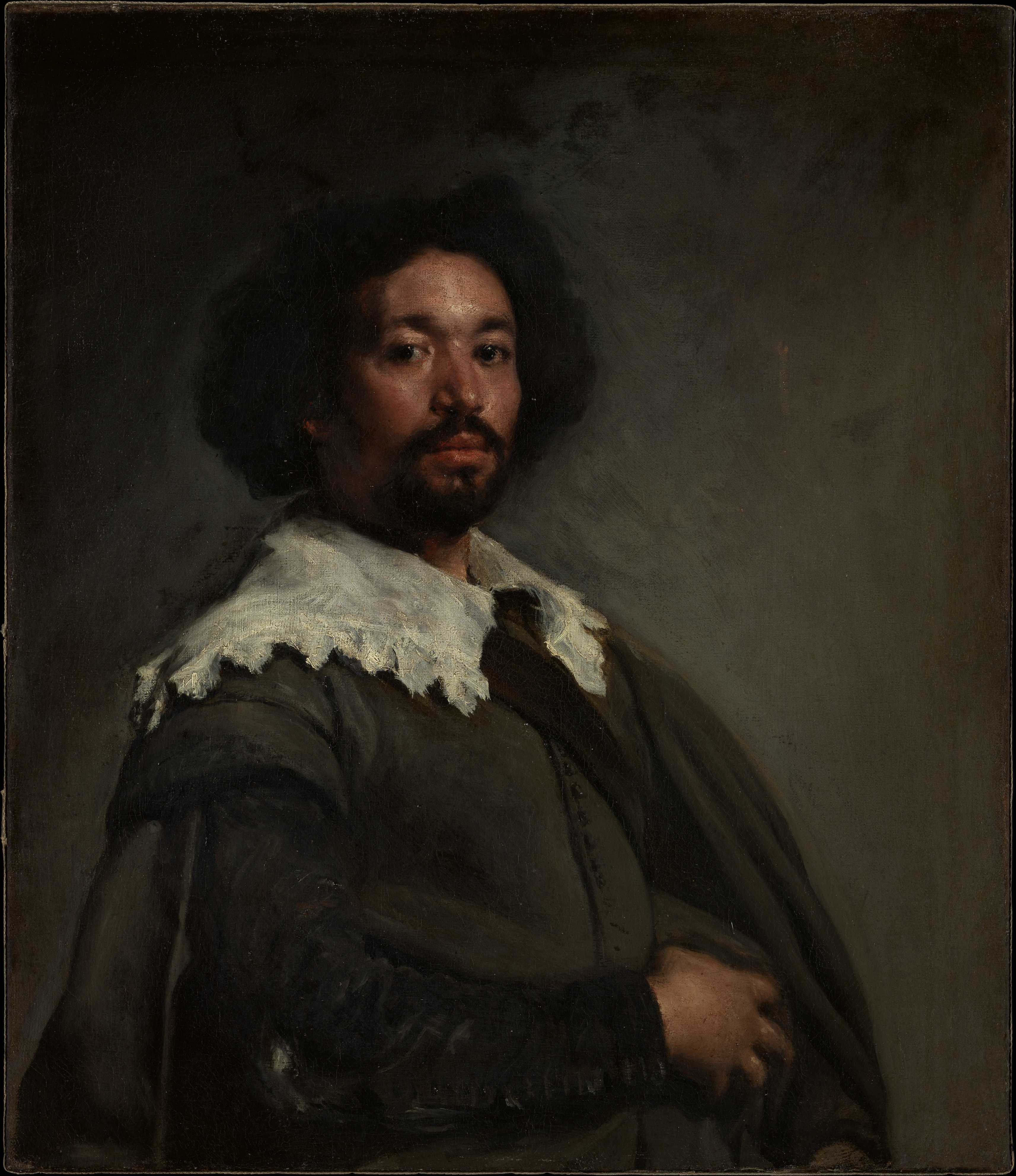
The intersection of classical painting and futuristic fashion is not merely an exercise in historical pastiche; it is a radical recontextualization of form, texture, and power. For the SS26 collection, Zoey Fashion Laboratory turns its deconstructive gaze upon Diego Velázquez’s masterwork, Juan de Pareja (ca. 1608–1670). This portrait, a triumph of Baroque realism and psychological depth, is not a relic but a living blueprint for structural innovation. By stripping the canvas of its narrative weight and extracting its core architectural principles—volume, tension, opacity, and layered silhouette—we forge a garment language that is both ancestral and extraterrestrial. The subject, a man of African descent who transcended enslavement to become a painter, embodies a narrative of resilience and transformation, a perfect metaphor for the SS26 ethos: reclamation through radical reconstruction.
The Silhouette of Power: From Baroque Collar to Biomorphic Armature
The most immediate visual anchor in Velázquez’s work is the golilla, the stiff, starched white collar that frames de Pareja’s face. In traditional portraiture, this element signifies status and rigidity. For SS26, we dismantle this symbol. The collar is no longer an accessory; it is the foundation of a new silhouette. We reinterpret it as a biomorphic armature that extends beyond the neck, curving into a sculpted shoulder piece that mimics the subtle lift of the original painting’s chiaroscuro. The materiality shifts from starched linen to a laser-cut, thermoformed biopolymer that is both translucent and structural. This collar-armature is not static; it articulates with the wearer’s movement, creating a dynamic interplay between light and shadow, much like the original painting’s deep, mysterious background.
The painting’s doublet—a tightly fitted garment with a subtle waist emphasis—serves as the second architectural node. We reject its historical constriction in favor of a deconstructed exoskeleton. The doublet is sliced along its vertical seams, revealing a secondary, translucent layer of organza embedded with fiber-optic threads. This inner layer pulses with a low, ambient light, echoing the subtle luminosity of de Pareja’s skin tones. The outer shell is crafted from a recycled metallic mesh, oxidized to a deep, aged bronze, mirroring the painting’s dark, rich palette. The silhouette is not a copy; it is a fragmented reconfiguration—the doublet’s original purpose of containment is replaced by a visual dialogue between solid and void, opacity and transparency.
Structural Innovation: The Canvas as a Wearable Tension System
Beyond the silhouette, the painting’s materiality—oil on canvas—becomes a direct source of structural innovation. The canvas itself is a woven grid, a system of warp and weft that creates tension and support. For SS26, we translate this into a tension-based garment system. The primary structure is a woven carbon-fiber lattice, inspired by the canvas’s weave. This lattice is not a fabric; it is a rigid, yet flexible, architectural grid that floats away from the body. Sections of the grid are left open, while others are filled with hand-painted silk organza panels that replicate the painterly strokes of Velázquez’s brush. The result is a garment that functions as a three-dimensional painting, where the viewer’s gaze moves through the structure, perceiving the body as both subject and support.
The oil paint itself is a material of viscosity and depth. We mimic its properties through a bio-resin coating applied to specific garment segments. This coating is not uniform; it is applied in layers, creating a topographical relief that mimics the impasto of the original work. Where Velázquez built up highlights on de Pareja’s cheekbones, we apply a thermochromic polymer that shifts color with body heat, creating a living, breathing surface. This is not decoration; it is a structural skin that responds to the environment, a direct translation of the painting’s emotional temperature into a wearable, interactive form.
Futuristic Silhouettes: The Asymmetric Drape and the Anti-Sleeve
The painting’s most radical element for SS26 is the asymmetry of de Pareja’s pose. His left shoulder is slightly forward, his right arm hidden, creating a subtle torsion that is deeply dynamic. We exaggerate this into a singular, asymmetrical drape that wraps the body in a continuous, spiraling line. This drape is not a simple piece of fabric; it is a pre-stressed, shape-memory textile that is programmed to hold a specific, architectural fold. The fold begins at the left shoulder, crosses the chest, and wraps around the lower back, creating a voluminous, sculptural train that echoes the painting’s deep, shadowed background. This is the anti-sleeve—a garment element that does not cover the arm but instead creates a secondary, protective volume around the torso.
The sleeve in the original painting is a study in controlled volume. For SS26, we deconstruct it into a modular, detachable limb. The sleeve is reimagined as a standalone, inflatable structure made from a high-tenacity nylon. When deflated, it lies flat against the body; when inflated via a small, wearable pump, it becomes a billowing, spherical form that mimics the puff of a Baroque sleeve but with a futuristic, almost extraterrestrial silhouette. This modularity allows the wearer to transform the garment’s volume in real-time, a direct response to the painting’s inherent tension between stillness and movement.
Conclusion: A New Lexicon of Garment Architecture
Juan de Pareja is not a passive subject for SS26; he is an active collaborator. The analysis of his portrait yields a new lexicon of garment architecture: the biomorphic armature, the tension-based lattice, the thermochromic skin, and the inflatable limb. These are not decorative flourishes but structural imperatives that redefine the relationship between body, garment, and space. The Baroque’s obsession with texture, volume, and light is translated into a futuristic language of responsive materials, modular forms, and deconstructed silhouettes. The result is a collection that honors the profound dignity and resilience of its subject while propelling couture into a new dimension of wearable, interactive art. This is not fashion; it is structural poetry—a garment that exists not to cover the body, but to extend its narrative into the future.