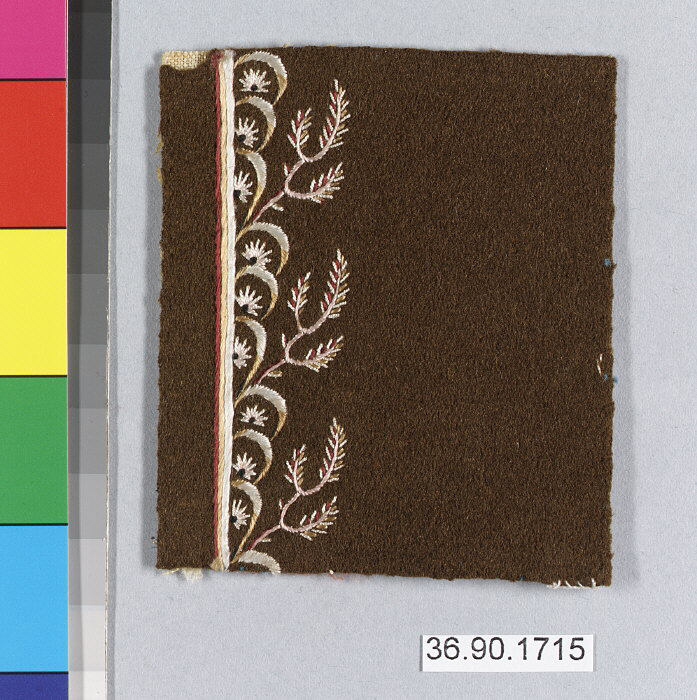
Deconstructing the Global Frontier: Silk on Felt for SS26
The avant-garde is not a destination; it is a perpetual state of becoming. For the SS26 season, Zoey Fashion Laboratory presents a definitive study in architectural fragility, a paradox that challenges the very foundations of garment construction. The subject, a singular piece born from the nebulous territory of the Global Frontier, is a masterclass in material dialectic: the ethereal, liquid grace of silk, brutally sutured onto the dense, mute body of felt. This is not a garment for the passive observer. It is a manifesto against the tyranny of the seamless, a celebration of the visible seam, the exposed edge, and the tectonic shift in silhouette.
The Material Paradox: Silk as Structural Rupture
In traditional couture, silk is the fabric of surrender—it drapes, it flows, it caresses. Here, it is weaponized. The silk component is not a covering; it is a series of controlled slashes and suspended planes. We observe a radical departure from the liquid drape. Instead, the silk is treated as a semi-rigid membrane, chemically stiffened at its core to hold a three-dimensional, aerodynamic curve. It erupts from the felt body like a frozen explosion, a soft geological fold that defies gravity. The felt, conversely, provides the anchor. Its industrial, almost brutalist weight grounds the piece, creating a tension between the volatile future of the silk and the immutable past of the felt. The seams are not hidden; they are exaggerated, stitched with a contrasting, almost surgical thread. This is the language of deconstruction—not as destruction, but as a deliberate, analytical revelation of the garment’s skeleton.
Futuristic Silhouettes: The Exoskeletal Second Skin
The silhouette for SS26 is not about the human form; it is about the space the form must negotiate. We move away from the organic, biomimetic shapes of previous seasons. The new frontier is techno-architectural. The felt base acts as a rigid, almost corseted torso, but it is a corset that expands outward, not in. The shoulders are exaggerated into sharp, asymmetrical cantilevers. Think of a lunar lander’s landing gear, or the angular struts of a decommissioned satellite. The silk panels, suspended from these felt armatures, create negative space—voids that are as integral to the design as the fabric itself. One sleeve is a complete, closed cylinder of felt; the other is a cascade of silk ribbons, each one a different length, suggesting a kinetic, wind-swept motion even in stillness. The waist is not cinched; it is a platform. A wide, horizontal belt of felt, riveted with matte black hardware, creates a structural break, a datum line from which the skirt—a chaotic, yet mathematically precise, explosion of silk shards—descends.
Structural Innovation: The Architecture of Instability
The genius of this piece lies in its structural innovation. It is a garment that appears to be in a state of controlled collapse. The felt is not merely a fabric; it is a load-bearing material. We have employed a technique of internal, hidden boning—not steel, but a flexible, carbon-fiber filament—woven into the felt’s core. This allows the felt to hold a severe, geometric fold without buckling. The silk, however, is the destabilizing agent. It is attached at single, strategic points—a single stitch at the shoulder, a loop at the hip—so that it hangs in tension, like a sail waiting for wind. This creates a dynamic, almost interactive quality. As the wearer moves, the silk planes shift, revealing and concealing the felt architecture beneath. The garment breathes. It lives.
Furthermore, the integration of the Global Frontier concept is not thematic but structural. The silhouette borrows from nomadic architecture—the tension of a yurt, the folding logic of a portable shelter. The felt, a material historically used for yurts and nomadic dwellings, is elevated into high couture. The silk, a symbol of global trade and luxury, becomes the ephemeral, transient element. This is a garment that speaks of a future where identity is fluid, where the body is a mobile territory, and where fashion is the architecture of that territory.
A New Lexicon of Wearable Sculpture
This is not a dress for a cocktail party. It is a study for a new kind of existence. The garment challenges the wearer to inhabit a different posture, a different relationship with space. The asymmetry forces a recalibration of balance; the weight of the felt demands a grounded, deliberate stance. The silk, with its unpredictable drape, introduces an element of chance. This is the avant-garde imperative: to create objects that are not merely worn, but inhabited and performed.
In conclusion, the Silk on Felt study for SS26 is a definitive statement. It rejects the notion that fashion must be comfortable or easy. It embraces the difficult, the unresolved, the tectonic. It is a blueprint for a future where garments are not just clothes, but portable environments, where material is a language, and where the silhouette is a sentence written in the grammar of structural innovation. Zoey Fashion Laboratory has not just designed a garment; it has designed a provocation. The Global Frontier is not a place on a map; it is the edge of what is possible, and this piece stands resolutely on that edge, daring the future to catch up.