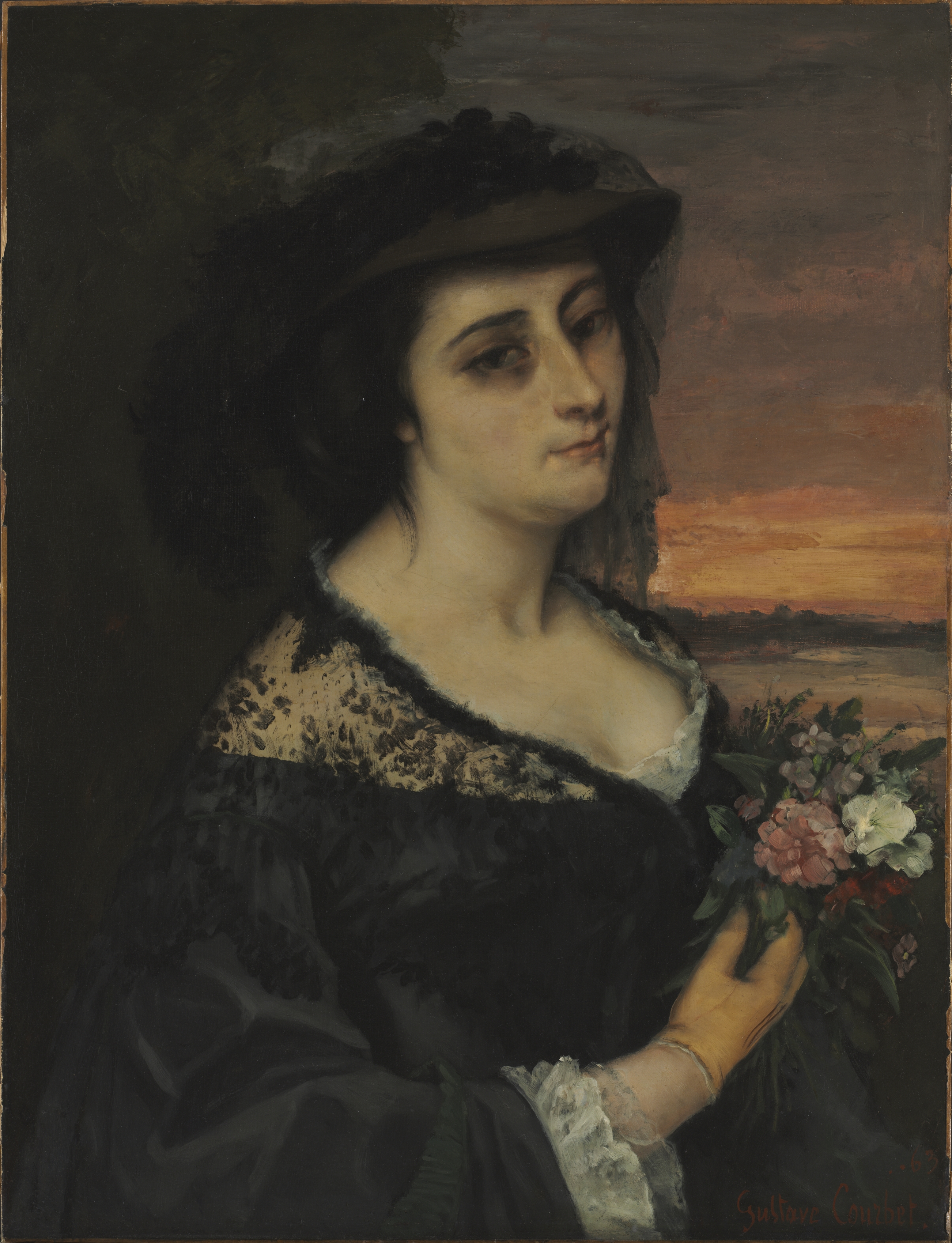
Deconstructing the Threads of Time: An Analysis of Mme L . . . (Laure Borreau) at Zoey Fashion Lab
At Zoey Fashion Lab, our mission is to unravel the fabric of history, not merely to preserve it, but to re-weave it into the lexicon of contemporary fashion. In this analysis, we turn our attention to a singular artifact: Mme L . . . (Laure Borreau), a 19th-century French oil-on-fabric portrait. This piece, while ostensibly a conventional bourgeois portrait, presents a profound case study for our New DNA Strand methodology—a framework that decodes the latent, avant-garde impulses embedded within historical textile and painterly traditions. By dissecting this work, we uncover a radical blueprint for future design, one that challenges the very notion of fashion as a linear progression.
The Fabric as Canvas: A Material Paradox
The technical specification of oil on fabric immediately signals a tension central to our analysis. In the 19th century, fabric was the substrate of identity—a medium for clothing, upholstery, and domesticity. Here, the same material is repurposed as a canvas for portraiture, a static representation of a woman, Laure Borreau, frozen in time. Yet, for Zoey Fashion Lab, this is not a limitation but a revelation. The fabric itself, likely a tightly woven linen or cotton, carries the physical memory of the artist’s brushstrokes, the weight of oil pigments, and the environmental decay of two centuries. This materiality is our New DNA Strand: a molecular-level trace of the past that can be sequenced and reimagined.
The avant-garde lens demands we see this fabric not as a passive support but as an active participant in the narrative. The oil paint, layered over the weave, creates a hybrid surface—part textile, part painting. This hybridity mirrors the contemporary fashion designer’s quest to blur boundaries between garment and art object. At Zoey Fashion Lab, we propose that the fabric’s original weave pattern, visible under magnification, offers a structural code for new textile architectures. The warp and weft, once hidden beneath pigment, become a blueprint for deconstructivist silhouettes that expose their own construction.
Deconstructing the Subject: Laure Borreau as Avant-Garde Icon
Mme L . . . (Laure Borreau) is depicted with the restrained elegance typical of 19th-century French portraiture: a composed posture, a direct but subdued gaze, and attire that signals her social standing. However, our New DNA Strand methodology reads beyond the surface. The subject’s dress—likely a silk or wool gown—is rendered with meticulous attention to drapery and texture. Yet, the artist’s brushstrokes reveal a subtle distortion: the folds are exaggerated, the shadows deepened, and the fabric’s surface seems to pulse with an almost kinetic energy. This is not mere realism; it is a proto-avant-garde gesture, a hint of the abstraction that would define modern art.
For Zoey Fashion Lab, this distortion is a call to action. We see in Laure Borreau’s gown a latent potential for deconstruction—a term central to avant-garde fashion. The painter’s manipulation of fabric on canvas prefigures the work of designers like Rei Kawakubo or Martin Margiela, who deliberately disrupt the garment’s form to expose its inner structure. By analyzing the brushwork’s rhythm, we can extract a pattern for asymmetric cuts, raw edges, and unexpected drapes. The portrait’s static nature becomes a dynamic source code for garments that challenge the viewer’s perception of fit and flow.
The New DNA Strand: Sequencing the Avant-Garde Impulse
Our New DNA Strand framework operates on three levels: material, structural, and conceptual. In Mme L . . ., the material strand is the fabric itself, now imbued with oil paint. We can sequence this by analyzing the chemical composition of the pigments and the weave’s tension, translating them into digital textures for 3D printing or laser-cut textiles. The structural strand is the portrait’s composition—the interplay of light, shadow, and line—which we reinterpret as pattern pieces for garments that play with volume and transparency. The conceptual strand is the subject’s identity, her place in history, which we recontextualize through a feminist lens, challenging the 19th-century gaze that framed her as a passive object.
Consider the avant-garde impulse as a rebellion against the conventional. In this portrait, the rebellion is subtle: the artist’s choice to emphasize the fabric’s materiality over the sitter’s psychology. This is a radical act for its time, akin to the fashion avant-garde’s rejection of the silhouette as a mere container for the body. At Zoey Fashion Lab, we extract this impulse to design collections that prioritize texture, weight, and movement over form-fitting perfection. The oil paint’s crackling, visible in the portrait’s age, becomes a motif for distressed finishes and intentional wear—a nod to the beauty of decay.
From Portrait to Prototype: A Design Methodology
Translating Mme L . . . into a contemporary fashion collection requires a rigorous deconstruction of its visual language. We begin by isolating the color palette: the deep blacks, muted ivories, and subtle ochres of the oil paint. These are not merely historical pigments but emotional tones—the black of mourning and authority, the ivory of purity and fragility. Our New DNA Strand algorithm maps these colors onto a spectrum of sustainable dyes, derived from natural sources that echo the 19th-century palette. The result is a collection that feels both ancient and futuristic.
Next, we analyze the texture. The oil paint’s impasto—thick, raised strokes—creates a tactile surface that invites touch. In fashion, this translates to quilting, pleating, and embroidery that mimic the painter’s hand. We propose a series of garments where fabric is treated as a three-dimensional canvas, with appliqué and layering that echo the portrait’s depth. The avant-garde twist: these textures are asymmetrical, appearing only on one sleeve or panel, disrupting the garment’s balance and forcing the wearer to reconsider their relationship with the clothing.
Conclusion: The Future Woven from the Past
Mme L . . . (Laure Borreau) is far more than a 19th-century portrait. For Zoey Fashion Lab, it is a New DNA Strand—a genetic code for an avant-garde fashion revolution. By deconstructing its material, structural, and conceptual elements, we unlock a design language that honors history while breaking its rules. The fabric, once a passive backdrop, becomes a protagonist; the subject, once a symbol of stasis, becomes a muse for movement. In this analysis, we have shown that the avant-garde is not a rejection of the past but a reconfiguration of its latent possibilities. The threads of Mme L . . . are now in our hands, ready to be woven into the future of fashion.