Executive Analysis: Project "Bill" – A Deconstruction for the Modern Avant-Garde
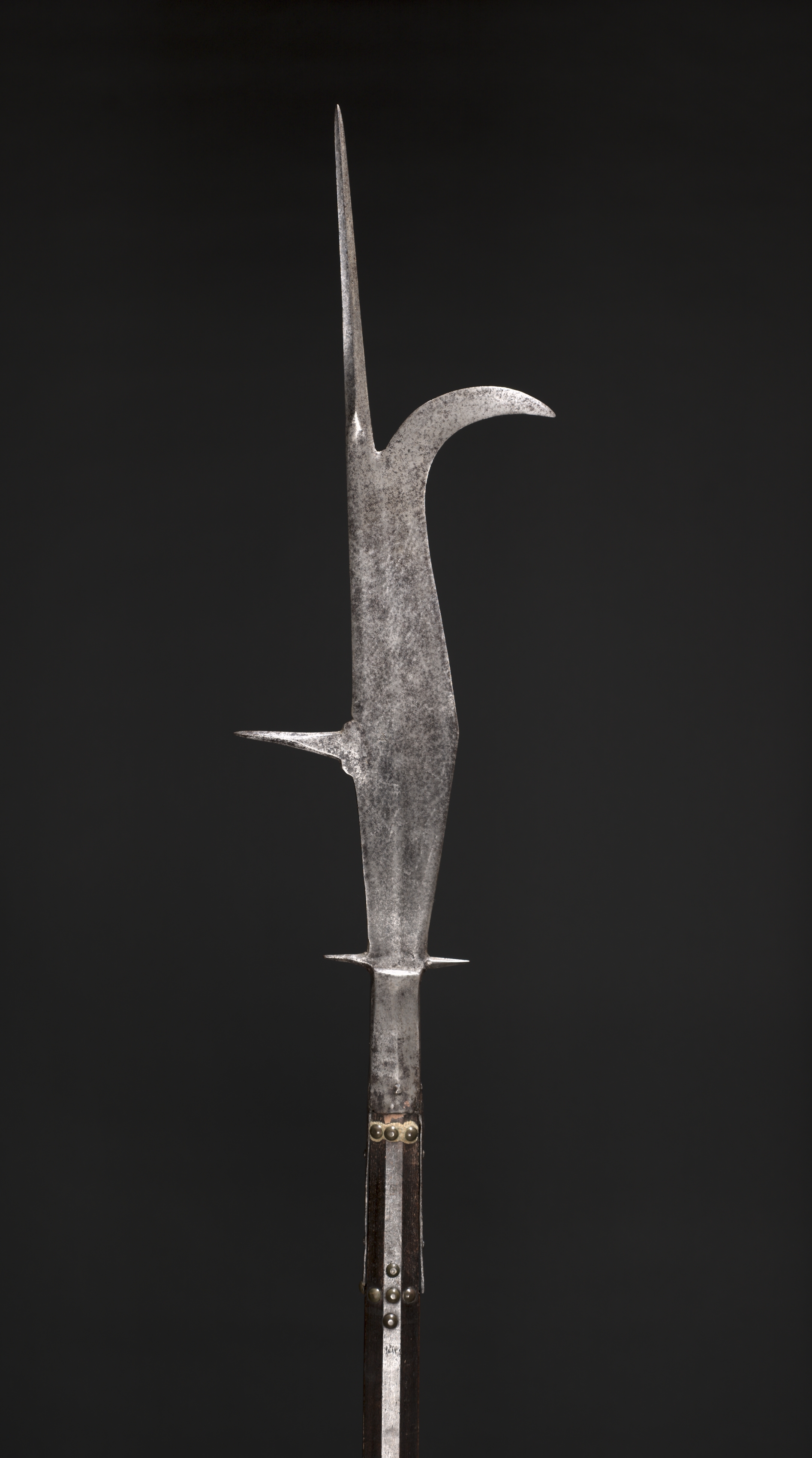
Subject: Project "Bill" – A 15th-century Italian polearm, specifically a type of billhook or bill. This is not a weapon of singular form, but a hybrid tool-weapon, evolved from agricultural implements. Its essence is adaptation, functionality, and a brutal, asymmetric elegance. Our reference inspiration, the New DNA Strand, speaks to fundamental recombination, a helical structure of interconnected parts forming a resilient and dynamic whole. This is our conceptual blueprint.
Core Deconstruction: The Foundational "DNA"
The original Bill's "DNA" is a helix of three intertwined material and functional strands:
Strand 1: The Steel Head (The Recombinant Blade). This is not a simple spearpoint. It is a modular, multi-functional assembly: a spear tip for thrusting, a hook for pulling, and often a cleaver-like blade for cutting. Each element serves a distinct purpose, yet they are forged into a single, fearsome unit. This is our primary inspiration for modular, transformable garment architecture. Think not of a single jacket, but of a core "spine" to which functional modules—a draped hood, a detachable sleeve with integrated glove, a structural hip panel—can be hooked, locked, and reconfigured.
Strand 2: The Wooden Haft (The Structural Helix). The haft provides length, leverage, and connection. It is the foundational axis that makes the head's complexity operable. In our translation, this becomes the wearable exoskeleton or internal corsetry. Imagine a lightweight, flexible polymer or molded composite "spine" that runs through a garment, providing structure and anchor points. This is the helical backbone from which fabrics drape, modules attach, and silhouettes extend.
Strand 3: The Purpose (Asymmetric Utility). The Bill was designed for the chaotic, close-quarters combat of the Renaissance infantryman, effective against both plate armor and cavalry. Its form is ruthlessly dictated by function, resulting in an asymmetric, threatening beauty. This translates to purpose-driven, asymmetric design with a protective stance. Garments may feature heavily structured, padded, or reinforced shoulders (deflecting modern "assaults" of attention), while the opposite side flows or is vulnerably open. Paneling can suggest armor plating without being literal.
Avant-Garde Translation: Recombinant Fashion Strands
Moving from historical DNA to avant-garde expression, we propose the following material and stylistic recombinations:
Material Genome
Steel Translation: We move from literal steel to its conceptual counterparts. Use cold, metallic Jacquard weaves mimicking hammered plate. Incorporate laser-cut acrylic or polished resin "blades" as appliqués or structural inserts. Experiment with memory polymers that hold a sharp, creased shape but flex with movement—fabric as a living blade. For hardware, utilize hook-and-eye closures, industrial toggle locks, and ratcheting straps reminiscent of weapon fittings.
Wood Haft Translation: The organic, foundational element. Source thermo-molded woods (like birch veneer laminated onto stretch substrates) for bodices or collar structures. Employ 3D-printed biodegradable polymers with a wood-grain texture for the internal exoskeleton. Contrast with oiled ash or walnut for actual buttons, toggles, or decorative "haft caps" at garment closures.
Silhouette & Construction
The silhouette must echo the Bill's elongated, threatening, and tool-like profile. Propose extended, sharp shoulder lines that pull from the hook's form, potentially extending into a cowl or high neck. Integrate asymmetric hemlines that sweep long on one side (the cutting blade) and are truncated on the other (the haft's end).
Construction should be visibly modular. Seams can be exaggerated with contrast stitching or industrial zippers, suggesting where components join. Use grommets and leather straps to allow the wearer to adjust drape and volume, literally "arming" themselves for the day. Draped fabric can be "hooked" back onto the structural frame, creating dynamic, self-contained folds.
The "New DNA Strand" Aesthetic
This is where the reference becomes paramount. The double helix suggests a twisted, interdependent duality. Execute this through:
Spiraling Seamwork: Construct garments with seams that spiral around the body, perhaps starting at one hip and ascending to the opposite shoulder, binding the form in a dynamic embrace.
Paired & Opposing Elements: Always design in complementary but contrasting pairs: one rigid, structured panel paired with one fluid, deconstructed one; a cool metallic fabric intertwined with a warm, felted wool. They are separate strands that form a stronger whole.
Pattern as Genetic Code: Develop a proprietary print derived from microscopic images of steel grain, wood cellulose, and actual DNA sequences. This "code" becomes the lab's signature, printed on linings or as subtle, all-over patterns.
Final Prototype Vision: "Helix Bill"
A unisex outerwear system centered on a Structural Haft Vest—a form-fitting base with a flexible polymer spine and multiple anchor points. To this, one can attach:
1. The "Hook" Module: A draped cowl-neck sleeve that attaches at the shoulder and wrist, pulling fabric across the torso in a sweeping curve.
2. The "Blade" Module: A stiff, trapezoidal panel skirt or kilt, laser-cut with a geometric pattern, that fastens asymmetrically at the hip.
3. The "Spike" Module: A long, slender scarf with a weighted, polished wood end, capable of being wrapped or left to hang as a stark, linear element.
The palette is monochromatic with material contrast: forged iron grey, ash white, and deep charcoal. A single "strike" of oxidized copper or verdigris green (referencing aged bronze) can appear as a lining or stitch detail.
Conclusion: Project "Bill" teaches us that true avant-garde design is not mere ornamentation; it is recombinant functionalism. By extracting the core DNA—modularity, structural axis, and asymmetric purpose—and recombining it through the lens of a double helix, we create not just clothing, but a wearable system. It is armor for the contemporary psyche, tool-like in its adaptability, and fundamentally built from the interconnected strands of past utility and future vision. The wearer does not simply don a garment; they assemble their stance for the modern world.