Deconstructing Armor: The Shaffron as a Blueprint for SS26 Avant-Garde Silhouettes
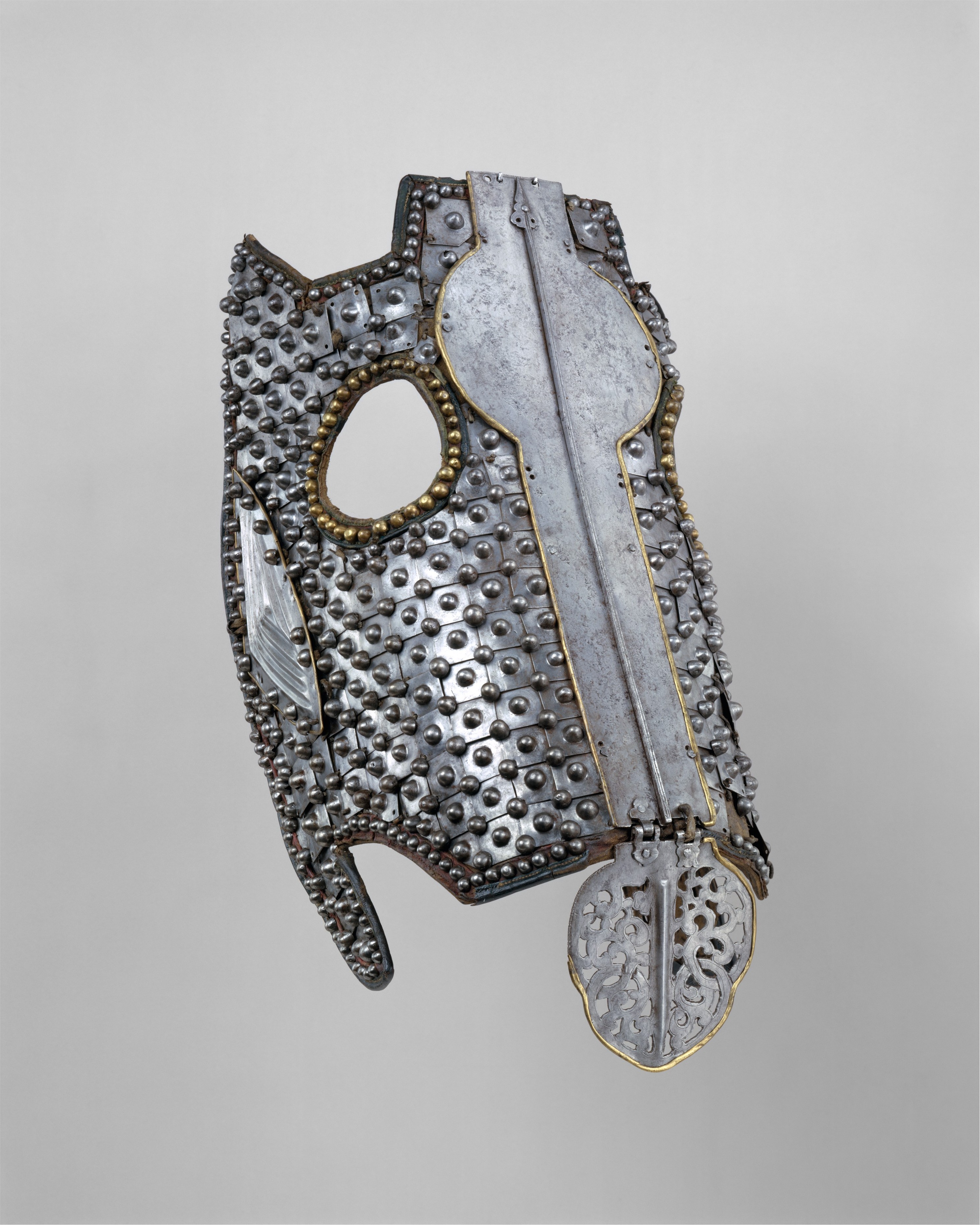
The shaffron, a piece of equestrian armor designed to protect a horse’s head, emerges from the annals of Tibetan and Mongolian martial history as a relic of both utility and ornamentation. Crafted from iron, leather, and brass or copper alloys, this object is not merely a defensive implement—it is a sculptural manifesto. In the context of Zoey Fashion Laboratory’s avant-garde study for SS26, the shaffron transcends its historical function to become a radical template for futuristic silhouettes. This analysis deconstructs its structural innovations, material dialogues, and kinetic potential, proposing a new lexicon of wearability that challenges the boundaries between human form and equine architecture.
Structural Innovation: From Equine Armor to Human Silhouette
The shaffron’s core architecture—a rigid, contoured shell that follows the topography of a horse’s skull—offers a profound departure from conventional garment construction. Its primary challenge is the translation of a non-human anatomy into wearable forms that amplify, rather than mimic, the human body. The Tibetan shaffron, often featuring a pronounced forehead plate and hinged cheek guards, introduces a modular system of overlapping segments. For SS26, this translates into segmented exoskeletal garments that articulate with the wearer’s movements, creating a second skin that is both protective and performative. The use of iron and brass alloys suggests a weighty, metallic presence, but the avant-garde imperative is to reinterpret these materials through lightweight, high-tech composites—carbon fiber, titanium mesh, or bio-resin—that retain the visual density of armor while enabling fluidity. The shaffron’s central ridge, a structural spine, inspires a series of spine-like dorsal fins that run along the back of jackets or bodices, creating an imposing, futuristic profile reminiscent of cybernetic augmentation.
Further, the shaffron’s integration of leather straps and brass rivets introduces a system of tension and release. These fastenings, originally designed for adjustability on a horse’s head, become a design language of exposed hardware and adjustable tension points. For SS26, this manifests in garments where straps, buckles, and metal eyelets are not hidden but celebrated as structural elements. A coat might feature leather harnesses that cinch at the shoulders and hips, echoing the shaffron’s grip on the equine skull. The result is a silhouette that is simultaneously armored and deconstructed, where the wearer’s form is both constrained and liberated by these industrial details.
Material Dialogues: The Alchemy of Iron, Leather, and Patina
The shaffron’s material palette—iron, leather, and copper alloys—offers a rich textural vocabulary for avant-garde exploration. Iron, with its cold, unyielding surface, represents architectural permanence. In the hands of a futurist designer, this translates into sculpted panels that mimic the shaffron’s hammered or embossed surfaces. Laser-cut iron or steel alloys, treated with a patina of rust or verdigris, evoke a post-apocalyptic aesthetic that speaks to decay and resilience. Leather, often used as a backing or strap material, introduces organic warmth and flexibility. For SS26, leather is reimagined as a molded, structural skin, treated with resins or metallic foils to create a hybrid material that bridges the organic and industrial. The Tibetan shaffron’s brass or copper accents—often gilded or inlaid with turquoise—become a source of opulent contrast. These metallic highlights are transposed into garments as intricate embroidery, beading, or laser-cut appliqués that catch light and create a sense of motion.
Perhaps the most radical material innovation is the incorporation of patina as a design feature. The shaffron’s aged surface, with its layers of tarnish and wear, suggests a temporal dimension. For SS26, garments are designed to evolve with use—fabrics that oxidize, metals that develop a natural patina, and leathers that darken with handling. This challenges the fashion industry’s obsession with pristine newness, positing instead a wardrobe that tells a story of time and experience. The shaffron’s brass fittings, often worn smooth by centuries of use, inspire a series of worn-in finishes that celebrate imperfection as a marker of authenticity.
Futuristic Silhouettes: The Equine-Tech Aesthetic
The shaffron’s influence on silhouette is most potent in its redefinition of the head and neck as a site of architectural intervention. The original armor’s domed shape, flaring cheek guards, and protruding nose plate suggest a helmet-like enclosure. For SS26, this translates into exaggerated collars and hoods that frame the face with angular, protective structures. A jacket might feature a high, rigid collar that extends into a visor-like brim, echoing the shaffron’s protective visor. The shape is not merely decorative but functional, creating a sense of fortified intimacy where the wearer is both shielded and exposed. The shaffron’s ear guards—often shaped as pointed, zoomorphic forms—inspire asymmetrical shoulder panels that jut outward like equine ears, lending a predatory, alert quality to the silhouette.
Beyond the head, the shaffron’s segmentation informs a layered, modular aesthetic. The armor’s overlapping plates, often riveted together, suggest a system of interchangeable parts. For SS26, garments are designed as assemblages of detachable components: sleeves that snap on and off, panels that zip into place, and harnesses that can be reconfigured. This modularity aligns with the futuristic ethos of adaptability, where a single garment can transform from a minimalist shell to a fully armored exoskeleton. The shaffron’s brass and leather straps, originally used to secure the armor to the horse’s head, become a harness system that wraps around the torso, creating a second-skeleton that supports and structures the garment. This harness, visible through sheer fabrics or worn over bare skin, evokes a cyborgian aesthetic where fashion becomes a form of bodily extension.
Kinetic Potential: Movement and Stasis in Armored Garments
The shaffron, despite its rigidity, was designed for a moving animal. Its articulation—the way plates shift and straps tighten during gallop—introduces a dynamic tension that is critical for SS26. The avant-garde garment must not be static; it must respond to the wearer’s movements. For instance, the shaffron’s hinged cheek guards inspire articulated joints in sleeves and trousers, where metal or composite panels pivot at the elbow and knee. These joints, visible and functional, create a mechanical rhythm that echoes the horse’s gait. The leather straps, when reinterpreted as elasticized tension bands, allow the garment to tighten or loosen in response to posture, creating a living, breathing second skin.
Moreover, the shaffron’s weight—its material density—forces a reconsideration of gravity and balance. In the avant-garde context, this weight is not a limitation but a design element. Garments are constructed with counterbalanced hemlines, where heavy panels are offset by lighter, floating layers. A coat might feature a weighted, metallic front panel that drags slightly, while the back rises in a sweeping, aerodynamic curve. This interplay of mass and airiness creates a silhouette that is both grounded and ethereal, evoking the shaffron’s paradoxical nature as both protective burden and graceful ornament.
Conclusion: The Shaffron as a Portal to SS26
The Tibetan or Mongolian shaffron, with its iron, leather, and brass alloys, is far more than a historical artifact. It is a radical design thesis that challenges the conventions of garment architecture, materiality, and wearability. For Zoey Fashion Laboratory’s SS26 collection, this equine armor becomes a portal to a future where fashion is not merely clothing but a form of technological embodiment. The segmented exoskeletons, patina-driven materials, and modular harnesses inspired by the shaffron propose a new avant-garde vocabulary—one that is both brutal and beautiful, protective and expressive. As the line between human and machine blurs, the shaffron reminds us that the most futuristic silhouettes are often forged from the most ancient forms. In this collection, the horse’s head defense is reborn as a defense of the human spirit—armored, agile, and unyielding in its pursuit of the next frontier.