Deconstructing the Equine Exoskeleton: A Tibetan Saddlery Lexicon for SS26
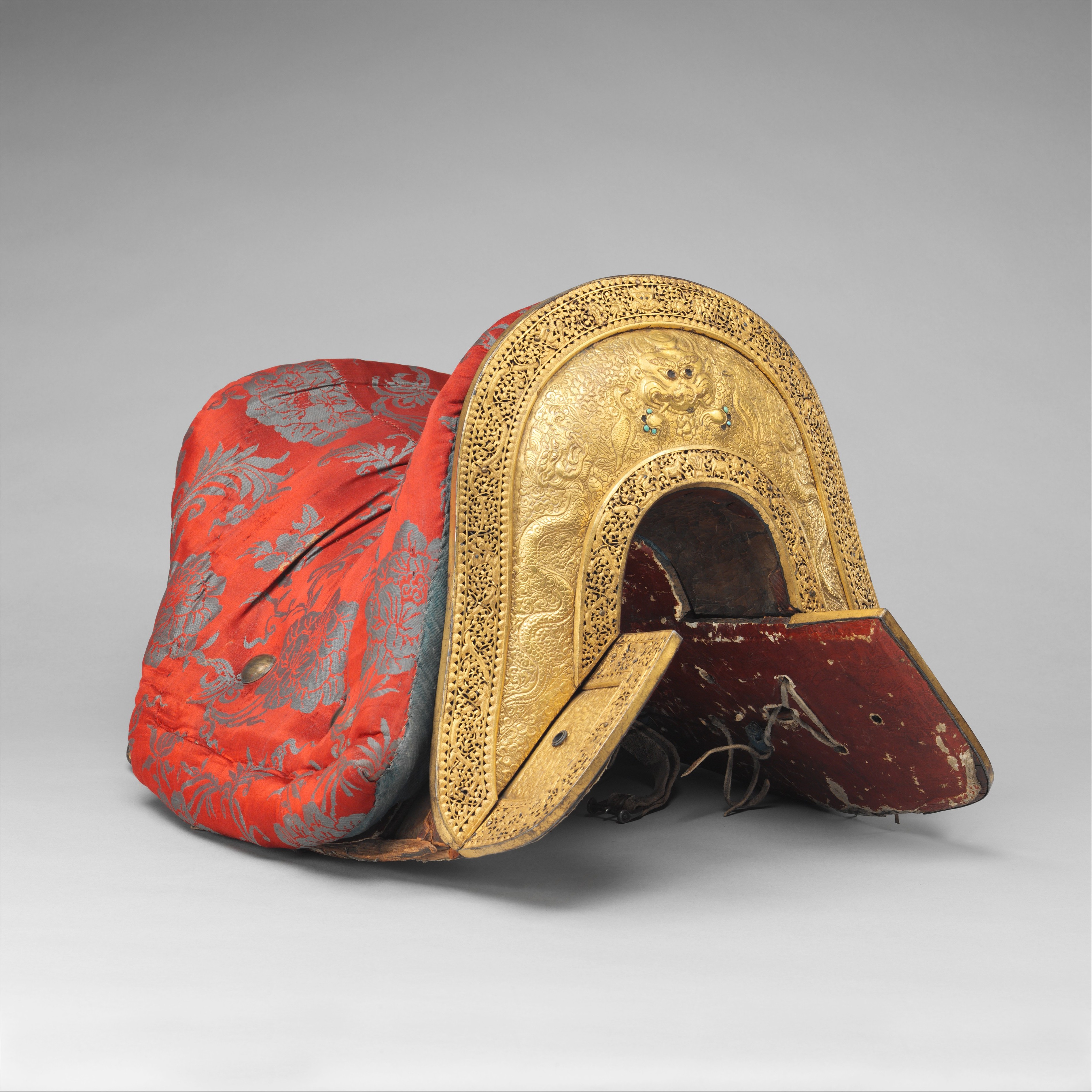
The avant-garde imperative is not merely to innovate, but to excavate. For the SS26 season, Zoey Fashion Laboratory turns its gaze to the Tibetan saddle—not as a relic of nomadic utility, but as a blueprint for a new, post-humanist silhouette. This is not equestrian chic; it is equine exoskeletal architecture. The materials—iron, gold, copper, turquoise, fruitwood, buckskin, doeskin, linen, silk, wool, and yak hair—are not decorative. They are structural provocations. We dissect each component: the saddle, saddle pad, stirrups, rein, stirrup straps, bit and bridle, breaststrap, tassel, and crupper. The result is a collection of wearable armatures that challenge the boundary between rider and ridden, garment and gear.
The Saddle: An Iron-Laced Corsetry for the Torso
The Tibetan saddle, often constructed from fruitwood and reinforced with iron and copper bands, is a rigid, cantilevered form. For SS26, we translate this into a deconstructed bustier that suspends the torso in a state of tension. The iron plates are reimagined as laser-cut, oxidized steel inserts sewn into a base of undyed buckskin. The gold and copper inlays are not gilding; they are conductive threads that create a lattice of electromagnetic rigidity across the ribcage. The turquoise cabochons, typically set for spiritual protection, become functional pressure points that articulate the spine’s movement. The silhouette is severe: a high, flared waist that mimics the saddle’s pommel and cantle, forcing the wearer into a posture of poised, forward-leaning propulsion. This is not a jacket; it is a thoracic exoskeleton that redefines the human form as a vessel for motion.
The Saddle Pad: A Textile Stratigraphy of Resistance
Beneath the saddle lies the pad—a thick, layered composite of wool, felt, and linen, often padded with yak hair. For our laboratory, the saddle pad becomes a volumetric undergarment that inflates the silhouette at the hips and lower back. We engineer a double-faced construction: the outer layer is a double-weave linen infused with copper thread, while the inner layer is a raw, unspun yak hair felt. The result is a pneumatic cushion that expands and contracts with breath. The pad is not hidden; it is exposed as a dramatic, asymmetrical hip drape that cascades into a train. The turquoise beads are stitched in a radial pattern, mimicking the mandala-like designs on traditional Tibetan pads. This is a study in protective volume—the garment as a buffer between the body and the world.
Stirrups and Stirrup Straps: The Suspension of Locomotion
The stirrup is a fulcrum of power. Tibetan stirrups, forged from iron with gold-washed detailing, are heavy, angular, and deeply functional. For SS26, we abstract the stirrup into a foot harness that extends into a full-leg chassis. The stirrup straps—traditionally leather—are reimagined as woven strips of doeskin and silk, dyed in oxidized indigo and rust. The strap system is not merely for the foot; it wraps around the calf and thigh, creating a tension-grid that alters the gait. The iron stirrup itself is replaced by a sculpted, hollow form in copper and turquoise—a wearable anvil that clinks with each step. The silhouette is amphibious: the legs appear to be suspended from the hip, as if walking on a phantom horse. This is a critique of groundedness, a proposal for a future where locomotion is mediated by mechanical appendages.
Rein, Bit, and Bridle: The Architecture of Control
The bit and bridle are instruments of direction. In Tibetan tradition, the bridle is a complex network of leather, silk, and metal, often adorned with coral and turquoise. For our collection, the bridle becomes a cranial cage that wraps the head in a lattice of copper and doeskin. The bit is not placed in the mouth; it is suspended before the lips as a floating interface—a metallic bar that the wearer can touch, but not grasp. The reins are translated into long, braided cords of yak hair and silk that trail from the shoulders to the floor. These are not handles; they are directional threads that the wearer can tug to shift their own weight. The silhouette is cyborgian: the head is framed by a halo of metal and leather, while the reins become a train that the wearer must navigate. This is a meditation on agency—the garment as a system of subtle commands.
Breaststrap and Crupper: The Tension of the Torso
The breaststrap and crupper are the stabilizers of the saddle. The breaststrap wraps the chest, while the crupper loops under the tail. For SS26, we fuse these into a single thoracic-pelvic harness. The breaststrap is a wide band of iron-reinforced leather that crosses the sternum, while the crupper is a curved, copper-plated form that cups the lower back. The two are connected by a series of adjustable straps that create a dynamic tension system—tightening or loosening to alter the silhouette’s posture. The turquoise and gold accents are placed at the intersections, acting as both ornament and structural joints. The silhouette is vertebrate: the spine is articulated by a series of metallic segments, and the wearer’s movement is both constrained and amplified. This is a garment that demands a new kind of locomotion—a staccato, deliberate gait.
The Tassel: A Kinetic Counterweight
The tassel, often dismissed as mere decoration, is a crucial counterweight in Tibetan saddlery. Made of silk, wool, and yak hair, it dangles from the breaststrap or saddle flap. For SS26, the tassel becomes a kinetic sculpture that attaches to the hem of the jacket or the cuff of the sleeve. We engineer it as a weighted cluster of copper beads, turquoise drops, and frayed yak hair, suspended from a braided silk cord. The tassel’s movement is not random; it is calibrated to alter the garment’s center of gravity. When the wearer turns, the tassel swings, pulling the fabric into a new drape. The silhouette is pendular—a constant negotiation between stillness and motion. This is not a fringed trim; it is a physics experiment in wearable momentum.
Conclusion: The Future as a Nomadic Armature
The Tibetan saddle is not a costume; it is a technological manifesto written in iron, turquoise, and yak hair. For SS26, Zoey Fashion Laboratory decodes this manifesto to propose a new sartorial logic: the garment as exoskeleton, as suspension system, as directional interface. The silhouette is severe, volumetric, and cyborgian—a fusion of nomadic pragmatism and futuristic abstraction. The materials are not passive; they are active agents of structure and tension. This is not a collection for the passive consumer. It is for the rider of the future—one who wears their garment as a second skeleton, a tool for navigating a world of constant motion. The saddle is no longer for a horse. It is for the human form, reimagined as a vessel of power and precision. This is the definitive avant-garde study of equine architecture, stripped of nostalgia and reborn as pure, structural possibility.