Deconstructing the Yuan Dynasty Brocade with Hares: A Chief Fabric Deconstructionist’s Analysis for Zoey Fashion Lab
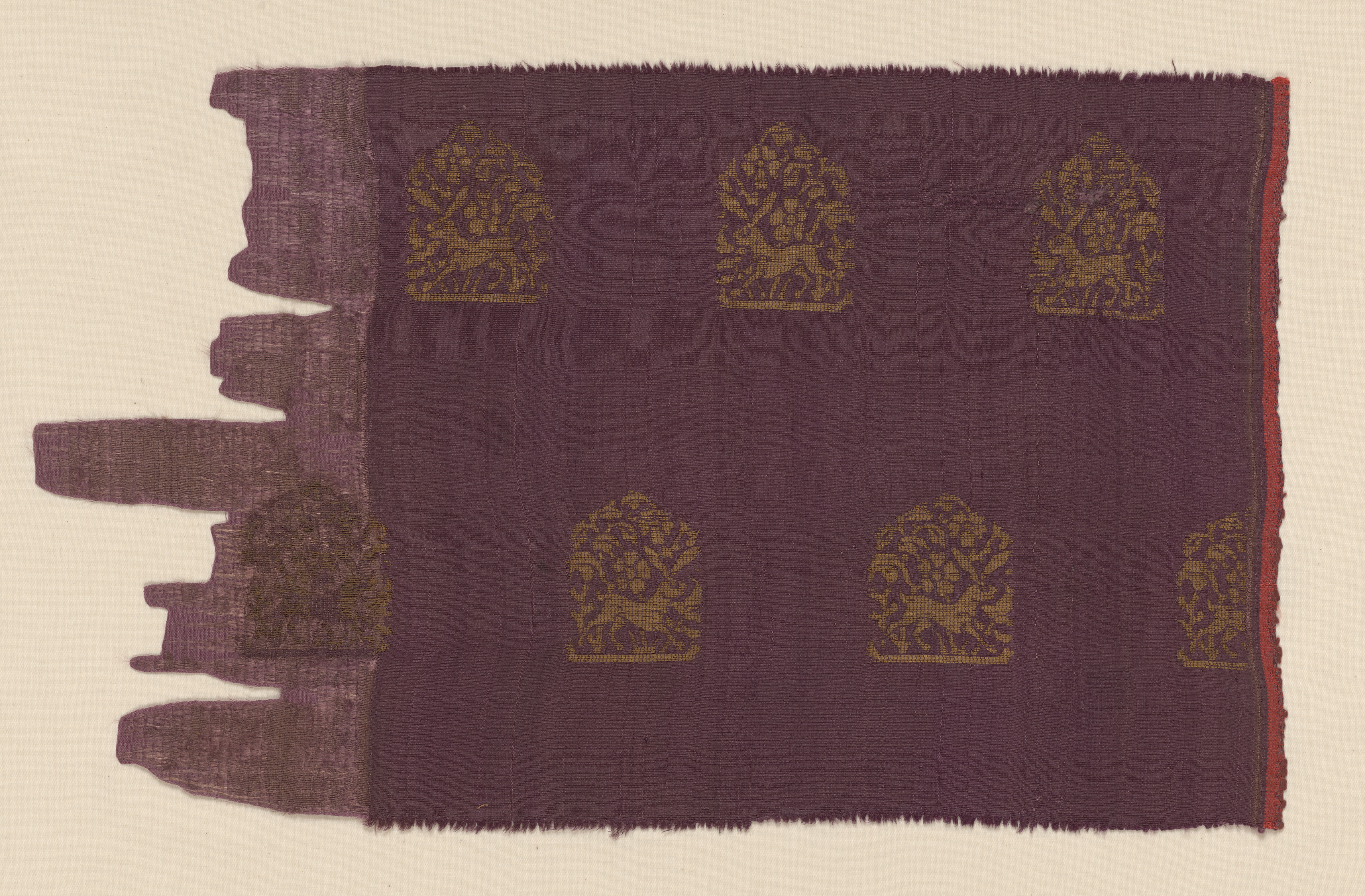
At Zoey Fashion Lab, our mission is to excavate historical textiles not as relics, but as living blueprints for avant-garde expression. The subject of this analysis—a Yuan dynasty (1271-1368) brocade from Northern China, woven with silk in a tabby ground, brocaded with gold thread, and featuring a motif of hares—presents a profound case study. This fabric is not merely a decorative artifact; it is a sophisticated technological and aesthetic document. Its technical construction, iconographic choices, and the cultural context of the Mongol-ruled Yuan dynasty offer a rich vocabulary for disruptive, contemporary fashion design. We will deconstruct this piece through three primary lenses: technical structure, symbolic iconography, and cultural resonance, drawing a direct line from the 13th-century loom to the 21st-century runway.
Technical Structure: The Dialogue Between Tabby and Brocade
The foundation of this textile is a silk tabby weave, the simplest and most ancient of weaves, where warp and weft interlace in a one-over-one-under pattern. This creates a stable, flat, and relatively unadorned ground. The genius of the piece lies in the brocaded technique. Brocading is a supplementary weft technique, meaning extra weft threads—in this case, gold thread—are introduced only in specific areas to form the pattern. This is not a woven-in design; it is a surface embellishment that floats on the reverse side. For the avant-garde designer, this structural duality is a goldmine. The tabby ground provides a disciplined, minimalist base—a canvas of pure, unadorned silk. The brocaded gold thread, conversely, introduces an element of controlled chaos, of deliberate interruption. This creates a tactile and visual tension between the matte, absorbent silk and the reflective, metallic gold. In a modern garment, this could be exploited through selective wear, revealing the reverse side’s floating threads, or by deconstructing the brocaded areas to create deliberate fraying and textural contrast. The gold thread itself, likely a gilded animal membrane wrapped around a silk core, is a testament to technological ambition. Its fragility and stiffness demand precision in weaving, a constraint that can be reinterpreted in contemporary materials like Lurex, metallic leather, or even laser-cut mylar, echoing the original’s opulence while embracing modern manufacturing possibilities.
Symbolic Iconography: The Hare as a Dynamic Motif
The central motif—the hare—is far from a passive decorative choice. In Chinese and Central Asian traditions, the hare is a potent symbol. It is associated with the moon, with longevity, and with the elixir of life. In the context of the Yuan dynasty, a period of vast empire and cultural exchange, the hare also carries connotations of swiftness, fertility, and the untamed spirit of the steppes. The Mongol rulers brought a love for hunting and animal motifs into Chinese textile arts. The hare, therefore, is not a static emblem but a narrative of movement and transition. For Zoey Fashion Lab, this iconography can be abstracted. The hare’s silhouette can be fragmented, repeated at different scales, or distorted through digital printing. Its association with the moon suggests a color palette of lunar silver, deep indigo, and midnight black, offset by the gold’s solar brilliance. The hare’s posture—whether leaping, grazing, or alert—can inform the draping and silhouette of a garment. A leaping hare motif could be placed at the shoulder or hem to suggest upward motion, while a repeating pattern of hares in flight could create a sense of dynamic rhythm across a long coat or dress. The gold thread, in this context, becomes a tool for highlighting the hare’s energy, tracing its form in a material that captures and refracts light, making the animal seem to move with the wearer.
Cultural Resonance: The Archive as an Avant-Garde Catalyst
The Archive Resonance reference—noting the 16th to 17th centuries as a period of cultural collision—is crucial, though our textile predates it by two centuries. The Yuan dynasty was itself a crucible of cross-cultural exchange. The brocade with hares is a product of Mongol patronage, Chinese technical mastery, and Central Asian aesthetic influences. The use of gold thread, for instance, was heavily influenced by Persian and Central Asian weaving traditions. The hare motif, while Chinese, was given new prominence under Mongol rule. This textile is not “pure” Chinese; it is a hybrid, a conversation between cultures. This is the most potent lesson for the avant-garde designer. The archive is not a static repository of “authentic” forms but a living document of adaptation and synthesis. To be truly avant-garde is to engage in a similar act of cultural translation. We can take the structural logic of the brocade—the interruption of a base fabric by a luxurious, foreign element—and apply it to contemporary contexts. Imagine a base of utilitarian cotton or recycled denim, brocaded with a pattern using recycled plastic threads or conductive fibers. The “gold” is no longer a precious metal but a material that carries a new value—sustainability, technology, or social commentary. The hare motif can be replaced with a symbol of our own time: a Wi-Fi signal, a endangered species, a QR code. The act of brocading itself becomes a metaphor for inserting a disruptive, valuable narrative into a mundane surface.
The Yuan brocade with hares is a masterclass in controlled opulence and narrative density. Its tabby ground provides restraint; its brocaded gold provides excess. Its hare motif provides a story of movement and cultural hybridity. For Zoey Fashion Lab, this textile is not a costume to be copied but a system of design principles to be abstracted and radicalized. We can deconstruct its weave to create new textures, fragment its iconography to generate new patterns, and reinterpret its cultural logic to forge new meanings. The result is not a historical reproduction but a contemporary artifact that carries the weight of the past while projecting into the future. The hare leaps not across a Yuan dynasty field, but across a 21st-century runway, its gold thread tracing a line between tradition and transformation. This is the essence of our work at Zoey Fashion Lab: to find the avant-garde impulse within the archive and release it into the world.