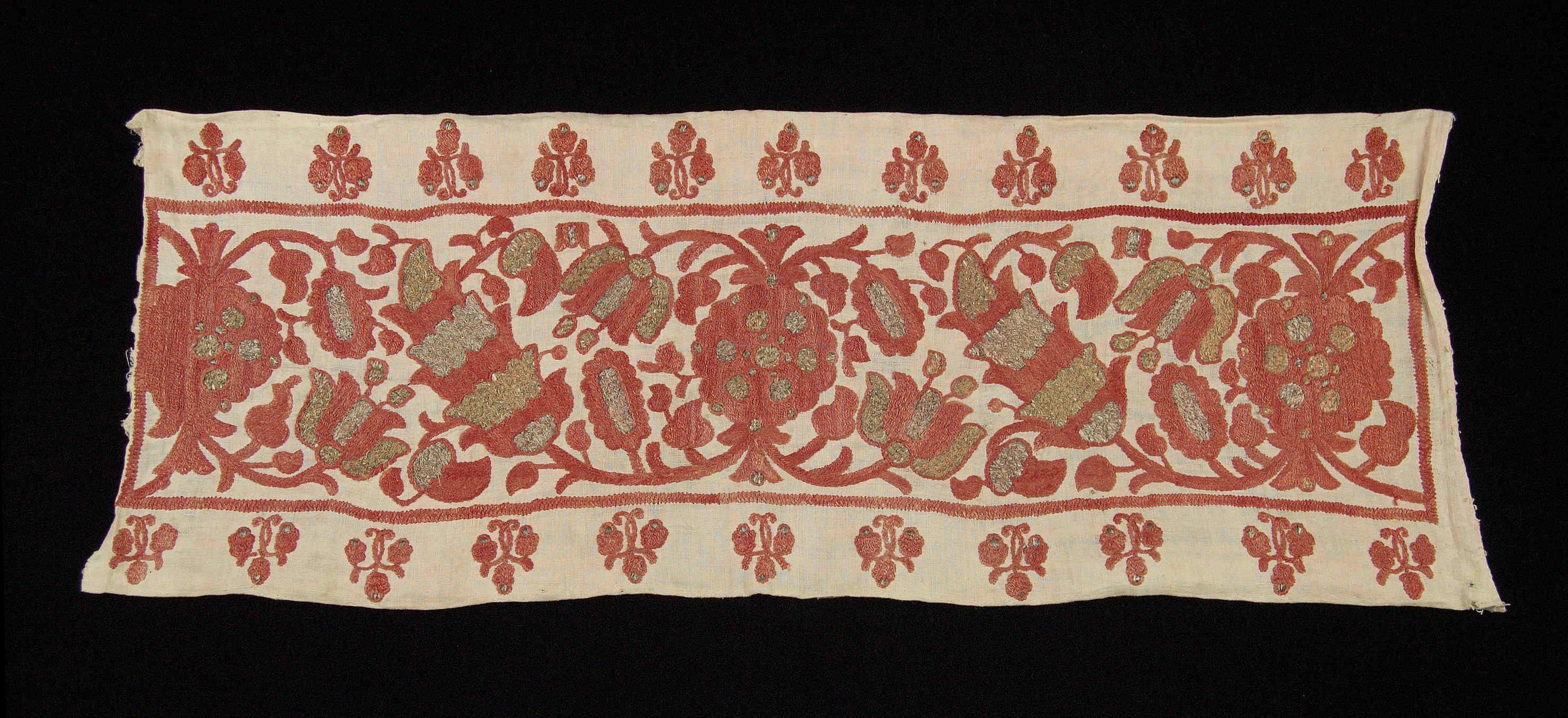
Deconstructing the Global Frontier: The Fragment as a Complete Garment
In the lexicon of avant-garde couture, the fragment is not a remnant but a genesis. At Zoey Fashion Laboratory, we dissect the very notion of completeness, interrogating the boundary between the garment and its absence. For SS26, our study centers on a single, potent artifact: a fragment of a shirt, sourced from the nebulous Global Frontier—a conceptual space where cultural boundaries dissolve and raw materiality reigns. This fragment, woven from linen, silk, and metallic threads, is not a diminished object but a radical provocation. It challenges the traditional garment’s hierarchy, proposing that a sliver of fabric, when architecturally recontextualized, can generate a futuristic silhouette more potent than any whole garment.
The Global Frontier is not a geographical location but a state of material and cultural flux. Here, the fragment exists as a palimpsest of histories: the earthy resilience of linen, the fluid luxury of silk, and the cold precision of metallic fibers. This tripartite materiality is the foundation of our structural innovation. Linen provides a sense of grounded, organic weight; silk introduces a dynamic, almost liquid drape; and the metallic weave offers a rigid, almost architectural armature. Together, they form a composite that is both ancient and futuristic, a textile that breathes with the past while reaching toward the unknown. The fragment, as we present it, is not a torn remnant but a deliberate excision—a surgical cut that reveals the garment’s internal logic, its seams, its tensions, and its potential for reconfiguration.
Futuristic Silhouettes: The Architecture of Absence
The silhouette for SS26 is defined not by volume but by void. The fragment is suspended, pinned, and draped across the body using a system of metallic tension cables and silk-wrapped boning. This creates a series of negative spaces that are as vital as the fabric itself. The shirt fragment, typically a chest panel or a single sleeve, is reoriented to become a structural exoskeleton. It wraps around the torso not to cover but to delineate, carving out a new topology of form. The result is a silhouette that is simultaneously fragmented and cohesive, where the missing pieces are implied through the body’s own geometry.
Consider a fragment of a linen shirt back, now elevated to a shoulder yoke that extends into a single, asymmetrical wing. The silk lining, once hidden, is exposed and allowed to cascade in a single, unbroken line from the neck to the hip, while the metallic threads are woven into a lattice structure that holds the entire composition aloft. The shirt’s collar, detached and reimagined as a necklace-like armature, frames the face with a sharp, geometric precision. This is not a shirt; it is a sculpture of absence, where the missing sleeves, the absent placket, and the lost hem become active participants in the design. The wearer becomes a living architecture, their body the foundation upon which the fragment builds a new reality.
Structural Innovation: Tension, Suspension, and the Unfinished
Our structural methodology for SS26 is rooted in tension engineering. The fragment is not sewn in the traditional sense but suspended using a system of metallic grommets and silk cords. This allows the fabric to float, to shift, and to interact with the wearer’s movement in real time. The linen provides a rigid base, the silk offers a fluid counterpoint, and the metallic elements act as both anchors and accents. This tripartite system creates a dynamic equilibrium, where the fragment is never static but perpetually in a state of becoming.
We employ laser-cut perforations along the fragment’s edges, creating a filigree of light and shadow. These perforations are not decorative; they are structural, allowing for the insertion of flexible metallic rods that can be bent and shaped to create cantilevered forms. The shirt fragment’s original seams are deconstructed and re-stitched with conductive thread, which can be charged with low-voltage LED fibers, illuminating the fragment from within. This transforms the garment into a light-emitting architecture, where the metallic threads become conduits for a soft, ethereal glow. The unfinished edges are raw, frayed, and celebrated, not as imperfections but as evidence of the fragment’s journey from the Global Frontier to the body.
Material Alchemy: Linen, Silk, and Metallic Fusion
The material dialogue within this fragment is a study in contrasts. Linen, with its natural slubs and earthy texture, grounds the design in an almost archeological reality. Silk introduces a liquid, almost holographic sheen, catching light and creating depth. The metallic threads, woven into a subtle herringbone pattern, add a third dimension of hardness and reflection. When these materials are combined in a fragmentary state, they form a composite textile that is both pliable and rigid. The linen absorbs moisture and holds shape, the silk lends a sensuous fluidity, and the metallic weave provides a skeleton that prevents the fragment from collapsing into mere drapery.
For SS26, we treat the fragment as a laboratory specimen. We subject it to heat pressing to create permanent pleats, chemical washing to distress the linen and reveal its inner fibers, and electroforming to deposit a thin layer of copper onto the metallic threads. This alchemical process transforms the fragment into a relic of a future civilization, where the boundaries between natural and synthetic, organic and industrial, are dissolved. The resulting garment is not a shirt but a material manifesto, a testament to the transformative power of the fragment when liberated from its original context.
Conclusion: The Fragment as a Complete Universe
In this standalone avant-garde study, the fragment of a shirt from the Global Frontier is not a symbol of loss but of infinite potential. It is a complete garment in its own right, one that rejects the tyranny of the whole and embraces the radical freedom of the incomplete. The futuristic silhouette is not about adding volume but about subtracting to reveal essence. The structural innovation lies not in complex construction but in the intelligent suspension of a single piece. For Zoey Fashion Laboratory, SS26 is a declaration that the future of couture is not in the finished garment but in the fragment—a piece that invites the viewer to complete the story, to imagine the missing parts, and to see the body as the ultimate canvas for architectural expression. This is the Global Frontier made wearable, a fragment that contains the universe.