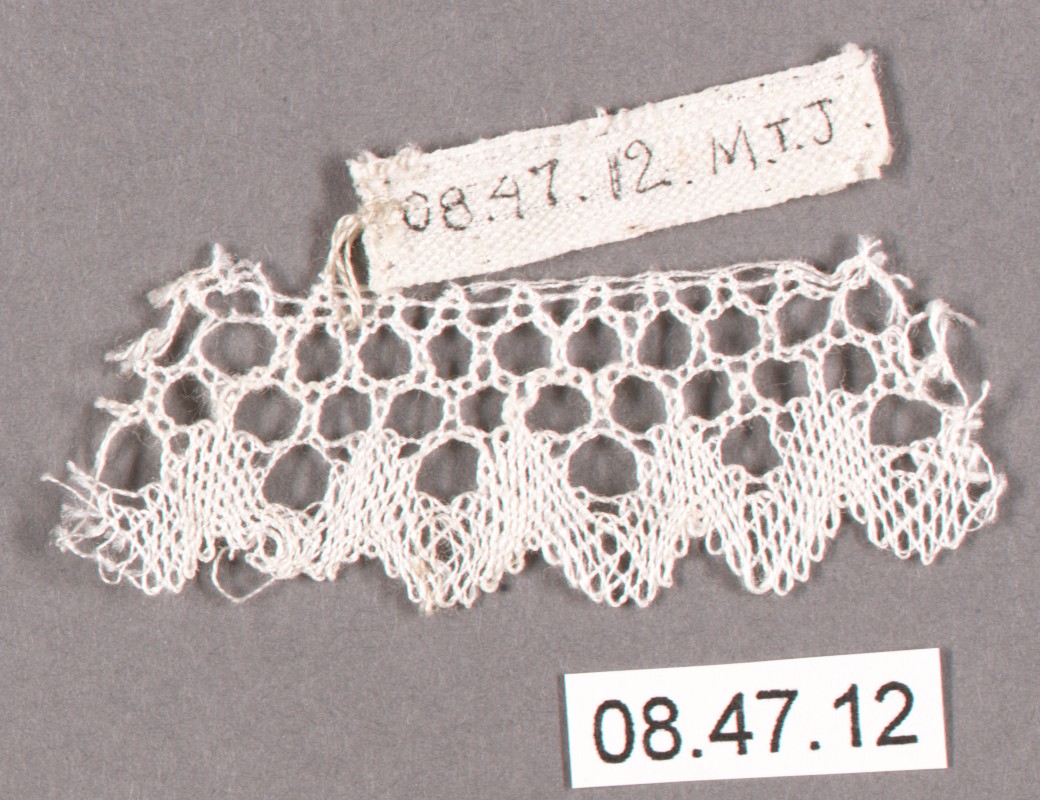
The Fractured Body: Deconstructing the Fragment Through Bobbin Lace for SS26
The avant-garde imperative for SS26 demands a radical renegotiation of the garment’s relationship with the human form. At Zoey Fashion Laboratory, we turn our analytical gaze to the Fragment—not as a sign of loss or incompletion, but as a generative architectural principle. The fragment, in our context, is a deliberate, controlled rupture. It is the point where the silhouette ceases to be a continuous surface and becomes a series of strategic, volumetric events. Our chosen material, bobbin lace, is the paradoxical vehicle for this structural innovation. Traditionally the epitome of delicate, ornamental continuity, we re-engineer it as a tensile, semi-transparent membrane that defines the fragment’s negative space. This is not a nostalgic revival; it is a futuristic synthesis of heritage craft and computational logic. The Global Frontier of this study is not a geographical location but a conceptual space—the frontier between the solid and the void, the rigid and the fluid, the whole and the shattered.
Structural Innovation: The Lace Armature and the Volumetric Void
The fundamental innovation for SS26 lies in transforming bobbin lace from a two-dimensional textile into a three-dimensional, load-bearing armature. Traditional lace is a pattern of holes and threads. We invert this logic. The threads become the structural skeleton, and the holes become the primary form. We achieve this through a process of laser-guided pattern drafting applied to hand-made lace panels. The lace is not cut and sewn in the conventional sense; it is thermo-set into rigid, curved geometries using a bio-polymer resin that is both flexible and durable. The resulting fragments—shoulder yokes, hip cages, spinal columns of lace—are not attached to a fabric base. They float, cantilevered off the body, creating dramatic negative spaces that are as essential to the silhouette as the positive forms.
Consider a jacket for SS26: the left shoulder is a full, sculpted volume of thermo-set lace, a solid fragment that extends into a sharp, asymmetric point. The right side of the torso is completely absent, replaced by a single, tensile lace strap that arcs from the collarbone to the lower back. The fragment is the entire garment. The body becomes the connective tissue. This is a direct challenge to the “complete” garment. We are not repairing the fragment; we are celebrating its structural autonomy. The lace’s inherent transparency allows the skin and the internal architecture of the garment to become visible, creating a multi-layered reading of form—a digital-age palimpsest of the body’s surface and the garment’s skeleton.
Futuristic Silhouettes: The Asymmetric Cascade and the Floating Panel
The silhouette for SS26 is defined by controlled asymmetry and gravity-defying cantilevers. The fragment is not random; it is a precise, engineered disruption of the classical hourglass or column. We propose two primary silhouettes: the Asymmetric Cascade and the Floating Panel.
The Asymmetric Cascade begins with a single, massive fragment of bobbin lace—perhaps a full skirt panel that is dense at the hip and dissolves into a fringe of loose, un-resined threads at the hem. This fragment is anchored at the left hip and cascades diagonally across the body, leaving the right leg entirely exposed. The upper body is a counter-fragment: a single, sculpted lace sleeve that is detached from the bodice, connected only by a thin, metallic chain or a bio-fiber thread. The silhouette is a study in weight and weightlessness. The dense, cascading lace fragment grounds the form, while the detached, floating sleeve creates a sensation of imminent flight. The body is not dressed; it is inhabited by fragments.
The Floating Panel silhouette is even more radical. Here, the fragment is a large, planar sheet of thermo-set lace—a rigid, translucent shield. It is worn not against the body, but suspended in front of it, attached by a single, slender carbon-fiber rod that extends from a waistband. The panel floats in space, creating a deep, negative volume between the body and the lace. This is not a garment that covers; it is a garment that defines a new spatial boundary. The viewer’s eye is forced to read the void as the primary form. The bobbin lace, with its intricate pattern of holes, becomes a filter for light and shadow, projecting a fractured, dynamic pattern onto the wearer’s skin and the surrounding environment. This is the frontier of the fragment: it is not a broken part of a whole, but a whole in itself, a self-contained architectural event.
Material Alchemy: Bobbin Lace as a Futuristic Membrane
The choice of bobbin lace is not decorative; it is a material strategy. Its inherent tensile strength and geometric precision make it ideal for our structural ambitions. We collaborate with master lacemakers from the Global Frontier—artisans in regions like the Czech Republic, Belgium, and Japan—to create custom patterns that are then digitized and scaled for our thermo-setting process. The result is a material that is simultaneously ancient and hyper-modern. The tactile quality is crucial: the resined lace has a glass-like finish, cool to the touch, with a slight rigidity that snaps back into shape. The un-resined sections remain soft and fluid, creating a dialectic between hard and soft within the same fragment.
We also explore chromatic and reflective treatments. The lace is dyed in gradient tones of iridescent silver, deep indigo, and pale opal, using a technique that allows the color to pool in the thread intersections while leaving the holes clear. When light hits the garment, the fragments seem to shift and dissolve, their boundaries becoming uncertain. This is the ultimate expression of the fragment: it is not a static object, but a dynamic, optical phenomenon. The garment is never fully seen; it is always in the process of being perceived, fractured by light and movement.
Conclusion: The Fragment as a New Whole
For SS26, the fragment is not a remnant of a lost totality. It is the primary unit of a new sartorial language. By weaponizing bobbin lace—transforming it from a delicate ornament into a rigid, load-bearing membrane—we create silhouettes that are impossible to achieve with traditional fabrics. The Asymmetric Cascade and the Floating Panel are not mere garments; they are propositions for a future of dressing where the body is not wrapped, but framed and punctuated. The void becomes volume. The hole becomes structure. The fragment becomes the whole. This is the definitive avant-garde study for a frontier that has no end, only continuous, deliberate, and beautiful fracture.