Deconstructing the Luminous Matrix: Furnishing Textile as Avant-Garde Armature for SS26
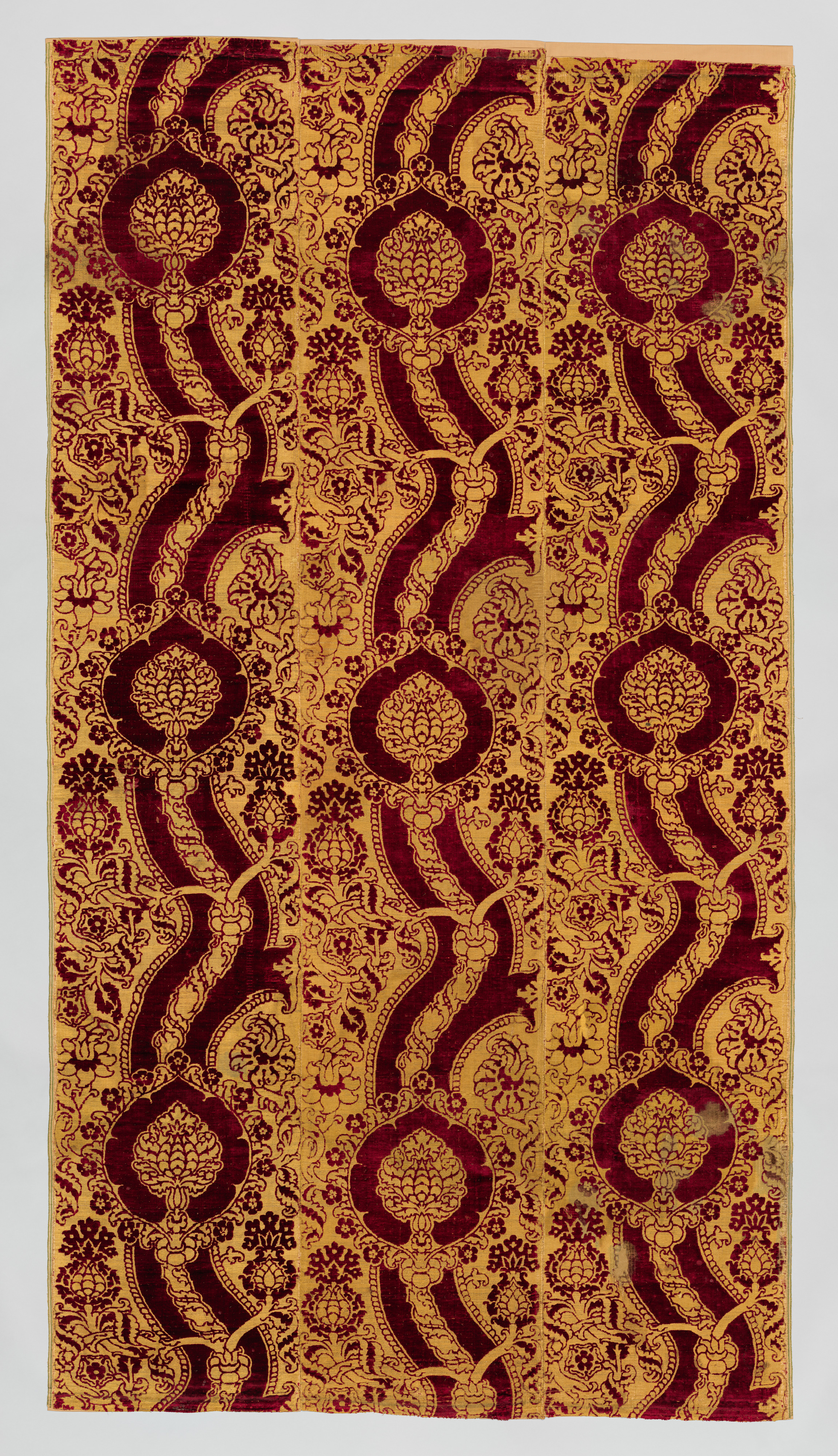
The traditional demarcation between interior furnishing and wearable architecture has long been a site of creative tension. For the SS26 season, Zoey Fashion Laboratory obliterates this boundary, presenting a standalone study that repositions the Furnishing Textile not as a mere source of inspiration, but as the very substrate of a new sartorial order. Sourced from the Global Frontier—a conceptual territory where artisanal heritage meets speculative fabrication—this material is a singular, uncompromising entity: a three-loom-width velvet cloth of gold, animated by an allucciolato effect and punctuated by bouclé loops of gilded silver metal-wrapped threads. This is not fabric; it is a structural system, a luminous matrix engineered for the future of the body.
The Metallurgical Grammar of Light and Shadow
The textile’s intrinsic complexity demands a radical rethinking of silhouette. The allucciolato effect—a shimmering, granular sparkle achieved through the strategic insertion of metallic wefts—creates a surface that is perpetually in flux. This is not a static sheen but a dynamic, photonic interference pattern. The velvet pile, typically associated with plushness and absorption, is here contested by the gilded silver loops. These bouclé elements act as micro-architectural anchors, catching ambient light and projecting a fragmented, almost holographic presence. The three-loom-width construction, a feat of industrial weaving, provides an unprecedented expanse of continuous material, allowing for monolithic, seam-free draping that defies conventional pattern cutting.
In a standalone avant-garde context, this textile dictates its own form. The weight of the metal-wrapped threads creates a natural, gravitational bias, compelling the designer to work with, not against, the material’s inherent stiffness. The result is a series of self-supporting volumes—cocoon-like torsos, cantilevered shoulders, and sculptural trains that stand away from the body as if charged with their own kinetic energy. The velvet’s pile direction, when manipulated, creates zones of matte absorption and specular reflection, generating a chiaroscuro effect that maps the body’s topography in real-time.
Futuristic Silhouettes: The Body as a Woven Enclosure
For SS26, the silhouette abandons the organic in favor of the biomorphic-geometric. The textile’s rigid opulence lends itself to forms that are simultaneously armored and fluid. Consider a long, columnar gown where the bodice is a single, unbroken piece of the cloth, folded and heat-set to create a rigid, corseted shell that flares into a train of metallic bouclé loops. The loops, here, are not decorative but functional—they act as tension-distribution points, allowing the garment to maintain its architecture without internal stays or boning. The allucciolato effect, concentrated at the shoulder line, creates a luminous epaulet, a nod to futuristic militarism softened by the velvet’s tactile warmth.
Another key silhouette is the inverted pyramid, where the textile is layered in radial pleats that expand from a micro-stitched waist. The gilded silver threads, when pleated, fracture into a thousand tiny mirrors, producing a moiré pattern that shifts with every step. The bouclé loops are used sparingly, clustered at the hem and cuffs, to create a heavy, oscillating fringe that counterbalances the volume above. This is not a garment for passive observation; it is a kinetic sculpture that demands a choreographed gait.
Structural Innovation: Beyond the Seam
The true innovation of this study lies in the seamless integration of textile and construction. The three-loom-width allows for a radical departure from the standard pattern block. Instead of cutting and rejoining, the fabric is manipulated through strategic slits, folds, and metallic-thread gussets that act as structural hinges. The velvet’s pile is used as a directional guide; by brushing the pile in opposing directions, the designer creates zones of optical density that simulate seam lines without any physical join. This technique, which we term “pile-vector tailoring,” produces garments that appear to have been grown, not manufactured.
The bouclé loops are deployed as a primary fastening system. Woven into the fabric at precise intervals, they function as both eyelets and loops, allowing for a lacing system of gilded silver cords that can be tightened or loosened to alter the garment’s silhouette in real-time. This introduces a parametric adjustability—the wearer becomes a co-architect, able to shift from a closed, cocoon-like form to an open, expansive one. The allucciolato effect, when concentrated at these adjustable points, creates a constellation of light that traces the wearer’s adjustments, turning the act of dressing into a performative event.
The Global Frontier: A Synthesis of Craft and Futurism
The origin of this textile—the Global Frontier—is not a geographic location but a conceptual nexus. It represents the convergence of ancient velvet weaving techniques from the Italian Renaissance, the metallic thread craftsmanship of Japanese kinran brocade, and the industrial-scale loom engineering of contemporary European mills. The allucciolato effect, historically achieved by hand-gilding individual threads, is here realized through a proprietary process of laser-etched metallic deposition on the silver core, ensuring consistent sparkle without the weight of traditional bullion. The bouclé loops, typically a rustic element, are refined through a micro-coiling technique that creates uniform, spring-like tension.
This synthesis results in a material that is at once opulent and austere, historical and futuristic. It rejects the trend of “sustainable luxury” in favor of durable transcendence—a textile meant to last generations, its metallic threads tarnishing gracefully, its velvet pile developing a patina of wear that becomes a record of its use. In the context of SS26, where digital ephemerality dominates, this textile stands as a monument to physical, haptic reality.
Conclusion: The Textile as a Manifesto
This standalone study for Zoey Fashion Laboratory is not merely a garment collection; it is a material manifesto. The Furnishing Textile, liberated from its domestic origins, becomes a statement on the future of haute couture: a future where fabric dictates form, where light is a structural element, and where the body is a chassis for architectural expression. The three-loom-width velvet cloth of gold, with its allucciolato shimmer and gilded silver loops, is not a passive surface but an active agent. It challenges the designer to think in three dimensions, to work with gravity and reflection, and to create garments that are as much about the space they occupy as the body they adorn. For SS26, Zoey Fashion Laboratory proves that the most radical future of fashion lies not in new technologies, but in the radical recontextualization of ancient craft.