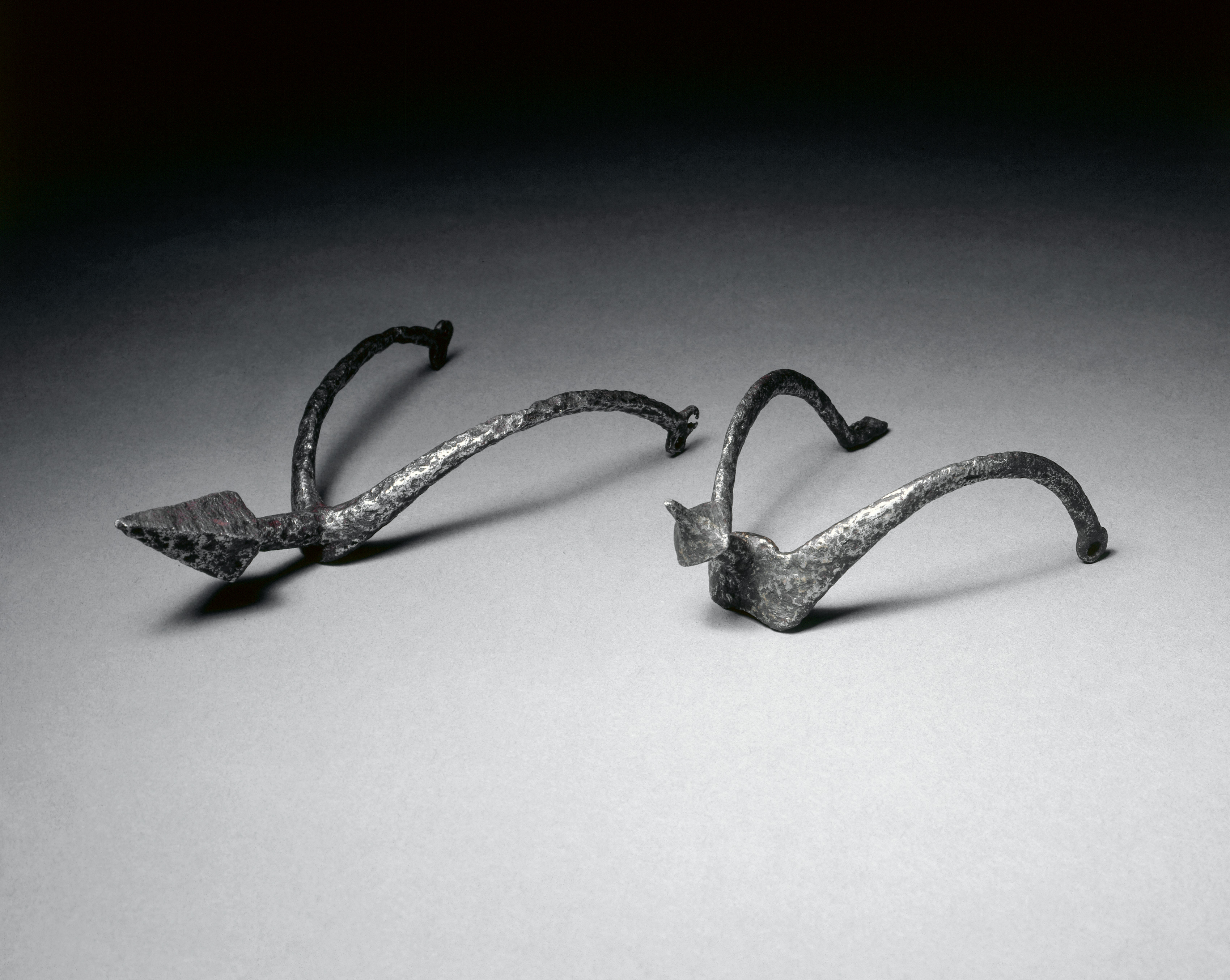
Pricked Spur: Deconstructing the Avant-Garde Steel Strand
At Zoey Fashion Lab, we approach the garment as a living system—a network of tensions, histories, and material dialogues. The subject of this analysis, Pricked Spur, is a singular artifact that demands a redefinition of textile logic. Originating from the arid plains and equestrian traditions of Spain, this object is not fabric in the conventional sense. It is forged from steel, yet its reference—a New DNA Strand—positions it as a biological metaphor, a genetic code for a new species of fashion. This analysis deconstructs Pricked Spur through its material origins, structural implications, and avant-garde potential, revealing how a spur becomes a blueprint for wearable architecture.
Material Origins: Spain's Equestrian Heritage Forged in Steel
The spur is an ancient tool of communication between rider and horse, a symbol of control, speed, and partnership. In Spain, particularly within the traditions of Andalusian horsemanship and bullfighting, the spur is not merely functional; it is a crafted emblem of status and precision. The Pricked Spur subverts this heritage. Its steel composition is cold, unyielding, and industrial—a stark contrast to the supple leathers and silks of traditional equestrian attire. Yet, this very hardness is its strength. Steel offers permanence, a refusal to decay. In the context of fashion, where garments are ephemeral, Pricked Spur introduces an element of the eternal. The "pricked" quality suggests a pointed, aggressive touch—a spur that does not merely guide but punctures, leaving a mark. This is not a passive accessory; it is an active agent of transformation.
The choice of steel is a deliberate departure from the organic. Where traditional textiles breathe and warp, steel remains rigid. This forces a reconsideration of how a garment interacts with the body. Pricked Spur does not drape; it imposes. It creates a new silhouette defined by negative space and structural tension. The reference to a New DNA Strand is crucial here. DNA is a double helix, a spiral of information. Pricked Spur, as a steel strand, suggests a re-coding of the body's own architecture. The spur becomes a rib, a spine, a exoskeletal element that rewrites the wearer's posture and movement. It is a genetic mutation in the fashion genome, introducing a metallic sequence into the soft tissue of apparel.
Structural Implications: The Steel Strand as Wearable Architecture
To analyze Pricked Spur as a "strand" is to view it as a linear, tensile element capable of forming complex structures. In Zoey Fashion Lab's methodology, we deconstruct the garment into its fundamental forces: tension, compression, and torsion. Steel excels in tension—it can be drawn into fine wires, coiled, or woven. The Pricked Spur likely manifests as a series of interconnected steel points, perhaps mimicking the serrated edge of a traditional spur wheel. These points, when arranged in a helical pattern, create a New DNA Strand that is both protective and aggressive. The structure offers armor-like defense while simultaneously inviting danger—the wearer is both shielded and armed.
This duality is central to the avant-garde. The steel strand does not follow the body's contours; it creates its own. It may emerge from a shoulder, coil around a waist, or extend from a collar like a metallic tendril. The "pricked" aspect ensures that any contact is felt. The garment becomes a conversation between the wearer and the environment, a boundary that announces presence. In terms of fabrication, this requires advanced metalworking techniques: laser cutting, precision welding, and perhaps even 3D-printed steel nodes. The strand must be articulated to allow for limited movement while maintaining its structural integrity. The result is a piece that is less clothing and more kinetic sculpture—a living, breathing exoskeleton that responds to the wearer's gestures.
Avant-Garde Potential: Rewriting the Fashion Genome
The avant-garde is not merely about shock; it is about proposing new paradigms. Pricked Spur, with its steel DNA, challenges the very definition of fashion. It asks: Can a garment be weaponized? Can it be permanent? Can it exist independently of the body, as a standalone artifact? The reference to a New DNA Strand suggests a biological imperative—a mutation that will propagate through future collections. This is not a one-off novelty; it is a prototype for a new species of textile. Zoey Fashion Lab sees Pricked Spur as a catalyst for exploring hybrid materials: steel woven with carbon fiber, steel embedded with conductive threads for digital interaction, or steel that corrodes over time to reveal a patina of wear.
In styling, Pricked Spur demands a minimalist context. It cannot be overwhelmed by prints or layers. The ideal presentation is against bare skin or stark, monochromatic fabrics—white cotton, black silk, raw linen. The steel strand becomes the focal point, a glinting interruption of softness. The wearer's movement becomes a performance: each step is a measured gesture, each turn a potential prick. This aligns with the avant-garde tradition of deconstruction, where garments are taken apart and reassembled in unexpected ways. Pricked Spur deconstructs the spur itself, removing it from the horse and attaching it to the human, thereby redefining the relationship between rider and ridden, controller and controlled.
Conclusion: The Steel Strand as a New Beginning
Pricked Spur is more than a fashion piece; it is a manifesto. Its steel origins in Spanish equestrian culture ground it in history, while its reference to a New DNA Strand propels it into the future. At Zoey Fashion Lab, we recognize this artifact as a fundamental building block for a new aesthetic language—one where hardness becomes beauty, where aggression becomes elegance, and where the garment is not a second skin but a new skeleton. The Pricked Spur invites us to reconsider the boundaries of the body and the materials that define it. It is a prick to the conscience of conventional fashion, a spur that drives us forward into unknown territory. As we continue to deconstruct and reconstruct, this steel strand will remain a core reference, a genetic marker in the evolution of avant-garde design.