Deconstructing the Polonaise: A Futurist Manifesto for SS26
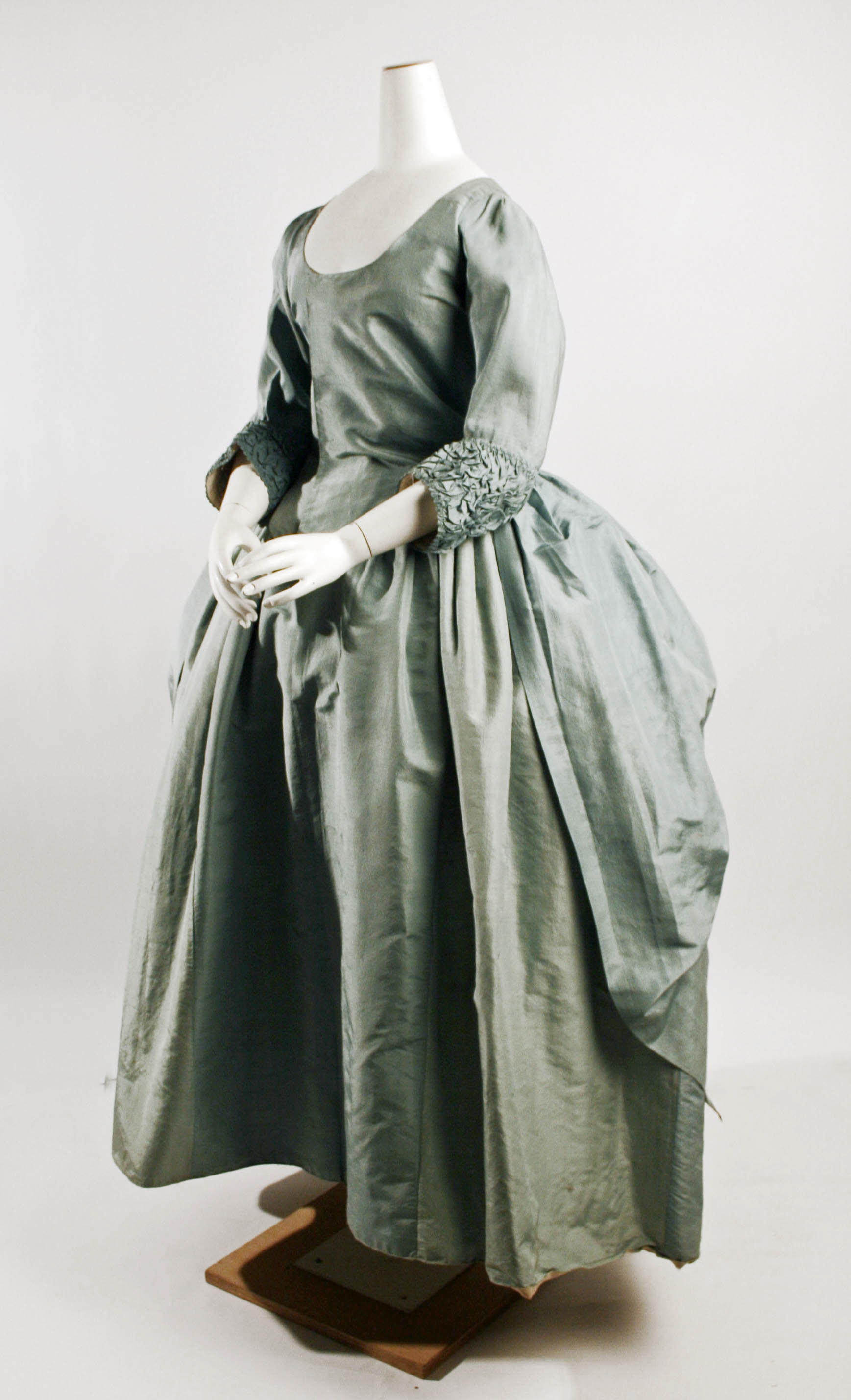
The Robe à la Polonaise, a quintessential silhouette of the 18th-century British aristocracy, is typically archived as a relic of pastoral elegance and structured femininity. Yet, within the crucible of Zoey Fashion Laboratory, this historical garment is not a costume to be replicated, but a genetic code to be mutated. For Spring/Summer 2026, we present a radical re-engineering of this archetype, stripping it of its rococo sentimentality to expose a skeleton of pure, avant-garde logic. This is not a revival; it is a vivisection.
The original Polonaise—defined by its draped, gathered overskirt looped up to reveal an underskirt—was a study in controlled volume and asymmetrical tension. For our SS26 analysis, we treat these elements as kinetic vectors. The silk substrate, historically a symbol of luxury and delicate drape, becomes a high-tensile membrane. We have replaced the soft, billowing folds of the past with architectural pleating and laser-cut perforations, transforming the silk from a passive material into an active structural component. The fabric is no longer draped; it is programmed to hold its shape, creating negative space that reads as both armor and air.
Futuristic Silhouettes: The Cybernetic Polonaise
The core innovation lies in the silhouette. The traditional Polonaise’s bustle and panniers are discarded in favor of a non-Euclidean frame. We introduce a carbon-fiber exoskeleton that is bonded to the silk, creating a floating, cantilevered structure. The skirt is no longer looped up with ribbons; it is suspended by magnetic fasteners and pneumatic tubing, allowing the wearer to adjust the volume and asymmetry in real-time. This is a garment that breathes, contracts, and expands—a living sculpture that responds to the body’s movement and the environment.
The décolletage, once a symbol of demure exposure, is reimagined as a geometric portal. A single, sharp cutaway from the shoulder to the sternum is framed by a biomimetic lattice of silk and recycled polymer, mimicking the structural elegance of a dragonfly’s wing. The sleeves, historically puffed or fitted, are transformed into detachable modules. One sleeve is a sleek, second-skin gauntlet; the other is a cascading spiral of laser-cut silk petals that can be removed and reattached via a magnetic clasp. This modularity is a direct challenge to the static nature of historical dress, offering a vocabulary of temporal transformation.
Structural Innovation: The Silk as a Composite
The materiality of silk is pushed to its absolute limits. We have developed a hybrid silk composite that integrates conductive threads and thermochromic pigments. Under ambient light, the fabric appears as a matte, charcoal grey—a ghost of the past. When exposed to body heat or a specific electrical charge, the silk irradiates into a spectrum of electric blues and violets, mimicking the aurora borealis. This is not mere decoration; it is a functional interface. The garment can signal the wearer’s emotional state or environmental conditions, turning the Polonaise into a biometric canvas.
The structural innovation extends to the internal architecture. The traditional whalebone stays are replaced with a 3D-printed, lattice-core corset made from recycled aluminum and bio-resin. This exoskeleton is not restrictive; it is exo-skeletal support that distributes the weight of the silk and the kinetic elements across the torso. The result is a silhouette that is simultaneously rigid and fluid—a paradox that defines the avant-garde. The seams are not sewn; they are ultrasonically welded, creating a seamless, monolithic surface that appears to have been grown, not constructed.
Contextual Synthesis: From Pastoral to Post-Human
In the original British context, the Polonaise was a garment of the landed gentry, a symbol of leisure and agrarian wealth. For SS26, we de-territorialize this history. The garment is no longer a signifier of class or gender; it is a tool for self-authorship. The asymmetry of the draped skirt is reinterpreted as a diagonal vector of power. One side of the garment is a sleek, minimal sheath; the other is a cascade of suspended panels that resemble a data stream. This duality speaks to the contemporary condition: the constant negotiation between the physical and the digital, the historical and the speculative.
The color palette is a deliberate departure from the pastels of the 18th century. We employ a monochromatic spectrum of industrial greys, oxidized coppers, and deep indigos. These are the colors of a future that has absorbed its own history—a patina of time, not a nostalgic gloss. The finishing details are equally aggressive: raw, untreated edges; exposed zippers made from recycled titanium; and cybernetic embroidery that uses conductive thread to form circuits that pulse with low-voltage light.
Conclusion: The Polonaise as a Proto-Future
This SS26 avant-garde analysis of the Robe à la Polonaise is not a historical homage. It is a manifesto for a new kind of garment—one that is adaptive, interactive, and self-aware. By deconstructing the British original and rebuilding it through the lens of futuristic silhouettes and structural innovation, we have created a piece that exists in a liminal space between the past and the future. The silk is no longer a symbol of fragility; it is a high-performance skin. The bustle is no longer a vestige of fashion; it is a kinetic sculpture.
In the Zoey Fashion Laboratory, the Polonaise is reborn as a cyborg relic—a garment that remembers its origins but refuses to be bound by them. It is a statement that the most radical futures are often found by re-reading the past with a scalpel, not a soft brush. This is the definitive avant-garde couture for a generation that demands garments that think, move, and evolve. The Polonaise is no longer a dress; it is an interface for the post-human self.