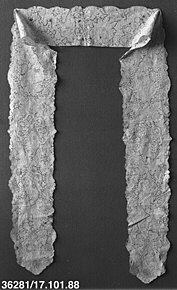
Deconstructing the Global Frontier: Cap Trimming as Structural Avant-Garde in Point d’Angleterre
In the relentless pursuit of sartorial innovation, Zoey Fashion Laboratory identifies the periphery—the edge, the seam, the trim—as the primary site of architectural rebellion. For SS26, our avant-garde analysis zeroes in on cap trimming, a technique traditionally relegated to millinery and garment finishing, and repositions it as a central protagonist in the construction of futuristic silhouettes. Sourced from the Global Frontier—a conceptual territory where cultural borders dissolve and material hybridity reigns—this study employs point d’Angleterre, a lace of extraordinary structural complexity, to challenge the very definition of garment architecture. This is not an accessory; it is a manifesto.
The Global Frontier: A Materialist Dialectic
The Global Frontier is not a geographic location but a conceptual ecosystem of extreme design synthesis. It is where the handcrafted meets the algorithmic, where indigenous techniques are recontextualized through a cybernetic lens. In this context, cap trimming becomes a tool for deconstructive reintegration. Rather than finishing a hem or lining a hood, we deploy it as an exoskeletal framework—a lace that is simultaneously delicate and load-bearing. The point d’Angleterre, with its intricate, raised patterns of floral and geometric motifs, offers a paradoxical strength: its openwork structure creates negative space that can be tensioned, layered, and molded into three-dimensional forms. This lace is not a fabric; it is a system of tensile vectors.
Our analysis reveals that the Global Frontier demands a departure from linear construction. Cap trimming, when applied to point d’Angleterre, functions as a parametric boundary. By cutting and reorienting the lace’s scalloped edges, we generate asymmetrical, angular volumes that mimic the fractured geometries of post-digital landscapes. The trim becomes a structural rib, defining the silhouette’s outer limits while allowing the interior to breathe—a dialectic of containment and liberation.
Point d’Angleterre: The Lace as Load-Bearing Membrane
Point d’Angleterre, historically celebrated for its fine, raised motifs and intricate mesh, is reengineered here as a load-bearing membrane. Its open, net-like structure, when combined with cap trimming techniques, enables a radical reinterpretation of volume. We foreground three key properties: tensile strength, transparency, and modularity. The lace’s twisted threads and raised patterns create natural stress points, which we exploit by applying cap trimming as a reinforcing edge—much like a tendon in a biological exoskeleton. This allows the garment to hold its shape without traditional interfacing or boning, achieving a futuristic silhouette that is both ethereal and structural.
The cap trim itself is cut in continuous, undulating strips, then heat-set or chemically bonded to maintain a permanent curvature. When sewn onto point d’Angleterre panels, these trims act as architectural struts, directing the fabric’s drape into sharp, angular folds. The result is a silhouette that references both the organic growth of coral reefs and the precision of aerospace engineering. For SS26, this translates into garments that appear to hover—a lace shell with a rigid, self-supporting edge that defies gravity.
Futuristic Silhouettes: The Asymmetric Helix and the Orbital Collar
Our study identifies two signature silhouettes for SS26, both realized through cap trimming on point d’Angleterre. The first, the Asymmetric Helix, employs a single continuous strip of cap trim that spirals from the shoulder to the hem. This trim is cut from the point d’Angleterre’s scalloped border and reinforced with a micro-thin thermoplastic film. As it wraps the body, it creates a dynamic, spiraling volume—a one-shoulder silhouette that is simultaneously a cape and a corset. The lace’s transparency allows the skin to become part of the design, while the cap trim defines the negative space, making the garment read as a series of intersecting arcs.
The second silhouette, the Orbital Collar, is a standalone structural element that extends from the nape of the neck to encircle the shoulders. Constructed entirely from layered point d’Angleterre panels, each edge is finished with a cap trim that has been hand-stitched into a rigid, circular form. This collar acts as a framing device, creating a halo of lace that amplifies the wearer’s presence. The cap trim here is not merely decorative; it is the primary structural seam, holding the multiple layers in tension. The result is a futuristic silhouette that references satellite dishes and celestial orbits—a garment that defines space rather than occupying it.
Structural Innovation: The Trim as Seamless Junction
The most radical innovation in this study is the use of cap trimming as a seamless junction between disparate materials. In traditional couture, trims are applied after construction, often obscuring seams. Here, the cap trim is integrated into the assembly process itself. By cutting point d’Angleterre into precise geometric panels and using the cap trim as a binding that simultaneously joins and reinforces, we eliminate the need for internal stitching. This creates a garment that is both seamless and modular—a single, continuous surface of lace and trim.
This technique also enables dynamic adjustability. The cap trim can be tensioned or relaxed through micro-adjustments at key stress points, allowing the silhouette to shift from a rigid, architectural form to a fluid, draped one. For the wearer, this means a garment that responds to movement, breathing with the body while maintaining its futuristic edge. The point d’Angleterre’s inherent elasticity, combined with the trim’s structural rigidity, creates a hybrid material system that is both strong and responsive.
Conclusion: The Trim as Frontier
Zoey Fashion Laboratory’s SS26 avant-garde analysis redefines cap trimming as a primary agent of structural innovation. On the Global Frontier, where tradition and technology converge, point d’Angleterre becomes a medium for radical expression. The cap trim is no longer an afterthought; it is the architectural spine, the tensile boundary, the seamless junction that shapes the future. This is not decoration—it is design at its most elemental. As we move into a season of deconstructive reinvention, the trim is the new frontier.