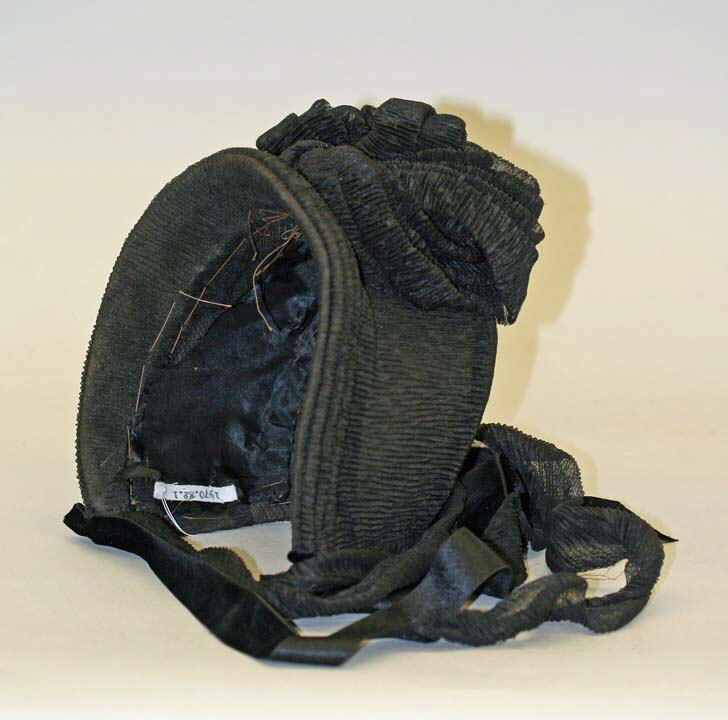
The Bonnet Deconstructed: An Avant-Garde Silhouette for SS26
In the lexicon of American fashion, the bonnet has long resided as a relic of pastoral nostalgia—a soft, utilitarian covering associated with infancy, agrarian modesty, or historical reenactment. For SS26, Zoey Fashion Laboratory seizes this archetype and subjects it to a rigorous, deconstructive intervention. The bonnet is no longer a quaint accessory; it becomes a locus of structural innovation, a futuristic statement that interrogates the boundary between the wearable and the sculptural. This analysis examines the transformation of the American bonnet, rendered in silk, into an avant-garde artifact of the coming season. The material’s inherent fluidity and luster are not merely preserved but weaponized, creating a tension between the traditional and the hyper-modern.
Deconstructive Genealogy: From Rural Cover to Urban Armature
The American bonnet’s origins—as a sun-shielding, face-framing device—are subverted in this SS26 study. Historically, its form dictated a passive relationship to the wearer: it shielded, enclosed, and softened. Zoey Fashion Laboratory’s approach inverts this logic. The bonnet becomes an active, aggressive structural element that redefines the wearer’s silhouette. The silk, typically associated with drape and delicacy, is engineered through thermal bonding and laser-cut seam allowances to hold rigid, cantilevered forms. The result is a silhouette that projects outward, forward, and upward, defying gravity and expectation. This is not a bonnet that sits upon the head; it is a bonnet that architects the head, transforming the cranium into a platform for angular, asymmetrical volumes.
The deconstruction operates on multiple levels. First, the traditional brim is excised and reimagined as a detached, floating visor that hovers millimeters from the face, secured by invisible magnetic closures. Second, the crown—historically a soft dome—is segmented into interlocking geometric panels, each articulated with micro-hinges that allow for kinetic movement. This segmentation creates a tessellated surface that catches light in unpredictable ways, exploiting silk’s natural sheen to produce a moiré effect. The bonnet thus becomes a living, breathing architectural model, responsive to the wearer’s motion and the ambient environment.
Material Alchemy: Silk as Structural Medium
The choice of silk is deliberate and paradoxical. In conventional fashion, silk connotes luxury, softness, and a yielding quality. For SS26, Zoey Fashion Laboratory subjects silk to a process of material alchemy, transforming it into a high-tensile, shape-memory fabric. Through a proprietary technique involving resin infusion and controlled heat-setting, the silk is rendered capable of holding sharp, creased folds and deep, volumetric pleats. This process does not sacrifice the material’s tactile sensuality; rather, it amplifies it, creating a surface that is at once rigid and pliable, cool and warm, matte and reflective.
The structural innovation lies in the interplay between these treated zones and untreated, fluid silk panels. A single bonnet might feature a rigid, origami-like peak constructed from resin-infused silk, while the side panels remain soft, cascading in a waterfall of natural drape. This juxtaposition creates a tectonic tension—a visual and tactile dialogue between the engineered and the organic. The bonnet’s interior is lined with a micro-perforated silk mesh, ensuring breathability and comfort despite its architectural ambition. The weight is distributed via a hidden carbon-fiber armature, invisible to the eye but essential for maintaining the silhouette’s integrity.
Futuristic Silhouettes: The Bonnet as Prosthetic Architecture
The SS26 bonnet is not a hat; it is a prosthetic extension of the wearer’s form, a wearable sculpture that redefines the human silhouette. The silhouette is characterized by three primary architectural gestures:
1. The Asymmetric Cantilever: The bonnet’s front brim extends in a single, sweeping arc that terminates at the right temple, creating a dramatic, unbalanced profile. This cantilever is supported by a hidden, adjustable strut, allowing the wearer to modulate the angle of projection. The effect is that of a bird in mid-flight, frozen in a moment of aerodynamic tension.
2. The Volumetric Crown: The crown is inflated into a series of nested, spherical volumes, achieved through internal pleating and strategic use of elasticated silk panels. This creates a silhouette that is simultaneously bulbous and structured, reminiscent of futuristic habitation modules or cellular organisms. The volumes are asymmetrically distributed, with the largest lobe positioned at the occipital region, counterbalancing the forward cantilever.
3. The Negative Space Interface: Between the bonnet’s rigid outer shell and the wearer’s head, a deliberate void is maintained. This negative space is not empty; it is a zone of visual and conceptual tension, suggesting a separation between the self and the garment. This interface is lined with a translucent, laser-cut silk lattice that casts shifting shadows onto the wearer’s face, creating a dynamic, ever-changing interplay of light and form.
Contextualization: The Bonnet in the SS26 Avant-Garde Landscape
In the broader context of SS26, the bonnet emerges as a counterpoint to the season’s prevailing trends of hyper-minimalism and digital wearability. While other houses pursue seamless, skin-tight second skins, Zoey Fashion Laboratory embraces the extravagant, the volumetric, and the intellectually provocative. The bonnet is a refusal of the body-conformist impulse; it is an assertion of the garment as an independent, sculptural entity that dictates its own spatial logic.
This study also engages with contemporary discourses around identity and protection. The bonnet, historically a symbol of modesty and concealment, is reimagined as a tool of empowerment and visibility. Its exaggerated silhouette demands attention, forcing the viewer to recalibrate their perception of the human form. The silk, with its luminous quality, becomes a medium for projecting an aura of otherworldly sophistication. The bonnet is not worn; it is inhabited, a portable architecture that transforms the wearer into a living monument to the future of fashion.
Conclusion: A Paradigm Shift in Headwear
Zoey Fashion Laboratory’s SS26 bonnet represents a definitive paradigm shift in the conceptualization of headwear. By deconstructing the American bonnet and reconstructing it through the lens of avant-garde structural innovation, the Laboratory has created a piece that is at once a tribute to historical form and a radical departure from it. The silk, treated as a dynamic structural medium, bridges the gap between the soft and the hard, the organic and the engineered. The futuristic silhouettes—asymmetric, volumetric, and negative-space-driven—redefine what headwear can be: not an accessory, but an autonomous, architectural statement. For the discerning avant-garde collector, this bonnet is not merely a garment; it is a manifesto, a declaration of intent for a season that demands bold, uncompromising vision.