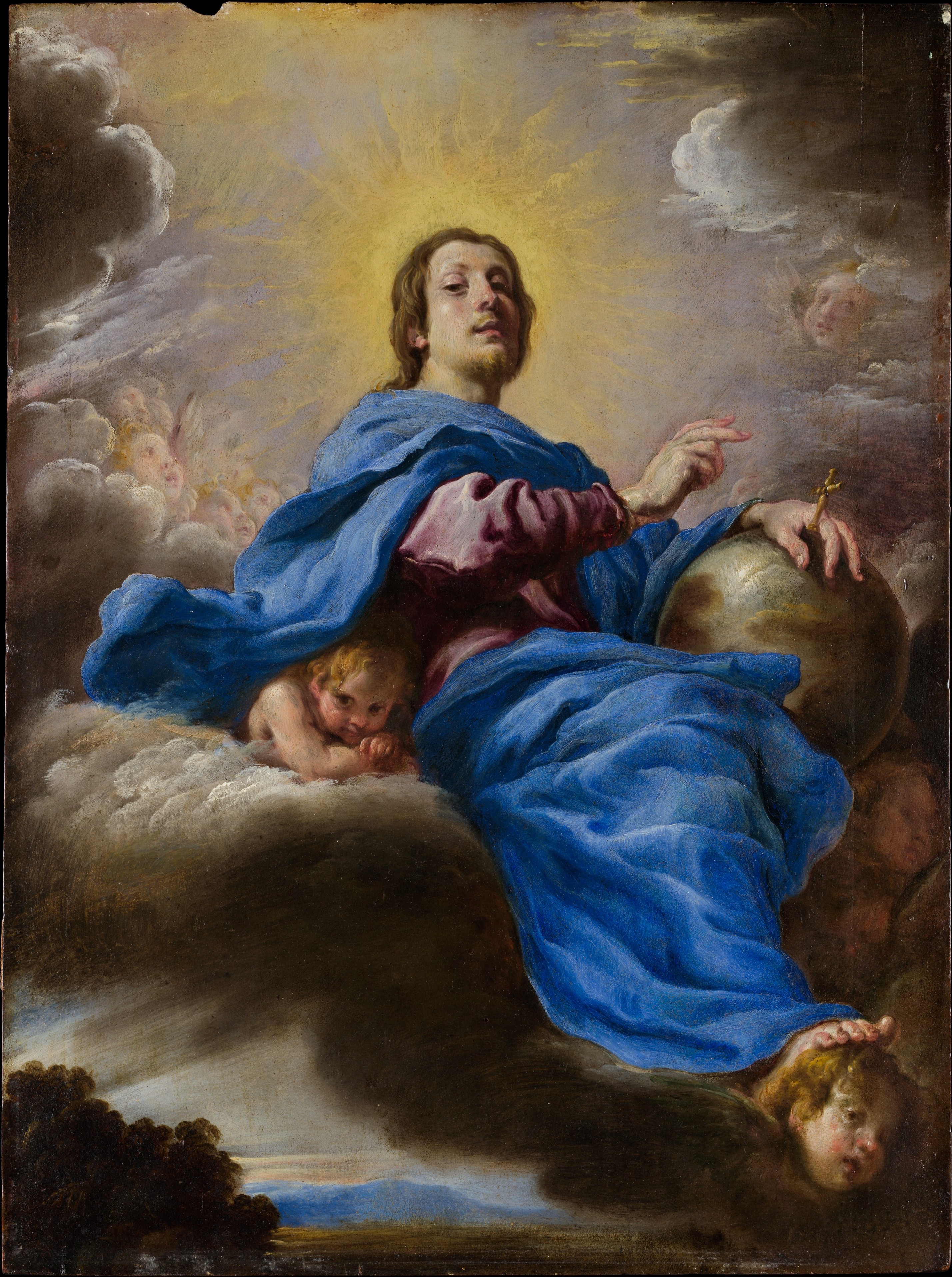
Salvator Mundi Recontextualized: The SS26 Deconstruction of Sacred Geometry
In the unyielding crucible of Zoey Fashion Laboratory’s SS26 collection, the Salvator Mundi—a global frontier artifact of oil on wood—emerges not as a relic of Renaissance piety, but as a blueprint for structural transcendence. This avant-garde analysis dissects the painting’s latent geometries, reinterpreting the Christ figure’s benediction and orb as catalysts for a new architectural silhouette. The work, long shrouded in provenance debates and market mystique, is stripped of its historical varnish to reveal a radical language of asymmetry, tensile force, and volumetric negation. For the Laboratory, this is not a homage; it is a vivisection of the sacred into the speculative.
The Orb as Structural Paradox: Weightlessness and Containment
The Salvator Mundi’s crystal orb—traditionally a symbol of dominion—is reimagined as a futuristic silhouette through the lens of material innovation. In SS26, this sphere is not a static emblem but a dynamic, load-bearing element. The Laboratory proposes a suspended orb motif integrated into garment architecture: a translucent, inflatable polymer sphere encased in carbon-fiber lattice, worn as a dorsal exoskeleton. This piece, anchored to the spine via tensile cables, creates a counterbalance to the wearer’s forward momentum, embodying a paradox of containment and liberation. The orb’s surface is treated with a photovoltaic film, charging micro-LEDs that pulse in sync with biometric data—a secular halo for the post-humanist subject. The structural innovation lies in the negative space between the orb and the body, a void that challenges traditional tailoring by defining form through absence.
The Benediction Gesture: Deconstructing the Sleeve as Ritual Limb
Christ’s right hand, raised in a two-fingered benediction, is deconstructed into a modular sleeve system that redefines the upper body’s relationship with space. The gesture’s diagonal axis is replicated through a series of articulated, segmented panels that extend from the shoulder to the wrist, each joint controlled by micro-servos. These panels can be programmed to assume the benediction pose—a silent, robotic blessing—or to collapse into a streamlined, second-skin silhouette. The material is a hybrid of liquid-crystal-infused organza and recycled aerospace-grade aluminum, offering both flexibility and structural rigidity. This design challenges the conventional sleeve’s role as a mere covering, transforming it into a performative limb that communicates through gesture, not fabric. The innovation is a kinetic architecture that blurs the line between garment and prosthesis.
Oil on Wood: The Palette of Decay and Renewal
The original medium—oil paint on walnut panel—undergoes a chromatic and textural transmutation in SS26. The painting’s chiaroscuro, with its deep umbers and luminous glazes, is translated into a layered, reactive textile system. The Laboratory employs a biodegradable, mycelium-based fabric dyed with iron oxide and carbon black, mimicking the oil’s patina. The surface is embedded with thermochromic microcapsules that shift from dark sepia to pale gold when exposed to body heat, evoking the painting’s restoration history. The wood grain is replicated through laser-cut, laser-welded panels of recycled oak veneer, bonded to a flexible mesh base. These panels are arranged in a cracked, fissured pattern that echoes the painting’s craquelure, creating a second skin that breathes and moves with the wearer. The structural innovation is a dynamic patina that evolves over time, each garment bearing the unique imprint of its user’s thermal history.
Provenance as Pattern: The Narrative of Ownership Unraveled
The Salvator Mundi’s contested provenance—from Charles I’s collection to the 2017 auction—is reimagined as a cartographic pattern woven into the garment’s lining. The Laboratory maps the painting’s ownership chronology onto a geometric, non-Euclidean grid, printed using a digital jacquard technique. Each owner’s location (Whitehall, Paris, St. Petersburg) is represented by a node, connected by lines of varying thickness that correspond to the time held. This pattern is visible only under ultraviolet light, a hidden narrative that challenges the wearer to question authenticity and value. The structural innovation lies in the reversible garment—one side presents the deconstructed orb and benediction as a public facade, while the reverse reveals this provenance grid as a private, introspective layer. This duality mirrors the painting’s own oscillation between divine and commercial realms.
Futuristic Silhouettes: The Asymmetric Torso and the Floating Hem
The SS26 collection’s silhouettes are defined by asymmetry and levitation, derived from the Salvator Mundi’s compositional tension. The torso is sliced along a diagonal axis—from the left clavicle to the right hip—creating a cut-out that exposes the orb exoskeleton beneath. The fabric on the opposite side is gathered into a series of suspended, cantilevered folds, held aloft by internal carbon-fiber struts. The hem is not a fixed line but a floating, undulating edge, achieved through a gradient of stiffness: the fabric transitions from rigid near the waist to fluid at the hem, creating an optical illusion of weightlessness. This is a direct response to the painting’s floating orb, which hovers in Christ’s hand without visible support. The structural innovation is a variable-stiffness textile that uses shape-memory alloys to adjust its drape in real-time, allowing the garment to morph from a severe, architectural form to a flowing, ethereal silhouette.
The Global Frontier: A Synthesis of Sacred and Secular
Finally, the global frontier context of the Salvator Mundi—a painting that has traversed continents and ideologies—is embodied in a modular, nomadic garment system. The collection includes a transformable cape that can be reconfigured into a tent, a shroud, or a display case for the orb exoskeleton. The cape’s fabric is a smart textile embedded with conductive threads that can project digital recreations of the painting onto its surface, creating an immersive, wearable gallery. This piece is designed for the stateless, hyper-connected individual—a citizen of the global frontier who carries their sacred symbols as mutable, ephemeral projections. The structural innovation is a self-supporting, expandable framework that allows the cape to stand independently, echoing the painting’s original function as a devotional object. In this synthesis, the Salvator Mundi is no longer a fixed image but a living, breathing system of meaning—a testament to Zoey Fashion Laboratory’s commitment to deconstructing the past to build the future.