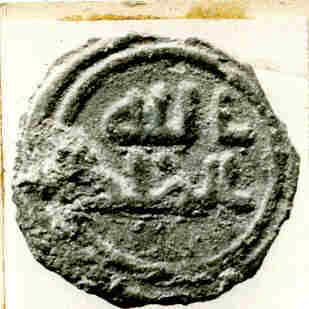
Deconstructing Currency: The Copper Coin as Avant-Garde Structural Catalyst for SS26
The global frontier is no longer a geographical expanse but a conceptual one, defined by the tension between value systems and material reality. For SS26, Zoey Fashion Laboratory interrogates the most primal unit of exchange—the coin—not as a symbol of wealth, but as a structural archetype. Specifically, we isolate the copper coin: a material of conductivity, oxidation, and historical weight. This analysis deconstructs the coin’s geometry, its patina, and its tactile density to propose a new language of futuristic silhouettes. The copper coin is not an ornament; it is a load-bearing element, a modular joint, and a catalyst for rethinking garment architecture.
The Geometry of Value: From Disc to Drape
The coin’s fundamental shape—a perfect, rigid disc—poses an immediate challenge to the fluidity of fabric. In avant-garde couture, this opposition is not a limitation but a generative force. The SS26 collection explores the coin as a pivot point for structural innovation. We move beyond appliqué to integrate the coin into the garment’s very skeleton.
Modular Armatures and Kinetic Joints
Copper coins, 0.5mm thick, are cold-forged into articulated hexagons that serve as modular joints for a new exoskeletal silhouette. Each coin is drilled with precision and connected via micro-alloyed copper wire, creating a chainmail-like lattice that can be reconfigured. The result is a transformable outer shell—a jacket that can be worn as a rigid cuirass or unclasped to form a fluid, undulating cape. The copper’s natural conductivity is harnessed for subtle thermal regulation, where the body’s heat activates a patina effect over time, making each garment a living document of its wearer.
Negative Space and the Void of Value
The coin’s value lies in its face, but its edge—the thin, often overlooked cylinder—becomes the primary architectural line. We laser-cut coins into concentric rings, creating negative-space silhouettes that mimic the concept of scarcity. A floor-length gown features a corset constructed from these rings, leaving the skin visible through the voids. The silhouette is deconstructed and reconstructed, with the rings acting as tension points that pull the fabric into sharp, angular folds. This references the coin’s history as a tool for measurement and exchange, here repurposed to measure the body’s geometry.
Material Alchemy: Copper’s Patina as a Narrative Tool
Copper is not static; it oxidizes, verdigris blooms, and it ages with intention. In the Zoey Fashion Laboratory, this is not a flaw but a core design principle. The SS26 collection embraces material temporality as a form of avant-garde storytelling.
Oxidation as Embroidery
Copper coins are treated with accelerated patination techniques—ammonia fuming, salt-water immersion, and heat application—to create a palette of burnt sienna, malachite green, and deep umber. These coins are then hand-stitched onto organza and silk organza using a technique we call “metallic pointillism.” The pattern is not fixed; over the season, the copper will continue to react with the wearer’s skin pH and ambient humidity, creating a unique, evolving surface. This transforms the garment from a static object into a performative artifact, where the coin’s oxidation becomes a diary of wear.
Structural Patina and Weight Distribution
The weight of copper—approximately 8.96 g/cm³—is exploited to create gravity-defying drapes. A series of coin-weighted panels are suspended from a titanium alloy shoulder frame, creating a silhouette that is both armored and ethereal. The coins are graded by thickness: 0.3mm for the upper torso, graduating to 1.0mm at the hem. This gradient creates a natural, cascading heaviness that pulls the fabric into sculptural folds, reminiscent of molten metal. The patina is deliberately uneven, with the most oxidized coins at the hem, suggesting a garment that has been submerged in time.
Futuristic Silhouettes: The Coin as Boundary Object
The SS26 silhouette is defined by asymmetry and fragmentation, echoing the coin’s dual nature as a unified whole and a divisible unit. We reject the conventional shoulder-to-hem line, instead proposing a fragmented architecture where the coin acts as a hinge between disparate forms.
The Coin-Collar and the Floating Spine
A standout piece is the “Coin-Collar”—a neckpiece constructed from 200 hand-hammered copper coins, each slightly convex, creating a series of reflective, dish-like surfaces. The collar extends 30cm from the neck, forming a protective halo that can be adjusted via copper wire tension. Below this, a sheer mesh bodice is anchored by a single, oversized coin at the sternum, which acts as a counterweight for a floating train of oxidized copper rings. The silhouette is vertical and monolithic, with the coin’s circularity disrupting the linear flow, creating visual pauses.
Deconstructed Trousers and Coin-Weighted Hemlines
Trousers are reimagined as deconstructed leg wraps, held together by coin-clasps at the hip, knee, and ankle. The coins are not merely decorative; they are functional fasteners, each one drilled and threaded with leather cord. The silhouette is aggressively asymmetrical—one leg is full-length and weighted with a coin-fringe that drags on the ground, while the other is cropped and bare. This imbalance references the coin’s role in trade: a unit that creates disparity. The copper’s warm tone contrasts with blackened steel and matte white polyurethane, creating a futuristic palette that is both industrial and archaeological.
Conclusion: The Coin as a Manifesto for SS26
In the Zoey Fashion Laboratory, the copper coin is not a symbol of monetary value but a structural manifesto. It challenges the designer to work with mass, conductivity, and time. The SS26 collection proposes a future where garments are not passive but active, reactive, and modular. The coin’s geometry—its circularity, its edge, its weight—becomes a new alphabet for deconstructive tailoring. By embracing oxidation and modularity, we create a couture that is self-documenting, where every scratch, every green stain, and every shift in weight tells a story of use. This is not fashion for the passive observer; it is a wearable system for the global frontier, where value is measured not in gold but in material intelligence and structural audacity. The coin is the pivot. The future is forged.