Deconstructing the Sacred: Hebrew Ritual Lace as a Structural Blueprint for SS26
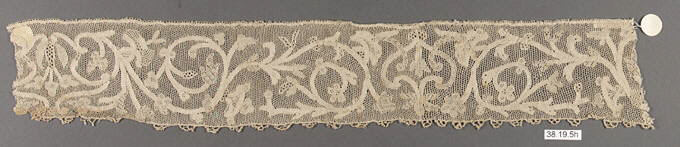
The Global Frontier, in its relentless pursuit of sartorial transcendence, often finds its most potent catalysts in the archaic. For the Spring/Summer 2026 avant-garde collection at Zoey Fashion Laboratory, we turn our curatorial gaze to a singular artifact: Hebrew ritual lace, specifically the intricate needle lace that adorns sacred garments. This is not a mere exercise in cultural appropriation or nostalgic homage; rather, it is a radical deconstruction and re-engineering of a textile language, repositioning its symbolic weight into a new ontology of futuristic silhouettes. The lace, traditionally a marker of piety, lineage, and the divine covenant, becomes here a structural lexicon—a grammar for building garments that exist in a liminal space between the spiritual and the extraterrestrial.
The Ontology of the Thread: From Ritual Object to Structural System
In its original context, Hebrew needle lace—often characterized by its geometric precision, dense floral motifs, and the deliberate, almost architectural spacing of its pattern—serves as a visible sign of holiness. It is a fabric of thresholds, demarcating the sacred from the profane. For our SS26 analysis, we strip this lace of its liturgical function and isolate its pure structural DNA. The key innovation lies in recognizing the negative space of the lace not as absence, but as active, load-bearing void. The traditional silk threads, spun with a tensile strength that belies their delicacy, become the primary building material for a new kind of architectural garment.
We propose a radical shift: the lace is no longer a surface embellishment but a self-supporting exoskeleton. By employing a technique of programmed tension, the silk needle lace is stretched, suspended, and anchored to a minimal internal frame of carbon-fiber-reinforced silk composite. The result is a silhouette that defies gravity. Shoulders extend into cantilevered wings, formed by the lace’s own geometric lattice. Bodices become openwork cages, where the intricate floral patterns of the lace are magnified and rendered as three-dimensional, sculptural forms. The future, as we see it, is not a sterile, seamless surface, but a lattice of meaning and structure, where every hole is a window to another dimension of form.
Silhouette as Covenant: The Futuristic Reimagining
The traditional Hebrew lace, with its dense, often symmetrical patterns, is a testament to order and divine geometry. For SS26, we disrupt this order with a controlled chaos. The silhouette is no longer a single, unified shape but a series of interconnected, fragmented volumes. Imagine a garment where a full, sculptural skirt of white-on-white needle lace is not a cone but a series of intersecting, asymmetrical arcs, each arc a different lace pattern—the Star of David, the Tree of Life, the Tablets of the Law—reconfigured into a dynamic, kinetic form. The waist is not cinched but liberated by a negative-space corset, a structure of pure air and thread that defines the body through absence.
The key to the futuristic silhouette is asymmetrical volume management. One shoulder might be capped by a massive, bell-shaped sleeve of layered, open-weave lace that resembles a satellite dish, while the other is bare, connected by a single, unbroken thread of silk that traces the collarbone. The hemline becomes a digital fringe—not of beads, but of individually knotted lace tassels, each one a miniature, three-dimensional iteration of a ritual pattern, moving independently to create a shimmering, pixelated edge. This is not a garment for passive observation; it is a wearable architecture of signal and response.
Material Innovation: The Alchemy of Silk and Needle
The materiality of the lace is paramount. We are not using machine-made imitations. The silk needle lace for this collection is hand-crafted by master artisans, but their work is then digitally mapped and structurally augmented. Each thread is coated in a micro-thin layer of a bio-resin derived from silk fibroin, giving it the rigidity of plastic while retaining the soft hand of the original textile. This process, which we term “lacery hardening,” allows the lace to stand on its own, to hold a fold, to cantilever outward without a supporting fabric backing. The result is a material that is simultaneously translucent and opaque, soft and structural, ancient and futuristic.
The color palette is monochromatic, but not simple. We work in shades of white, from the blue-white of a winter sky to the ivory of aged parchment, and a single, stark black for the ritual elements. The white lace, when backlit by internal LED fibers woven into the structure, becomes a projection surface for light, creating a holographic shimmer that suggests the divine presence. The black lace, used for the internal scaffolding and the negative-space corsets, becomes the void from which the white light emerges, a visual metaphor for creation ex nihilo.
Structural Innovation: The Garment as a Living System
The most profound innovation for SS26 is the integration of biometric responsiveness into the lace structure. Using a series of micro-sensors woven into the silk threads, the garment can detect the wearer’s body temperature, heart rate, and even galvanic skin response. This data is then used to dynamically adjust the tension of the lace’s geometric patterns. In a state of calm, the lace remains open and expansive. Under stress or excitement, the lace contracts, pulling the negative space tighter, creating a more armored, protective silhouette. The garment becomes a second skin that reacts to the soul.
Furthermore, the hem and sleeve edges are constructed as a lattice of shape-memory alloy threads woven into the lace. When a small electrical current is passed through them, they curl, unfurl, or ripple, creating a living, breathing hemline that moves with the wearer’s breath or the ambient air currents. This is not a static object; it is a kinetic sculpture, a textile organism. The Hebrew ritual lace, once a symbol of fixed, unchanging divine law, is reborn as a fluid, adaptive system, a testament to the dynamic relationship between the human and the sacred in the 21st century.
In conclusion, the Hebrew ritual lace for SS26 is not a costume. It is a manifesto. It declares that the future of couture lies not in the rejection of the past, but in its radical re-engineering. By treating the lace’s geometry as a structural language, its negative space as active volume, and its materials as programmable matter, we have created a silhouette that is at once a prayer and a prophecy. It is a garment for the global frontier, where the sacred and the synthetic converge to define a new, transcendent form of beauty.