Deconstructing the Avant-Garde: The Asante Goldweight as a Narrative Artifact
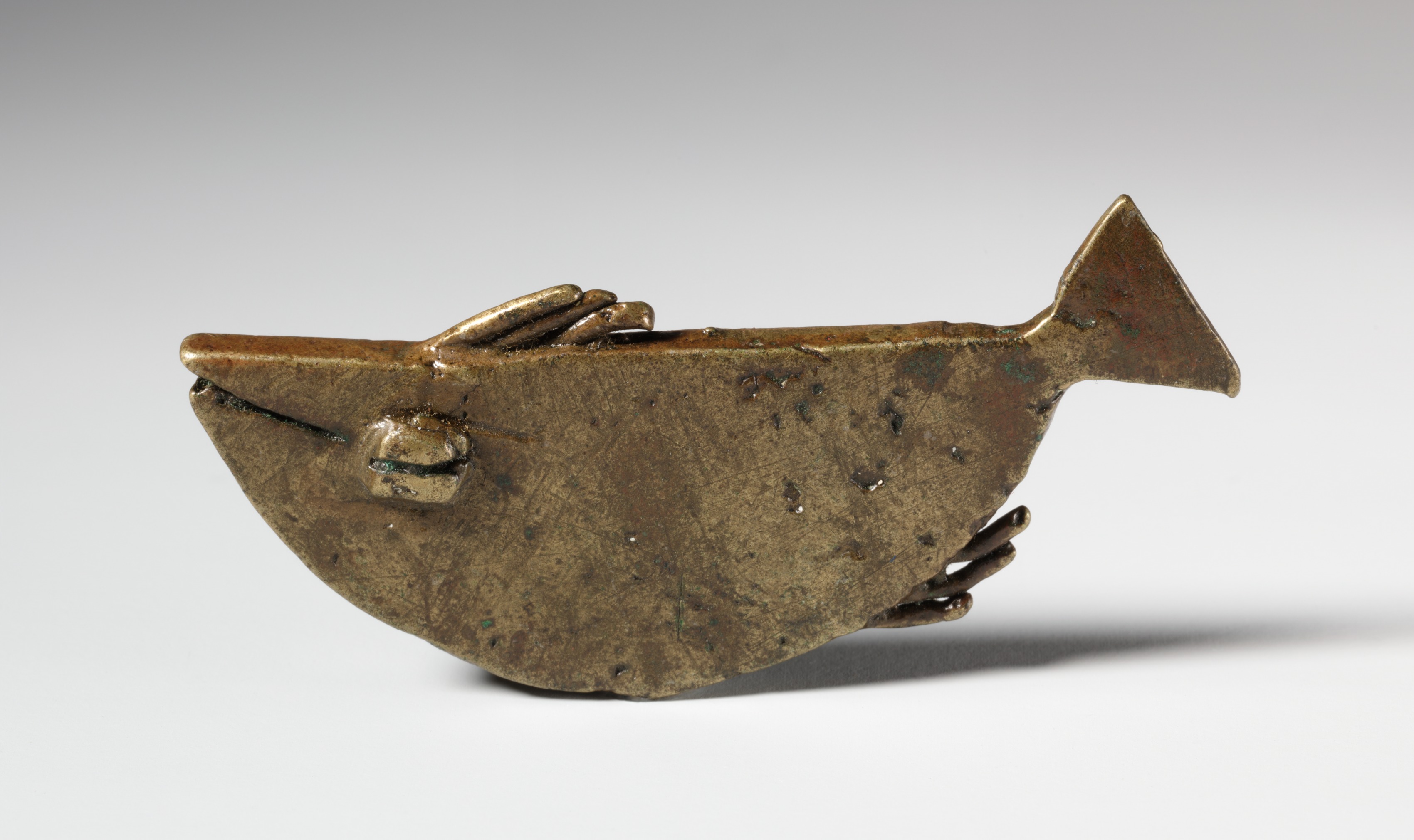
At Zoey Fashion Lab, we engage in a practice of radical deconstruction, stripping objects of their original context to reveal latent narratives and aesthetic potentials. The subject of this analysis—a small, copper-alloy goldweight from the Asante Kingdom of Ghana, known as an abrammuo in the shape of a fish—presents a profound challenge and opportunity. This object, typically a tool for measuring gold dust, is recontextualized through an avant-garde lens, drawing a parallel to the archive resonance of a Mirror with Split-Leaf motif. This resonance juxtaposes a reflective, gilded surface with the narrative depth of a funerary relief, forcing us to consider the goldweight not as a static relic, but as a dynamic interface between economic pragmatism, spiritual symbolism, and radical materiality.
I. The Object as a Micro-Economy of Meaning
The technical composition of this artifact—copper alloy—is the first layer of deconstruction. While goldweights are named for their function, their materiality speaks to a sophisticated metallurgical tradition. The goldweight is not gold; it is a surrogate, a stand-in for value. This is a crucial avant-garde move: the object signifies wealth without being wealth itself. The fish form, rendered in a stylized, almost abstract geometry, is not a mere representation. In Asante culture, the fish is a potent symbol of fertility, abundance, and the life-giving force of water. Yet, in the context of trade, the fish goldweight becomes a unit of measure, a quantifier of value. This duality is the core of its avant-garde potential.
The avant-garde fashion designer does not simply use a goldweight as a pendant or a print. Instead, we deconstruct its functional logic. The fish is a container of value, but its value is contingent on the gold dust it measures. In our lab, we ask: What if the form itself becomes the value? What if the fish is not a measure of gold, but a measure of narrative weight? The copper alloy patina, with its greenish-brown hues, becomes a textural element that speaks to time, to oxidation, to the decay of meaning. This is the archive resonance—the fish is not a pristine object but a weathered witness to centuries of exchange, power, and belief.
II. The Mirror and the Relief: A Dualistic Reading
The reference to the Mirror with Split-Leaf is not accidental. This imagined artifact—one side a polished silver mirror with gold-inlaid palm leaves, the other a stone sarcophagus with a narrative relief—provides a structural framework for reading the goldweight. The mirror side represents surface, reflection, and immediate perception. The goldweight’s shiny, polished surface (when new) would have caught the light, reflecting the wealth of its owner. It is a tool of transaction, a surface for agreement. The split-leaf motif, a common Asante symbol of growth and renewal, is here rendered in gold—a permanent, incorruptible material. This is the avant-garde gesture of surface: the goldweight’s form is a mirror of cultural values, a polished surface that reflects the society that created it.
Conversely, the relief side of the mirror represents depth, narrative, and hidden meaning. The fish goldweight, when turned over, reveals its underside—often a simpler, less detailed form. But in our deconstruction, we imagine the underside as a stone relief, a frozen narrative. The fish, in Asante cosmology, is also a symbol of the soul (sunsum), which can travel between worlds. The goldweight, then, is not just a tool but a threshold object, a portal between the material world of trade and the spiritual world of ancestors. The avant-garde designer exploits this duality: the fish becomes a wearable mnemonic device, a piece that carries the weight of history on its surface and the weight of myth in its form.
III. Materiality and the Avant-Garde: Copper Alloy as a Radical Choice
The choice of copper alloy over gold is a deliberate act of subversion. In the context of luxury fashion, gold is the ultimate signifier of value. But the avant-garde rejects this hierarchy. Copper alloy, with its susceptibility to patina, its warmth, and its historical association with both utility and ornament, becomes a material of resistance. It is a democratic metal, used by artisans across cultures for centuries. In the Asante context, the goldweight’s copper alloy composition was a practical choice—it was durable, castable, and could be patinated to resemble gold. But in our lab, we see this as a proto-avant-garde move: the object pretends to be what it is not, challenging the viewer’s assumptions about value.
The patina itself is a narrative agent. Each scratch, each discoloration, is a record of use. The avant-garde fashion piece does not hide these marks; it amplifies them. Imagine a garment that incorporates a cast of the fish goldweight, but the cast is made from oxidized copper, with a deliberately rough, unfinished surface. This is not a precious object; it is a witness. The garment becomes a body archive, carrying the weight of the goldweight’s history. The fish’s form, now abstracted through casting, becomes a repeating motif that suggests both movement (the fish swimming) and stasis (the goldweight’s fixed form). This tension is the essence of the avant-garde: the object is both a fragment of the past and a projection of the future.
IV. The Avant-Garde as an Act of Recontextualization
The final layer of analysis is the act of recontextualization itself. The goldweight, removed from its original economic and ritual context, becomes a floating signifier. In the avant-garde fashion lab, it is not a tool for weighing gold but a tool for weighing meaning. The fish form, now divorced from its Asante symbolism, can be re-inscribed with new meanings: migration, fluidity, survival. The copper alloy, once a humble material, becomes a statement of anti-luxury, a rejection of the fashion industry’s obsession with precious materials.
This recontextualization is a political act. It acknowledges the colonial history of gold extraction in West Africa, where goldweights were used to measure the very substance that fueled European greed. By elevating the goldweight to the realm of high fashion, we are not appropriating but amplifying. We are saying: this object, this fish, this copper alloy, carries the weight of a civilization. It is not a decorative trinket but a philosophical artifact. The avant-garde design, then, is not about the object itself but about the resonance it creates—the echo of the mirror’s split-leaf, the chill of the stone relief, the warmth of the patina.
V. Conclusion: The Fish as a Threshold
In the Zoey Fashion Lab, the Asante goldweight in the form of a fish is not a historical curiosity. It is a blueprint for avant-garde practice. It teaches us that value is not inherent but constructed, that materials are not neutral but narrative, and that the smallest object can contain the weight of an entire culture. The fish goldweight, with its copper alloy body and its dual life as a tool and a symbol, becomes a threshold—a point of transition between the past and the future, between the economic and the spiritual, between the polished surface and the buried relief. Our deconstruction is not an act of destruction but of revelation. We strip away function to reveal form, strip away history to reveal potential. The fish swims through time, and in our hands, it becomes a wearable archive, a piece that carries the resonance of the mirror and the weight of the stone.