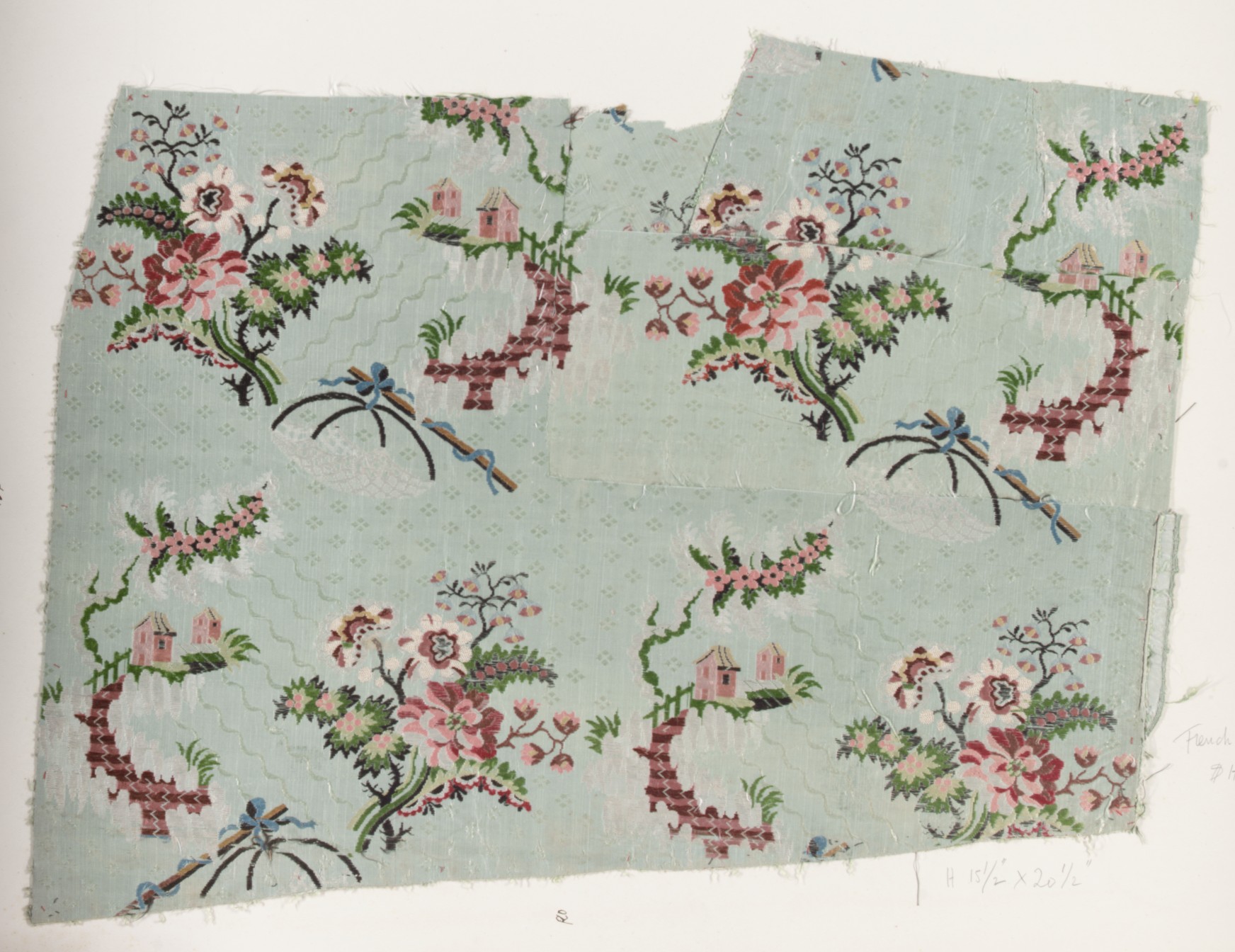
Fragment: The Deconstructed Silhouette as a Structural Manifesto for SS26
In the relentless pursuit of the new, the avant-garde designer must often look to the broken, the incomplete, and the deliberately unfinished. For Zoey Fashion Laboratory’s SS26 collection, the concept of Fragment emerges not as a concession to decay, but as a radical architectural principle. This is not a study in random tears or careless cuts. It is a calculated, high-precision exploration of how a single material—silk—can be engineered to embody both fragility and futuristic strength. The fragment, in this context, becomes the primary unit of construction, a cellular building block that redefines the very notion of a garment’s silhouette.
Deconstructing the Global Frontier: Silk as a Medium of Dislocation
The origin of this study is the Global Frontier—a conceptual space where geography dissolves into a network of overlapping, non-linear influences. Silk, historically a thread of trade routes and cultural exchange, is here stripped of its traditional connotations of luxury and drape. Instead, it is treated as a structural membrane, a material to be fractured, layered, and reassembled into non-Euclidean geometries. The laboratory’s process begins with the deliberate fragmentation of the silk yardage. Panels are laser-cut into irregular, tessellating shards, each edge precision-fused to prevent fraying, creating a hardened, almost ceramic finish. This transforms the silk from a fluid textile into a series of rigid, interlocking components.
The result is a silhouette that defies the body’s natural contours. Rather than following the curves of the torso, the fragmented silk creates negative space—voids between the shards that expose the skin in unexpected, architectural intervals. This is not the passive exposure of a cutout, but an active, structural void. The garment breathes through its own absence. The Global Frontier influence manifests in the asymmetry of these fragments; they do not mirror each other, but rather reference the disjointed, multi-perspectival nature of a globalized consciousness. A left sleeve might be composed of seven sharp, overlapping fragments, while the right side is a single, continuous panel that abruptly terminates in a jagged edge.
Futuristic Silhouettes: The Architecture of the Incomplete
The SS26 collection’s silhouette is defined by what we term “incomplete volume.” Traditional couture seeks to contain the body within a perfected shell. Here, the body is the catalyst for the garment’s final form. The silk fragments are suspended from a micro-engineered, carbon-fiber understructure that is barely visible. This exoskeleton, rather than the silk itself, provides the garment’s primary architecture. The silk shards are then attached at specific stress points, creating a kinetic, floating effect. When the wearer moves, the fragments shift independently, creating a constantly evolving silhouette—a living sculpture of broken planes.
One of the most radical propositions is the “Fragment Vestige”—a top that appears to be in a state of perpetual collapse. The shoulders are defined by a single, large silk shard that curves over the deltoid, while the front torso is a cascade of smaller, overlapping triangles that seem to be dissolving downward. The back is entirely open, save for three vertically suspended fragments that trace the spine. This is not a garment of comfort; it is a garment of provocative tension. The silhouette is deliberately unbalanced, forcing the eye to move across the body in a non-linear, disorienting path. The future of the silhouette, as posited by this study, is not in seamless integration, but in the aesthetics of disconnection.
Structural Innovation: Engineering the Unstable
The material innovation of this study lies in the manipulation of silk at the molecular level. Through a proprietary process called “Cryo-Fracture Weaving,” the silk fibers are treated with a thermosetting resin that is activated at sub-zero temperatures. The fabric is then struck with precision-milled, cold-forged steel dies, creating micro-fractures that are not random but follow a predetermined, algorithmic pattern. The result is a textile that is both brittle and resilient—it will not tear under tension, but it will hold a sharp, permanent fold. This allows for the creation of origami-like pleats that are frozen in time, impossible to achieve through traditional heat-set methods.
The structural innovation extends to the joining of fragments. Traditional seams are abandoned in favor of magnetic coupling. Each silk shard is backed with a thin, flexible magnetic substrate. This allows the fragments to be temporarily attached, detached, and re-arranged by the wearer, making each garment a customizable, interactive system. A skirt, for example, can be worn as a full, sweeping column of overlapping shards, or the lower fragments can be removed to create a sharp, asymmetrical hemline that ends mid-thigh. This modularity is a direct response to the fluid, non-permanent nature of the Global Frontier identity. The garment is never finished; it is always in a state of becoming.
The Avant-Garde Imperative: Fragment as a New Language
To conclude this analysis, the Fragment study for SS26 is not merely a formal exercise in deconstruction. It is a philosophical declaration. In an era of information overload and fragmented attention, the garment must mirror the fractured nature of contemporary perception. Silk, the most historically continuous of luxury fibers, is here used to embody discontinuity. The futuristic silhouette is not about streamlined efficiency, but about the poetry of broken lines. The structural innovation is not about invisible construction, but about making the process of assembly and disassembly visible and interactive.
Zoey Fashion Laboratory’s avant-garde proposition is clear: the most compelling future of fashion lies in the mastery of the fragment. It is through the deliberate, controlled, and architecturally precise use of the broken piece that we can construct a new, more honest, and more dynamic relationship between the body, the material, and the world. The Fragment is not the end of the garment; it is its most potent beginning.