Deconstructing the Prism: A Mineralogical Manifesto for SS26
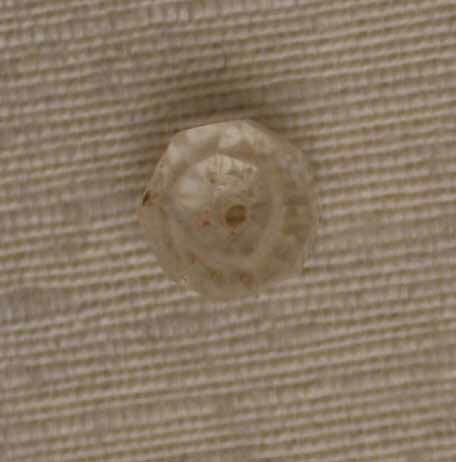
In the lexicon of adornment, the bead represents a primordial unit of expression. For Zoey Fashion Laboratory’s SS26 inquiry, we eschew this historical baggage to posit the bead not as ornament, but as architectural node. Our subject, drawn from the conceptual "Global Frontier"—a liminal space of geological and cultural extraction—is the rock crystal. This is not the crystal of mysticism, but one of ruthless clarity, structural integrity, and refractive agency. This standalone study, "Prismatic Tectonics," interrogates the crystal bead as the foundational element for a new sartorial geology, forging garments that are less worn and more inhabited—a wearable exoskeleton of light and fracture.
From Ornament to Exoskeleton: The Structural Paradigm Shift
The avant-garde mandate necessitates a complete ontological rupture. Here, the rock crystal bead undergoes a radical transubstantiation. It is enlarged, faceted with algorithmic precision, and hollowed to reduce mass while amplifying refractive surface area. It ceases to be a decorative afterthought and becomes the primary structural component. Imagine interlocking polyhedra—dodecahedrons, irregular tetrahedrons—fabricated from polished rock crystal and aerospace-grade polymers, forming jointed, articulated chains. These chains operate as the "fabric" itself, a rigid yet flexible mesh that constructs silhouette from the void outward. The garment’s form is dictated by the kinetic and optical properties of its crystalline lattice, creating silhouettes that are inherently angular, fragmented, and dynamically light-responsive.
This approach births the "Exoskeletal Dress," a torso piece comprising thousands of these modular crystal units, connected via nearly-invisible titanium filaments. The dress holds its own architecture, standing away from the body at key points to create negative space—a crystalline cavern around the form. Movement creates a symphonic cacophony of light and soft collision, a literal embodiment of tectonic shift. The silhouette is simultaneously protective and exposing, a fortress of transparency.
Silhouette as Refractive Field: The Optics of Form
SS26’s futuristic silhouette is not merely a shape, but a behavioral study of light. Rock crystal’s inherent refractive index becomes the designer’s most potent tool. Garments are engineered to capture, bend, and project light, effectively painting the wearer’s environment onto their form. The "Diffraction Coat" utilizes bead clusters with laser-etched internal fractures, worn over a minimalist base. As the wearer moves, these clusters cast intricate, ever-changing geometric shadows and rainbows across the body and surrounding space, dissolving the solidity of the human form into a walking holographic event.
Furthermore, we introduce the concept of "Phantom Volume." Through strategic placement of convex and concave crystal beads, light is manipulated to create optical illusions of volume where none physically exists. A lean, columnar dress can appear to have a dramatic, distorted bustle or wing-like appendages purely through this play of refraction. The silhouette becomes unstable, ephemeral, and context-dependent, challenging the very perception of garment shape. It is fashion as perceptual architecture.
Material Dialectics and Kinetic Architecture
True innovation lies in contradiction. The stark, mineral hardness of rock crystal is placed in deliberate tension with supple, biotechnological substrates. Beads are partially embedded or suspended within sheets of lab-grown mycelium leather or translucent silicone membranes. This creates a dialectic of rigidity and fluidity, where crystalline structures appear to erupt from or be consumed by a second skin. The "Lithic Bloom Gown" features a skirt where crystal beads start densely at the hip, gradually dispersing and becoming isolated "islands" on a flowing, liquid-like train, mimicking geological sedimentation.
Kinetic innovation is paramount. We have developed a "responsive joint" system where individual crystal beads are connected via shape-memory alloy links. Programmed to react to body heat, atmospheric humidity, or specific light frequencies, these joints can cause sections of the garment to slowly articulate, open like crystalline petals, or contract defensively. A shoulder piece might autonomously reconfigure its facets throughout the day, making the garment a living, responsive ecosystem. This is not static couture; it is wearable, kinetic sculpture with a behavioral algorithm.
Conclusion: The New Geological Body
Zoey Fashion Laboratory’s "Prismatic Tectonics" study for SS26 concludes with a definitive statement: the future of avant-garde form lies in mineral intelligence. By deconstructing the bead to its essential geometric and optical principles, we have forged a new design language. The rock crystal, sourced from the conceptual Global Frontier, becomes the seed for garments that are architecturally autonomous, perceptually unstable, and environmentally interactive. These creations transcend seasonal trend to propose a new relationship between body and covering—one of dynamic coexistence, where clothing is a crystalline shell, a refractive interface, and a hard, brilliant proof of concept for fashion’s potential as structural philosophy. The silhouette of tomorrow is not drawn; it is calculated, faceted, and brought to light.