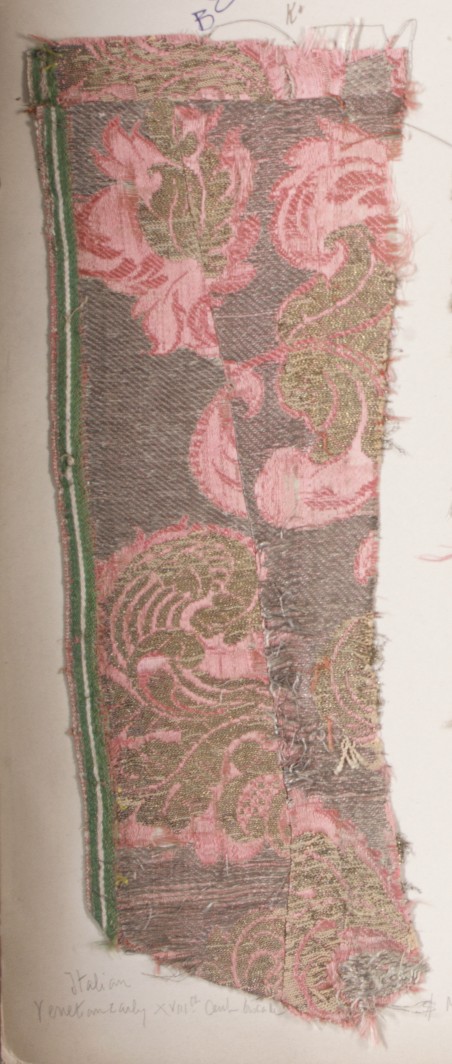
The Fragment as Architecture: Deconstructing the SS26 Avant-Garde Silhouette
In the relentless pursuit of the new, the avant-garde finds its most potent language not in the complete, but in the broken. For the SS26 season, Zoey Fashion Laboratory presents a definitive study on the fragment, a thesis that reimagines the garment not as a unified whole but as a dynamic assembly of displaced parts. Drawing from a global frontier of conceptual thought and material innovation, this collection employs silk and metal thread to construct a new lexicon of structural possibility. The fragment, in this context, is not a signifier of loss or decay; rather, it is a deliberate act of architectural rebellion, a method for generating silhouette that exists in a state of perpetual becoming.
The Dialectic of Silk and Steel: Material as Conceptual Scaffold
The choice of materials—silk and metal thread—is far from arbitrary. It embodies the core tension of the fragment: the ephemeral versus the eternal, the fluid versus the rigid. Silk, with its inherent luminosity and drape, represents the organic, the body’s own mutable architecture. It is a material of softness and surrender. Yet, when intersected with metal thread, it undergoes a radical transformation. The metal thread does not merely embellish; it structures. It acts as a tensile armature, a system of internal scaffolding that holds the fragment in a state of arrested collapse. This is not a decorative interplay but a structural dialogue. The silk becomes a skin stretched over a metallic skeleton, each fragment a discrete, load-bearing element. The resulting textile is a paradox: it flows and it stands, it yields and it resists. This dialectic is the foundational principle for every silhouette in the collection.
From Displacement to Silhouette: The Fragment as Modular System
The traditional garment relies on continuity—seams that connect, panels that harmonize. The avant-garde fragment rejects this. Instead, it proposes a modular system of displaced volumes. Consider a jacket that is not a single piece but a constellation of three separate, non-contiguous panels. One panel, anchored by a metal-thread corsetry structure, suspends from the right shoulder, its silk cascading into a sharp, asymmetrical point. A second panel, entirely detached, floats across the left hip, held in place by a hidden, magnetic armature woven from the metal thread. A third panel, a mere sliver of silk, wraps the nape of the neck like a metallic collar. The body is not clothed; it is navigated. The silhouette is not defined by the garment’s outline but by the negative spaces between these fragments. The eye traces the gap, the void, the interruption. This is the futuristic silhouette—not a smooth, aerodynamic form, but a jagged, algorithmic composition, as if the digital world had been physically rendered.
Structural Innovation: The Seam as Rupture, the Thread as Joint
In this collection, the seam is no longer a point of union but a site of rupture. Traditional construction seeks to hide its joins; here, they are celebrated as the locus of the fragment. The metal thread is the protagonist of this innovation. It is used not only as a woven element but as a free-standing structural joint. Imagine a dress where the skirt is composed of multiple, overlapping silk shards, each one connected to the next not by a continuous stitch, but by a single, taut metallic thread that acts as a tension cable. The shards do not touch; they hover, their edges raw, their relationship defined by the tensile strength of the thread. This creates a kinetic, almost holographic effect. As the wearer moves, the shards shift, the gaps widen and contract, and the silhouette reconfigures itself in real-time. This is structural innovation at its most radical: the garment is not a static object but a responsive system, a living fragment of a larger, unseen whole.
The Global Frontier: A Cartography of Disruption
The fragment is not merely a form; it is a philosophical position rooted in a global frontier of thought. This collection draws from the aesthetics of deconstruction pioneered in the late 20th century, but pushes it into a new, post-digital territory. The fragment here is a critique of the totalizing system, whether in fashion, architecture, or global culture. By refusing to present a complete, coherent garment, the collection challenges the viewer to complete the picture, to engage in an act of active perception. The silk, sourced from a global network of artisans, represents the fluidity of cultural exchange, while the metal thread, a product of industrial precision, represents the rigid systems of production that often constrain creativity. The fragment becomes a cartographic tool, mapping the tensions between the local and the global, the hand and the machine, the organic and the synthetic. Each garment is a territory of disruption, a place where the map of traditional fashion is torn and reassembled.
Conclusion: The Necessity of the Fragment
For SS26, Zoey Fashion Laboratory asserts that the fragment is not a crisis but a necessity. In an era of information overload and fractured identities, the complete, seamless garment feels like a lie. The avant-garde silhouette must reflect the reality of the present: a world of partial views, interrupted narratives, and constant reconfiguration. By employing silk and metal thread in a structural dialectic, this collection demonstrates that the fragment can be more powerful than the whole. It offers a silhouette that is unfinished, open, and perpetually future-facing. The garment does not end at its hem; it continues into the space around the wearer, inviting interaction and reinterpretation. This is the definitive avant-garde statement: that in the act of breaking, we find the most profound architecture for the future.