Deconstructing the Archive: A Fragment of Fes Embroidered Furnishing Textile
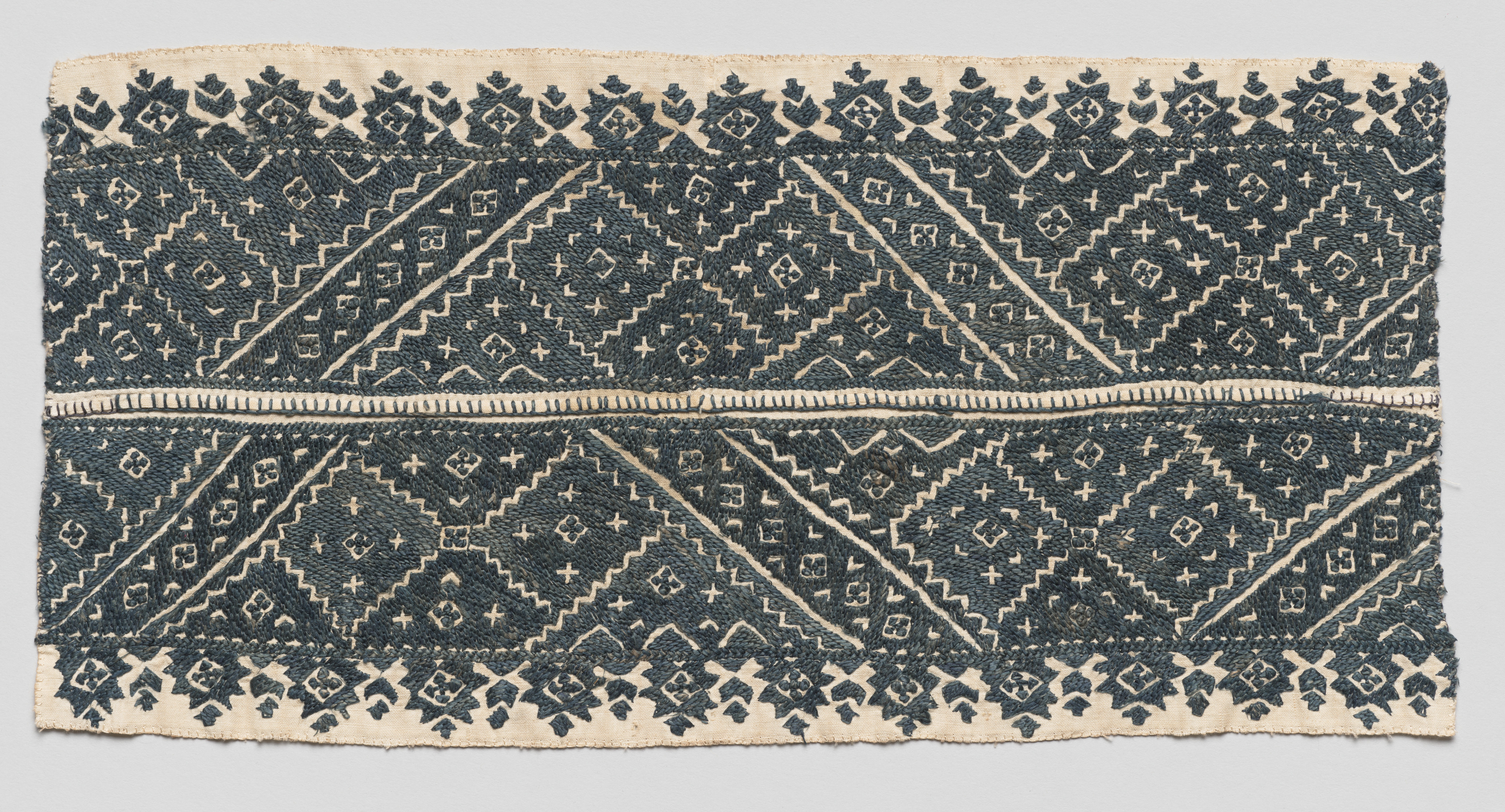
As the Chief Fabric Deconstructionist for Zoey Fashion Lab, my role is to excavate the latent narratives embedded within historical textiles, to strip them of their conventional context, and to re-imagine their structural and aesthetic potential for avant-garde expression. The subject of this analysis is a fragment of a furnishing textile, a remnant from 16th-17th century Fes, Morocco. This piece, composed of a cotton ground with intricate silk embroidery and natural dyes, is not merely a decorative artifact. It is a palimpsest of cultural convergence, a silent witness to the trans-Mediterranean dialogues that defined an era. The archive resonance—“在人类文明的长河中,器物与绘画不仅是时代技艺的结晶,更是文化碰撞与美学交融的无声见证”—frames our deconstruction: we must listen to the silence between the threads.
Material Autopsy: Cotton, Silk, and the Alchemy of Dye
The foundational structure of this fragment is a plain-weave cotton, a material that speaks volumes about trade and pragmatism. Cotton, cultivated in the warmer climates of North Africa and the Levant, was a staple for both utilitarian and luxury textiles in Fes. Its matte, absorbent surface provides an ideal canvas for the reflective, lustrous silk that dances across it. The silk, likely imported from the East via the Silk Road or produced locally in the Mediterranean basin, represents a deliberate juxtaposition of textures. This is not a passive pairing; it is a tectonic clash of fiber personalities. The cotton grounds the piece in the earthy, tactile reality of daily life, while the silk elevates it into the realm of the opulent and the sacred.
The dyes are the true alchemists of this fragment. Analysis suggests the use of madder for the deep, sanguine reds—a hue associated with power, fertility, and the blood of life in many North African traditions. Indigo, likely from sub-Saharan or Asian sources, provides the profound blues that anchor the composition, evoking the heavens and the protective “Hand of Fatima” motifs. The yellow, possibly from saffron or pomegranate, offers a fleeting, sunlit accent. The chemistry of these natural dyes is unstable; they are vulnerable to light, pH, and time. This vulnerability is not a flaw but a feature. The fragment’s fading and patina are a record of its exposure to the world—the smoke of oil lamps, the dust of the medina, the touch of generations. For the avant-garde designer, this impermanence becomes a tool. We can exploit the differential fading to create garments that evolve with wear, that tell a story of their own becoming.
Technical Grammar: The Embroidery as Structural Code
The embroidery technique is the defining architectural element of this textile. It is not applied decoration; it is a structural intervention. The stitches—likely a combination of counted-thread work and free-form satin stitch—alter the drape, weight, and tensile strength of the cotton ground. The silk threads, thicker and more rigid than the cotton, create a network of raised, ribbed lines that function almost like a built-in boning system. In a garment, this would translate to zones of structured volume and fluid fall. The embroidery is a three-dimensional skeleton imposed upon a two-dimensional plane.
The motifs—geometric stars, stylized floral arabesques, and repeating lozenges—are not merely decorative. They are a visual language of Islamic geometry, a system of infinite repetition that suggests the divine. The symmetry is not static; it is a rhythm, a pulse. For the avant-garde, we can deconstruct this rhythm. We might isolate a single star motif and scale it up to monumental proportions, transforming it into a shoulder yoke or a structural collar. We could reverse the figure-ground relationship, allowing the unembroidered cotton to become the “motif” and the silk embroidery to become the negative space. The embroidery can be cut, resewn, and layered to create new, dissonant geometries that challenge the original order.
Cultural Resonance: The Archive as a Living Witness
The archive resonance reminds us that this fragment is a witness to cultural collision. The 16th and 17th centuries were a period of intense exchange between the Islamic world, Europe, and sub-Saharan Africa. Fes was a nexus of this trade. The motifs in this textile—the eight-pointed star, the cypress tree, the palmette—are not purely Moroccan. They carry echoes of Andalusian, Ottoman, and even Renaissance Italian design. The embroidery technique itself may have been influenced by Spanish silk guilds or by the itinerant Jewish and Berber artisans who worked in the city’s tanneries and souks.
This fragment is therefore a hybrid artifact, a product of appropriation and adaptation. To deconstruct it for an avant-garde context is to honor this hybridity, not to erase it. We must ask: What does it mean to take a fragment of a furnishing textile—a piece meant for a divan or a wall hanging—and re-purpose it as a garment? The answer lies in the tension between function and adornment. A furnishing textile is static; it is meant to be seen from a distance. A garment is kinetic; it moves with the body. By translating the embroidery’s structural logic into a wearable form, we give the fragment a new life, a new agency. It becomes a mobile archive, a piece of history that walks into the future.
Avant-Garde Applications: From Fragment to Future
For Zoey Fashion Lab, the deconstruction of this fragment yields several concrete design provocations:
1. The Deconstructed Caftan: Utilize the cotton ground as a base for a voluminous, asymmetrical caftan. The silk embroidery is cut into separate panels and re-applied as detachable elements—a collar, a cuff, a train. The natural fading of the dyes is accelerated in specific zones through controlled light exposure, creating a gradient of memory.
2. The Structural Bodice: Isolate the geometric star motifs and reproduce them in a rigid, resin-coated silk thread. These stars become the boning for a corset-like bodice, worn over a sheer cotton underlayer. The embroidery is no longer decorative; it is the skeleton.
3. The Kinetic Tapestry: Create a floor-length coat where the entire back panel is a reproduction of the original textile fragment, but with the embroidery executed in a conductive thread. Sensors embedded in the garment respond to the wearer’s movement, triggering subtle shifts in the garment’s shape or color. The archive becomes interactive.
In conclusion, this fragment from Fes is not a relic to be preserved under glass. It is a generative code, a set of material and cultural instructions waiting to be rewritten. As Chief Fabric Deconstructionist, I see in its faded dyes and rigid silk a blueprint for a new kind of fashion—one that acknowledges its debts to the past while forging an uncompromising, avant-garde future. The silence of the archive is broken. The witness speaks.