Deconstructing the Parade Spear: A Technical and Stylistic Analysis for Zoey Fashion Lab
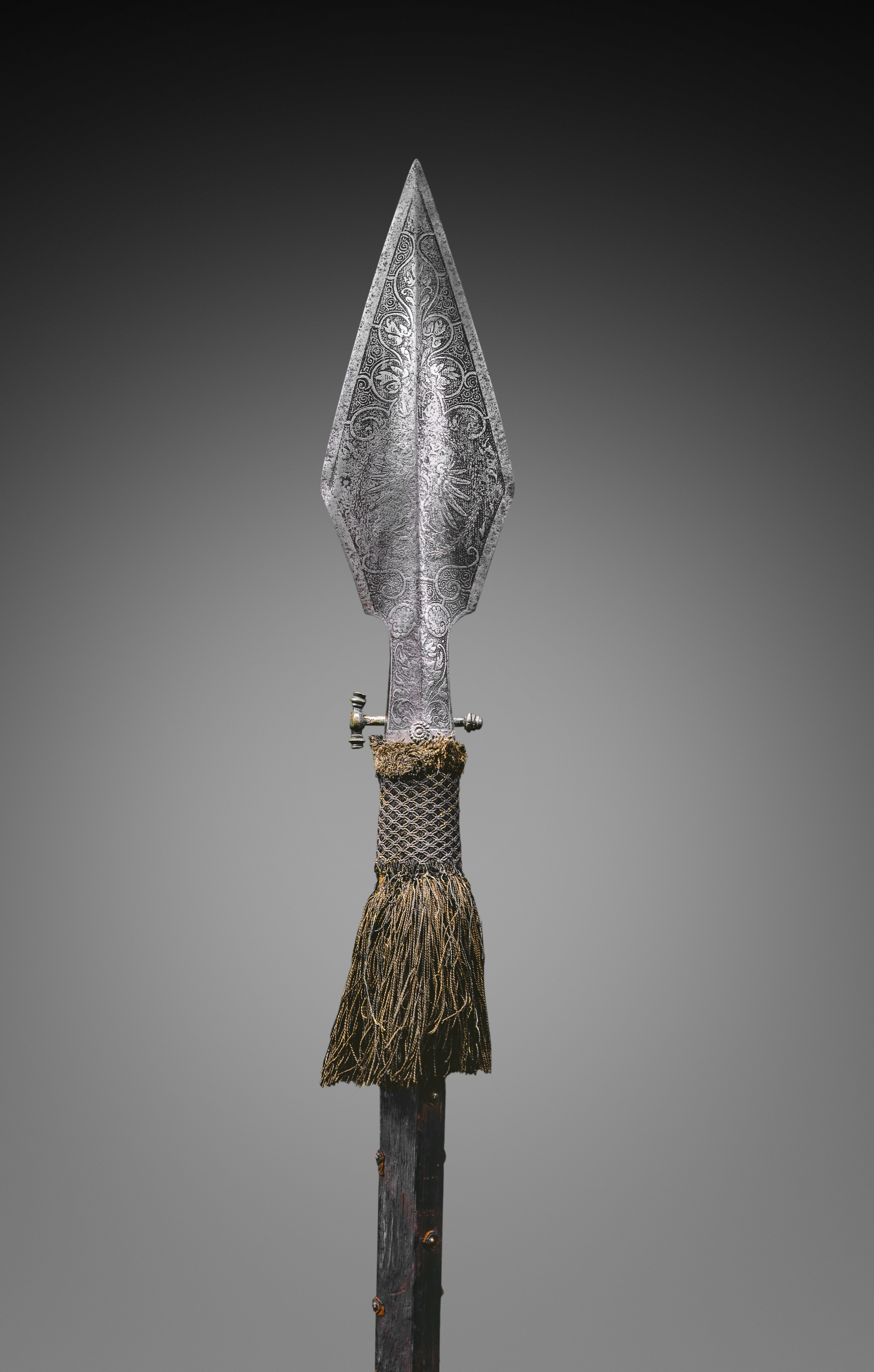
At Zoey Fashion Lab, we specialize in the radical deconstruction of historical artifacts to extract their latent DNA for avant-garde fashion design. Our latest subject, the Parade Spear, originating from Germany (possibly Augsburg), presents a rich tapestry of materials, craftsmanship, and symbolic weight. This weapon, designed for ceremony rather than combat, offers a unique vocabulary of textures, forms, and structural principles that can be reimagined into a cutting-edge garment or accessory collection. Below, we dissect each technical element and propose its translation into the language of avant-garde fashion.
Material Analysis: Steel and Brass as Structural Anchors
The spear’s head, forged from etched steel, is the primary focal point. The etching—likely an acid-based process to create decorative patterns—introduces a surface that is both reflective and tactile. In fashion, this translates to a metallic finish on structural fabrics. Consider a bonded leather or a high-density neoprene coated with a liquid metal finish, then laser-etched with geometric or organic motifs. The interplay of light and shadow on etched steel mirrors the effect of strategic pleating or laser-cut perforations on a garment, creating depth without adding bulk.
The brass lugs—the fittings that secure the spearhead to the shaft—serve as both functional joints and decorative accents. Brass offers a warm, golden contrast to the cool steel. For Zoey Fashion Lab, these lugs inspire hardware elements in garment construction. Imagine oversized brass grommets, zippers, or clasps that not only fasten but also articulate the silhouette. These could be placed at the shoulders, hips, or along a spine-like seam, echoing the spear’s verticality and structural integrity. The lugs also suggest a modular design approach, where separate garment pieces can be joined or detached, much like the spearhead can be removed from its haft.
Shaft and Haptic Elements: Wood, Leather, and Tassel
The hexagonal wood haft is a masterclass in ergonomics and geometry. The six-sided profile provides a secure grip and prevents rolling—a principle that can be applied to asymmetric or angular garment cuts. A hexagonal cross-section inspires a dress or coat with faceted panels that create a sculptural, almost architectural silhouette. The wood grain itself, if replicated in fabric, could be achieved through woven jacquard patterns or embossed textiles, giving a natural, organic feel to an otherwise rigid form.
The leather straps wrapped around the haft introduce a tactile, functional element. They suggest harness-like details in fashion: straps that cinch, tie, or suspend fabric. For an avant-garde piece, these straps could be reinterpreted as adjustable corsetry lacing along the sides of a coat or as suspension points for pockets or decorative elements. The contrast between the smooth leather and the textured wood or steel echoes the tension between soft and hard materials—a recurring theme in Zoey Fashion Lab’s collections.
The woolen tassel is perhaps the most unexpected element. Typically used as a ceremonial flourish, it introduces a fluid, kinetic component to an otherwise static object. In fashion, this translates to fringe, tassels, or trailing threads that move with the wearer. The woolen texture offers a matte finish that contrasts with the polished steel and brass. For a garment, consider a weighted tassel at the hem or sleeve, or a cluster of woolen strands that cascade from a shoulder harness. The tassel also evokes a sense of ritual and performance, suggesting that the garment is not just worn but enacted.
Stylistic Translation: Avant-Garde DNA Strand
The New DNA Strand reference is critical. We are not replicating the spear; we are extracting its genetic code—its core principles of form, material contrast, and function—and splicing it into a contemporary fashion context. The spear’s verticality and linearity inform a silhouette that is elongated, with sharp shoulders and a tapered waist. The hexagonal haft inspires a geometric, angular cut that breaks from traditional rounded forms. The etched steel translates to a surface treatment that is both hard and intricate, perhaps through laser-cut leather or metal mesh overlays.
The ceremonial purpose of the parade spear—a symbol of status and display—aligns with avant-garde fashion’s emphasis on theatricality and statement. The garment should not merely clothe but command attention. Imagine a long coat with a detachable, spear-inspired collar that rises behind the neck, or a belt with brass lugs that cinches the waist like a weapon’s joint. The tassel could become a dramatic train that trails behind the wearer, or a series of woolen cords that wrap around the arm like ceremonial bindings.
Construction and Wearability Considerations
While avant-garde, the piece must retain a degree of wearability. The steel and brass elements can be replaced with lighter materials such as coated aluminum or resin for the structural parts, and gold-toned hardware for the lugs. The hexagonal wood haft can be reinterpreted as a sculptural sleeve made from a rigid, molded fabric like horsehair or buckram, stiffened with a resin finish. The leather straps should be adjustable and removable to allow for different styling options.
The woolen tassel, while beautiful, may be impractical for daily wear. A solution is to use silk or synthetic fibers that mimic wool’s texture but are lighter and more durable. The tassel could also be detachable, allowing the garment to transition from day to evening. The overall silhouette should be modular, with the ability to remove or add components, reflecting the spear’s own construction.
Conclusion: From Weapon to Wardrobe
The Parade Spear from Augsburg is more than a historical artifact; it is a blueprint for avant-garde fashion. By deconstructing its materials—etched steel, brass lugs, hexagonal wood, leather straps, and woolen tassel—we uncover a vocabulary of contrast, geometry, texture, and movement. For Zoey Fashion Lab, this analysis yields a collection that is both armored and fluid, ceremonial and wearable. The spear’s DNA becomes a new fashion language, one that speaks of power, precision, and the beauty of functional form. The result is not a costume but a contemporary statement piece that honors its origins while pushing the boundaries of design.