Deconstructing the Husu: A Futuristic Silhouette Study for SS26
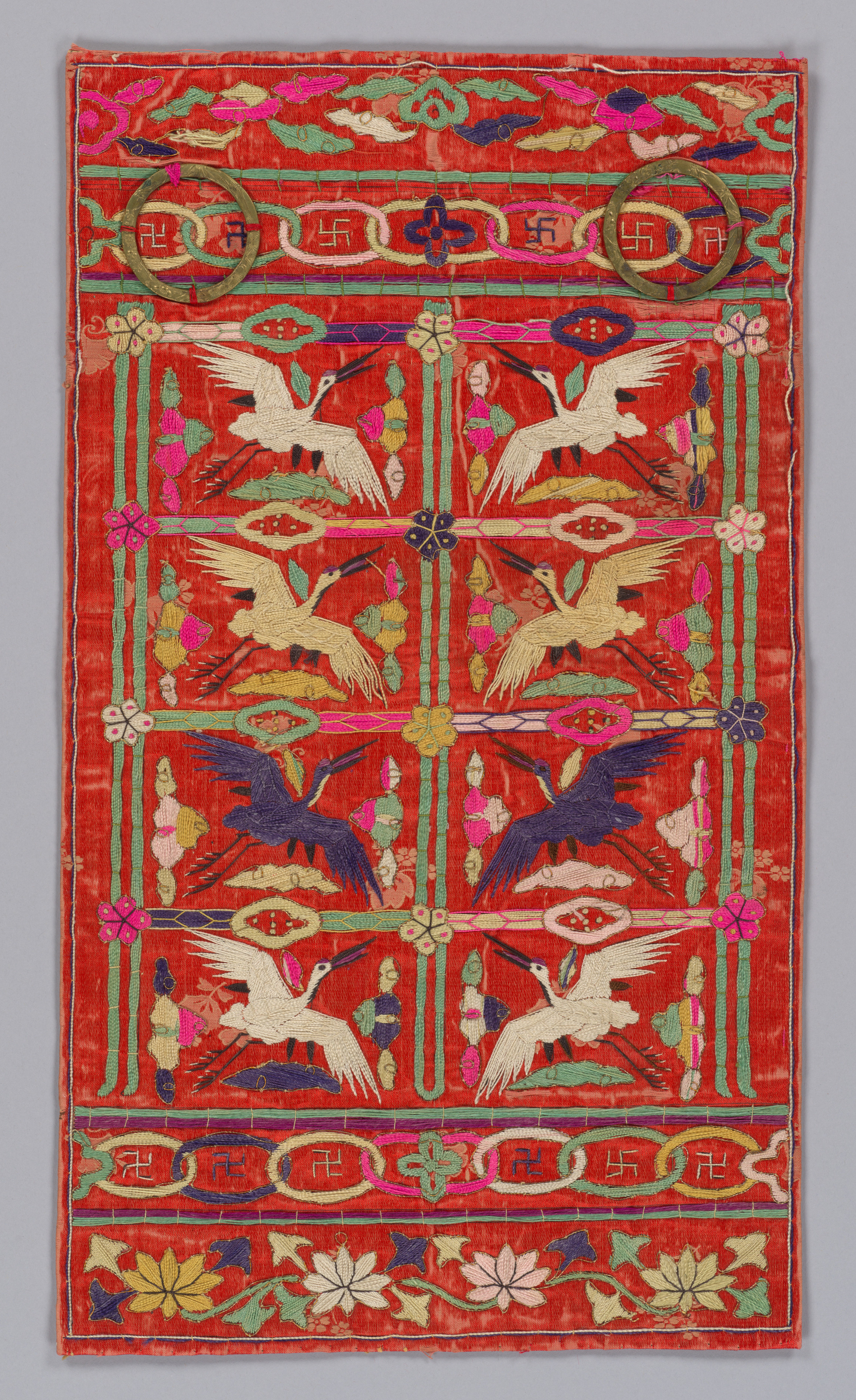
The Civil-official husu, a ceremonial rear panel from Korea’s Joseon dynasty, is an artifact of profound structural and symbolic weight. Traditionally embroidered with silk threads depicting cranes, clouds, and sun motifs, the husu signified authority, celestial order, and the wearer’s moral rectitude. For Zoey Fashion Laboratory’s SS26 collection, this historical garment is not a relic to be replicated but a generative blueprint for reimagining silhouette, materiality, and the very architecture of the back. This analysis dissects the husu’s core formal elements—its rigid planar geometry, its narrative embroidery, and its function as a wearable billboard of status—and transmutes them into a futuristic, deconstructive language that challenges contemporary notions of volume, gravity, and adornment.
From Planar Weight to Aerodynamic Volume
The husu’s original form is a flat, rectangular panel suspended from the shoulders, creating a stark, almost architectural verticality. In SS26, this static plane is re-engineered into a dynamic, aerodynamic volume. The silk embroidery, once a dense, surface-level embellishment, becomes a structural membrane. Imagine a rear panel that does not hang but floats away from the spine, supported by an internal exoskeleton of carbon-fiber-reinforced silk. The traditional crane motif is digitized and then re-embroidered using a technique of negative space weaving—where the unembroidered areas create kinetic patterns that shift with movement. The result is a silhouette that appears to breathe, expanding and contracting like a living organism. The husu’s original weight, a symbol of gravitas, is replaced by a zero-gravity lightness, achieved through micro-perforations in the silk and the integration of air-jet woven panels that trap pockets of space. This is not a garment that drapes; it is a wearable sculpture that defines its own atmosphere.
Embroidery as Algorithmic Narrative
Traditional Korean silk embroidery on the husu was a painstaking, hand-guided process of storytelling, with each stitch representing a layer of cultural meaning. For the avant-garde laboratory, this narrative is transformed into an algorithmic, generative code. The cranes, clouds, and sun are not merely motifs but data points that dictate the structure of the panel. Using a custom-developed software, the embroidery pattern is algorithmically generated to respond to the wearer’s biometric data—heart rate, posture, and ambient temperature. The silk threads, now a hybrid of natural silk and thermochromic filaments, change color and texture as the wearer moves. The sun motif, traditionally a static disc, becomes a pulsating gradient that radiates from the center of the back, its intensity modulated by the wearer’s emotional state. This elevates the husu from a passive emblem of authority to an interactive interface between the individual and their environment. The embroidery is no longer a fixed story; it is a living, evolving narrative that is unique to each moment of wear.
Structural Innovation: The Cantilevered Spine
The husu’s attachment to the body was historically a simple suspension system—two straps over the shoulders. In SS26, this is radically reimagined through a cantilevered spine that extends from the nape of the neck to the lower back. This spine, crafted from a silk-reinforced bio-resin, acts as a structural fulcrum. The rear panel is not attached to the shoulders but rather floats on a series of adjustable, magnetic anchors that allow it to tilt, rotate, or remain perfectly still. This creates a kinetic silhouette that challenges the static nature of traditional ceremonial wear. The cantilever functions as a counterbalance, allowing the panel to extend up to 30 centimeters from the body without any visible support. This innovation redefines the relationship between garment and wearer: the husu is no longer a burden but a tool for spatial negotiation, a wearable architecture that carves out a personal territory in the crowded urban landscape. The structural innovation lies not in adding volume but in redistributing mass to create an illusion of weightlessness and controlled instability.
Deconstructive Aesthetics: The Unfinished Panel
Avant-garde deconstruction demands that the husu’s inherent formality be subverted. The SS26 iteration deliberately deconstructs the panel’s borders, leaving raw, frayed edges that are then stabilized with a laser-cut lattice of silk organza. The traditional symmetry of the crane and cloud motifs is shattered: one half of the panel features dense, hyper-detailed embroidery, while the other half is left as a translucent, unadorned membrane that reveals the underlying structural spine. This asymmetry is a deliberate commentary on the dual nature of the civil-official—the public persona versus the private self. The unfinished quality is not a sign of incompleteness but a statement of perpetual becoming. The silk threads are left as loose, trailing filaments that can be tied, woven, or left to hang, allowing the wearer to actively participate in the garment’s final form. This transforms the husu from a finished object into a modular platform for personal expression, a radical departure from its original function as a fixed symbol of hierarchy.
Futuristic Silhouette and the SS26 Context
In the broader context of SS26, the husu-inspired rear panel becomes a signature piece for a collection that explores the intersection of heritage and hypermodernity. The silhouette is defined by a progressive elongation of the back, creating an almost avian, predatory stance. The panel’s ability to shift and tilt adds a dynamic, fluid element to otherwise minimalist front-facing garments. The color palette is restricted to monochromatic whites and silvers, with the thermochromic embroidery providing the only bursts of color—a subtle nod to the vibrant hues of traditional Korean silk. The husu is no longer a separate accessory but an integral part of the garment’s structure, seamlessly merging with the bodice through a series of hidden magnetic closures. This integration allows for a clean, uninterrupted line from the front to the back, creating a silhouette that is both futuristic and deeply respectful of its historical origins. The final effect is a garment that appears to be in a state of controlled flight, as if the wearer is perpetually moving forward, carrying the weight of history but shedding its gravity.
Conclusion: The Husu as a Living System
This avant-garde analysis reframes the Civil-official husu not as a static artifact but as a living system—a platform for structural innovation, algorithmic narrative, and deconstructive aesthetics. By reimagining its planar geometry as aerodynamic volume, its embroidery as interactive code, and its attachment as a cantilevered spine, Zoey Fashion Laboratory’s SS26 interpretation elevates the husu from a symbol of fixed authority to a dynamic expression of individual agency. The silk embroidery, once a meticulous record of heritage, now becomes a responsive, generative medium that blurs the line between garment and environment. This is not a costume; it is a wearable manifesto for a future where tradition is not preserved in amber but actively deconstructed and reborn. The husu’s rear panel, in this iteration, ceases to be a back piece and becomes a forward-facing declaration of what couture can become when it dares to break its own rules.