The Rectangular Fragment: A Deconstructive Blueprint for SS26
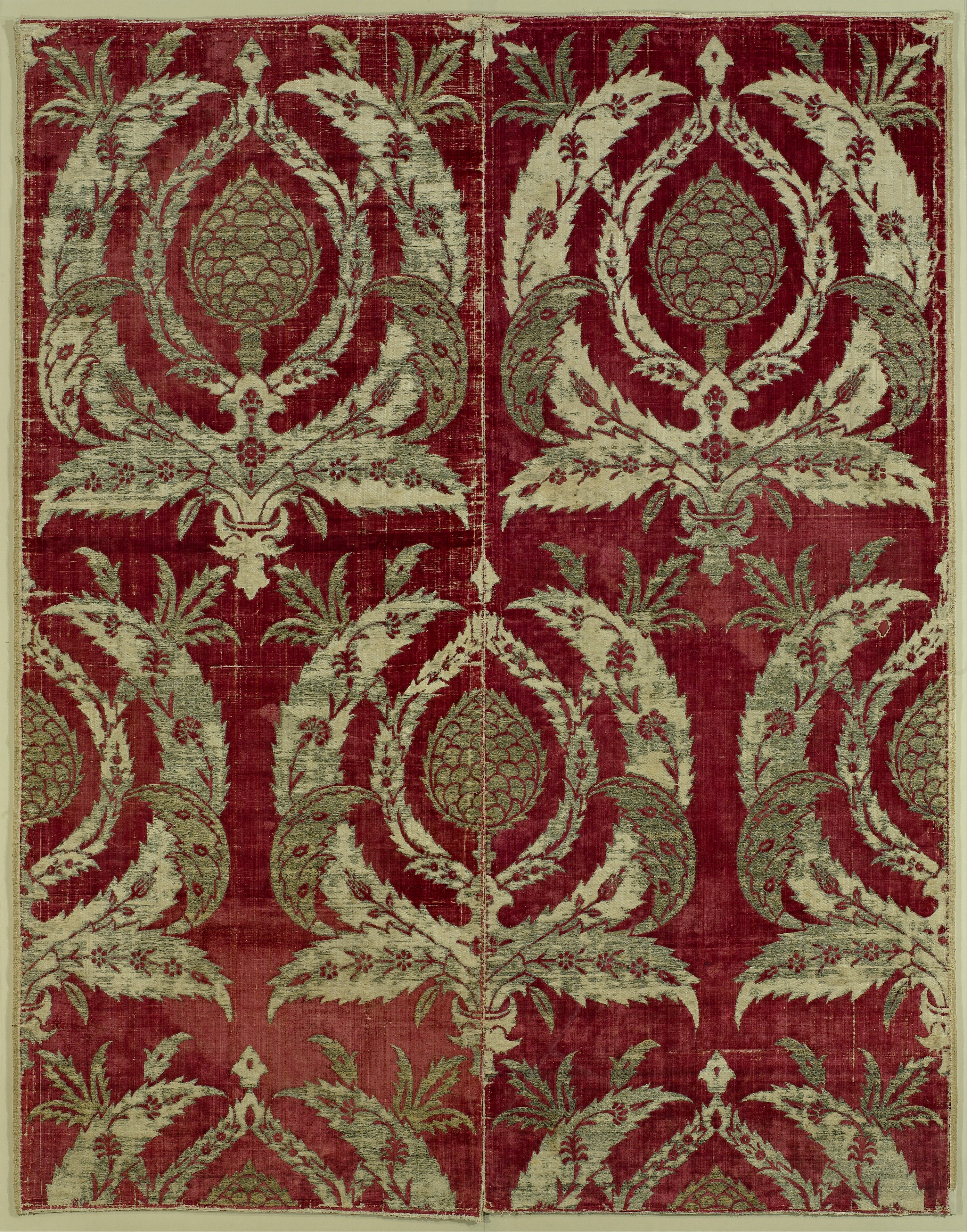
The rectangular textile fragment, an artifact from the Global Frontier, emerges not as a remnant but as a manifesto. In the hands of Zoey Fashion Laboratory, this piece—a composite of silk, metal-wrapped thread, cut and voided velvet, and brocade—transcends its historical origins to become a foundational module for SS26. It is a study in structural innovation, where the static geometry of the rectangle is deconstructed and reimagined into a futuristic silhouette that defies the body’s natural contours. This analysis dissects the fragment’s materiality, its potential for architectural transformation, and its role in pioneering an avant-garde language for the coming season.
Material Alchemy: Silk, Metal, and Voided Velvet
The fragment’s material composition is a deliberate clash of textures and weights, each chosen to challenge conventional draping and support. The silk base provides a fluid, almost liquid foundation, while the metal-wrapped thread introduces a rigid, conductive element that can be manipulated into structural armatures. The cut and voided velvet—a technique where pile is selectively removed to create negative space—offers a play of opacity and transparency, while the brocade adds a dense, ornamental counterpoint. This juxtaposition is not decorative but functional: the metal thread allows for self-supporting folds that resist gravity, while the voided velvet creates zones of breathability and visual weightlessness.
For SS26, this fragment becomes a modular building block. Consider its potential as a deconstructed corset: the metal threads are woven into a lattice that mimics exoskeletal ribs, while the voided velvet is laser-cut to reveal the skin beneath, creating a second skin that is both protective and exposed. The brocade, traditionally associated with opulence, is repurposed as a structural panel—seamlessly integrated into the silk to provide tension points that dictate the silhouette’s flow. This is not mere repair; it is a re-engineering of textile physics.
Futuristic Silhouettes: The Parasitic Gown
The rectangular fragment’s geometry lends itself to a parasitic silhouette—a form that attaches to the body not as a garment but as an extension of its architecture. Imagine a gown where the fragment is suspended from a single shoulder via a metal-thread cable, its rectangular form cascading into a voided velvet train that appears to float, disconnected from the wearer. The cut velvet’s negative spaces are aligned to create directional airflow, mimicking the aerodynamic lines of a futuristic vehicle. This is not a dress; it is a mobile sculpture that alters the body’s silhouette into an asymmetrical, angular profile—rejecting the natural hourglass for a geometric, almost robotic form.
Alternatively, the fragment can be reconfigured as a modular cape that wraps around the torso, its brocaded sections acting as armored plates that protect the core while the silk and velvet cascade into a fluid, trailing hem. The metal-wrapped thread is used to create rigid, wing-like extensions that flare from the shoulders, evoking a cybernetic exoskeleton. This silhouette is deliberately uncomfortable—it challenges the wearer to adapt, reflecting a future where clothing is a tool for survival and expression rather than mere adornment.
Structural Innovation: The Architectural Fold
The true innovation lies in how the fragment’s rectangularity is manipulated into three-dimensional volumes. Using a technique we term “tensile brocade”, the metal-wrapped thread is woven into a pattern that, when tensioned, creates self-forming pleats and origami-like facets. The voided velvet’s negative spaces are strategically placed to collapse or expand based on the wearer’s movement, turning the garment into a dynamic organism. For SS26, this allows for a transformable silhouette: a dress that can shift from a sleek, columnar form to a voluminous, wing-shaped cape through simple adjustments of the metal-thread cables.
The brocade, often considered heavy, is here deconstructed into floating panels that are attached only at the edges, creating a holographic effect as they sway independently of the silk base. This is a structural innovation that redefines the relationship between garment and body: the fragment becomes a portable environment, a micro-architecture that the wearer inhabits. The cut velvet’s voids are not just aesthetic; they serve as ventilation ducts and pockets for embedded technology—a nod to the Global Frontier’s blend of craft and futurism.
Contextualizing the Fragment for SS26
In the broader context of SS26, this rectangular fragment is a rejection of fast fashion’s disposability. It represents a return to garment-as-object, where each piece is a study in material and form. The Global Frontier origin suggests a nomadic aesthetic—the fragment is not a finished product but a template for adaptation. For Zoey Fashion Laboratory, it becomes a pedagogical tool: a starting point for designers to explore how a single geometric element can be transformed into infinite silhouettes through deconstruction and reconstruction.
The futuristic silhouette it enables is not about alienating the body but about augmenting its potential. The metal-thread armature allows for posture-correcting structures that align the spine, while the voided velvet provides cooling zones for thermal regulation—a marriage of avant-garde aesthetics with functional innovation. This is wearable architecture for a future where clothing is both a statement and a survival mechanism.
Conclusion: The Fragment as a Manifesto
The rectangular textile fragment from the Global Frontier is not a relic; it is a blueprint for the future of couture. Through its interplay of silk, metal, voided velvet, and brocade, it challenges us to rethink silhouette, structure, and materiality. For SS26, Zoey Fashion Laboratory proposes a radical vision: garments that are autonomous, adaptive, and architectural. The fragment, in its purest form, is a canvas for innovation—a reminder that the most profound avant-garde statements often begin with the simplest geometries. This is not fashion; it is a new language of form.