Deconstruction of the Divine: Reimagining Shuiyue Guanyin for SS26 Avant-Garde Couture
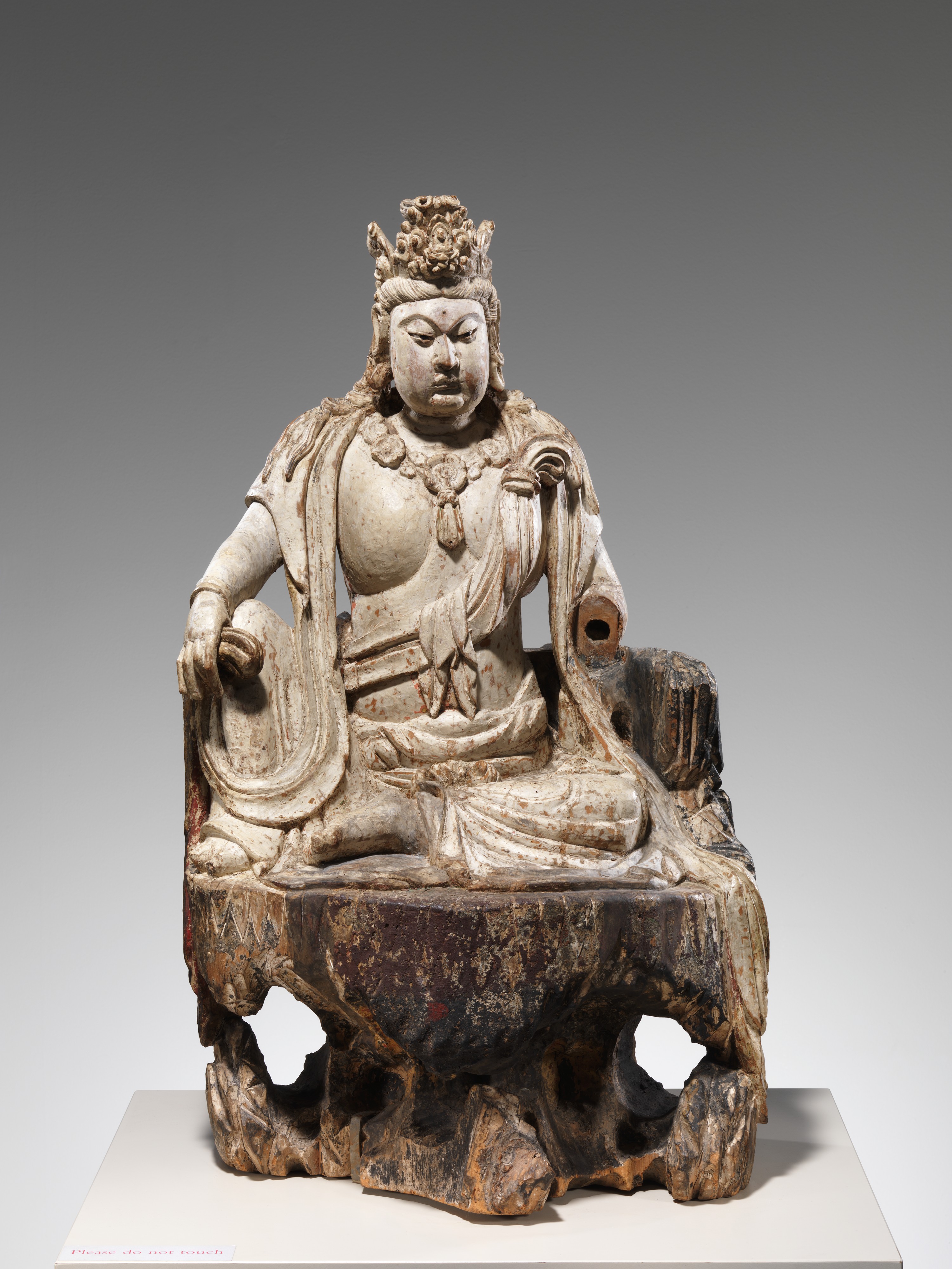
The Bodhisattva Avalokiteshvara in Water Moon Form (Shuiyue Guanyin), rendered in willow wood with gesso and traces of pigment, transcends its historical and spiritual origins to become a radical blueprint for futuristic couture. For Zoey Fashion Laboratory’s SS26 collection, this 11th-century Chinese sculpture offers a profound lexicon of structural innovation, deconstructive aesthetics, and ethereal materiality. The Water Moon Guanyin, embodying compassion and transcendence, is not merely a decorative motif but a conceptual framework for reimagining the human form through avant-garde architecture. This analysis dissects the sculpture’s key elements—its fluid posture, layered drapery, and residual pigment—to propose a collection that marries ancient spirituality with hyper-modern silhouettes.
Fluid Posture as Structural Innovation
The Shuiyue Guanyin’s iconic “royal ease” pose—one leg pendant, the other drawn up, with a relaxed yet regal bearing—offers a radical departure from static fashion forms. In SS26, this asymmetry becomes a core design principle: asymmetric hemlines and unbalanced draping that mimic the Bodhisattva’s meditative repose. The willow wood’s natural grain, visible beneath the gesso, inspires a biomimetic structural system where garments appear to grow organically from the body. Imagine a jacket where one shoulder is sculpted into a cantilevered shelf, echoing the pendant leg, while the opposite side dissolves into cascading folds. This asymmetry is not arbitrary but a deliberate dialogue with the viewer, inviting contemplation of balance and imbalance—a key tenet of deconstructive aesthetics. The futurist silhouette emerges not from rigid geometry but from a fluid, almost liquid, adaptation of the human form, much like Guanyin’s own transcendence of physical limitations.
Layered Drapery and the Gesso Effect
The gesso layer, a mixture of chalk and glue, once prepared the wood for pigment but now stands as a relic of time, its surface cracked and worn. For SS26, this texture is translated into layered, translucent fabrics—organza, silk gazar, and recycled polyester—that mimic the gesso’s matte finish and fragility. The drapery of Guanyin’s robes, which cascade in rhythmic folds, is reimagined as modular, detachable panels that can be rearranged by the wearer. Each panel carries traces of pigment—vermillion, azurite, and malachite—applied through digital printing or hand-painted micro-drips, referencing the original sculpture’s faded colors. The structural innovation lies in the use of heat-bonded seams and laser-cut perforations that create a lattice effect, allowing light to pass through the fabric like the gesso’s porous surface. This technique transforms the garment into a living artifact, where the passage of time is celebrated rather than concealed.
Futuristic Silhouettes: The Void and the Form
Guanyin’s Water Moon form is often depicted with a lunar halo, a symbol of enlightenment and emptiness. In avant-garde couture, this translates into negative space silhouettes—garments that define the body through absence rather than presence. Consider a dress with a circular cutout at the torso, framed by a rigid, carbon-fiber ring that references the moon. The cutout is not a simple opening but a structural void, supported by internal boning that mimics the sculpture’s wooden armature. The willow wood’s flexibility inspires kinetic elements: sleeves that can be articulated via micro-hinges, skirts that billow with internal fans, and collars that rise and fall like breathing. These are not gimmicks but extensions of the Bodhisattva’s compassionate gaze, inviting the wearer to embody a state of meditative flow. The futurist aesthetic is underscored by monochromatic palettes—stone gray, bone white, and oxidized copper—interrupted by flashes of original pigment, as if the past is bleeding into the future.
Materiality and the Traces of Time
The willow wood’s natural grain, combined with the gesso’s crackle, suggests a material philosophy of impermanence. For SS26, Zoey Fashion Laboratory explores this through biodegradable composites and recycled wood fibers woven into fabric. A coat, for instance, might be constructed from a mycelium-based leather that develops a patina over time, mirroring the gesso’s aging. The pigment traces are not merely decorative but functional markers: thermochromic inks that shift color with body heat, revealing hidden patterns of Guanyin’s lotus throne or flowing water. This material innovation aligns with the Bodhisattva’s role as a compassionate guide, urging the industry toward sustainability while preserving the aura of the sacred. The structural innovation here is the integration of memory—garments that record their own history through wear, much like the sculpture’s own traces of pigment.
Deconstructive Aesthetics: The Unfinished in the Sacred
The Shuiyue Guanyin’s missing pigment and exposed gesso embody a deconstructive ethos: the unfinished as a state of grace. In SS26, this is realized through raw edges, exposed seams, and intentional fraying that reference the sculpture’s weathered surface. A gown might feature a bodice that appears half-carved, with layered fabric strips mimicking wood chisel marks. The deconstruction is not chaotic but choreographed—each cut and fold follows the Bodhisattva’s meditative geometry. The futurist silhouette emerges from this tension between the sacred and the industrial: a dress that combines a 3D-printed, lattice-structured corset with hand-stitched, organic silk panels. This juxtaposition honors Guanyin’s dual nature—both earthly and transcendent—while pushing couture into new realms of expression.
Conclusion: The Water Moon as a Mirror
For Zoey Fashion Laboratory, the Bodhisattva Avalokiteshvara in Water Moon Form is not a relic but a living manifesto. Its willow wood, gesso, and pigment traces offer a definitive avant-garde study for SS26, where futuristic silhouettes and structural innovation are imbued with spiritual depth. The collection, titled “Lunar Veil,” will feature asymmetric forms, layered translucency, and void-based designs that challenge the wearer to become a vessel for compassion and transcendence. By deconstructing the sacred, we reconstruct the possible—a fashion that is both ancient and futuristic, fragile and resilient, empty and full. This is the Water Moon’s ultimate gift: a mirror for the soul, reflected in the threads of tomorrow.