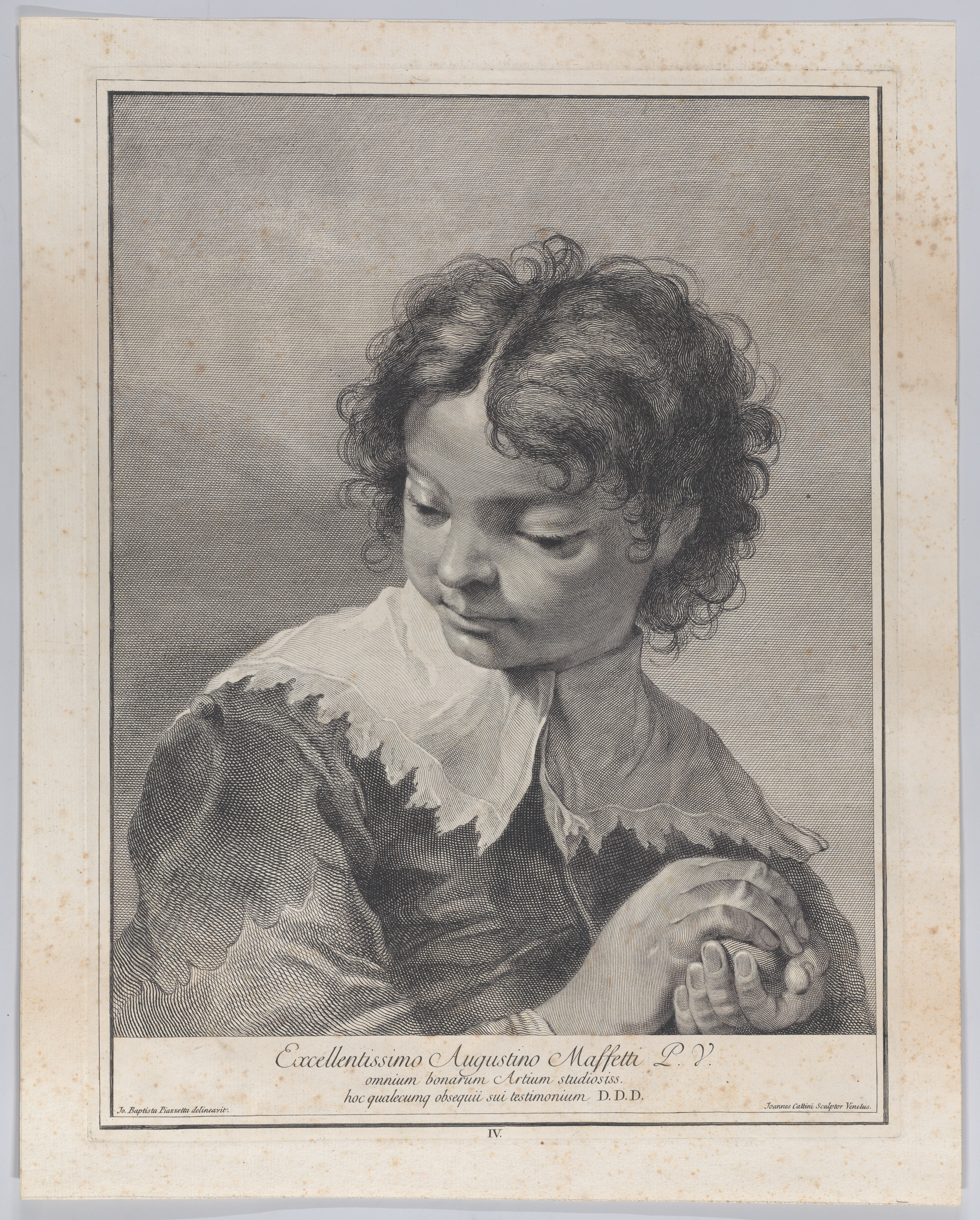
Deconstructing the Anachronism: Plate 4 as a Blueprint for SS26 Structural Innovation
Within the hallowed archives of sartorial archaeology, Plate 4 from Icones ad vivum expressae emerges not as a relic of static history, but as a volatile blueprint for the SS26 season. This etching—depicting a boy, a lace collar, and a single piece of fruit—is a paradox of innocence and restraint, of organic growth and artificial confinement. For Zoey Fashion Laboratory, this is not a nostalgic reverie; it is a manifesto for futuristic silhouettes that dismantle the past to rebuild the future. The analysis that follows deconstructs this image into three core architectural principles: the collar as a structural exoskeleton, the fruit as a biomorphic volume, and the boy as a cyborg-like chassis. These elements converge to define a new frontier of avant-garde couture, where etching becomes engineering and lace becomes load-bearing.
The Collar as Exoskeleton: Lace Re-Engineered for Load-Bearing
The lace collar in Plate 4 is the first point of rupture. Historically, lace signifies delicacy, handcraft, and ephemerality. Yet, in this etching, the collar is rendered with a precision that borders on mechanical—a rigid, repeating pattern that encircles the neck like a fossilized carapace. For SS26, Zoey Fashion Laboratory reimagines this collar not as a decorative frill, but as a structural exoskeleton that defines the entire upper torso. We propose a material evolution: laser-sintered nylon filaments woven with conductive metallic threads, creating a lattice that is both flexible and unyielding. This collar becomes a load-bearing ring, from which the rest of the garment cascades—a deconstructed bustier that suspends the shoulder line in a state of perpetual tension. The lace pattern is digitized and scaled, transformed into a parametric grid that can be compressed or expanded based on the wearer’s movement. This is not decoration; it is kinetic architecture. The collar’s rigidity contrasts with the softness of the boy’s skin, creating a dialogue between vulnerability and armor—a core theme for the season’s exploration of post-human elegance.
The Fruit as Biomorphic Volume: Sculpting the Silhouette from Within
The fruit held in the boy’s hands—a pomegranate or an apple, ambiguous in its ripeness—is the second critical element. In the etching, it is a static object, a symbol of temptation or mortality. For Zoey Fashion Laboratory, this fruit becomes a biomorphic volume that dictates the silhouette’s internal logic. We abandon the traditional notion of garment-as-shell; instead, the fruit is inflated to architectural scale, creating a three-dimensional pocket or pod that protrudes from the torso. Imagine a segmented, organic bustle that mimics the fruit’s cellular structure—a series of inflatable chambers made from recycled bio-polymers, each chamber calibrated to expand or contract based on humidity or body heat. This volume is not appended to the garment; it is integrated into the garment’s circulatory system. Channels of micro-tubing run from the collar’s exoskeleton down to the fruit-pod, allowing for a dynamic redistribution of air and weight. The silhouette becomes mutable: a sphere that can be compressed against the body for a streamlined profile, or inflated to create a dramatic, almost parasitic bulge. This challenges the static nature of traditional tailoring, introducing a living, breathing architecture that responds to the environment and the wearer’s intent. The fruit is no longer held; it inhabits the garment.
The Boy as Cyborg Chassis: The Body as a Modular Framework
The boy himself—the central figure—is the most radical element. In the etching, his posture is passive, his gaze inward. For SS26, this figure is recontextualized as a cyborg chassis, a neutral platform upon which the garment’s deconstructive narrative is inscribed. The body is not a mannequin; it is a modular framework with detachable, reconfigurable components. The etching’s flat, linear quality is translated into a grid of carbon-fiber ribs that articulate the torso, allowing the garment to be disassembled and reassembled in endless permutations. The arms, legs, and neck become attachment points for the collar and fruit-pod, each connection point magnetized or click-locked for rapid reconfiguration. This is not a garment for a passive consumer; it is a tool for the post-human performer. The boy’s innocence is overwritten by a cold, utilitarian aesthetic: his skin is a canvas for projection-mapped textures that echo the etching’s cross-hatching, creating a digital epidermis that blurs the line between organic and synthetic. The lace collar becomes a data-bus, transmitting signals to the fruit-pod to adjust its volume. The body is no longer a vessel for clothing; it is a co-author of the silhouette, a cyborg entity that wears its own architecture.
Structural Innovation: The Etching as a Fabrication Blueprint
The etching medium itself—the line, the cross-hatching, the negative space—is the final, and most profound, source of innovation. Zoey Fashion Laboratory treats the etching not as a reproduction but as a fabrication blueprint. The dense, parallel lines of the lace are translated into a filament-winding process for creating the exoskeleton’s lattice. The stippled shadows of the fruit are read as structural stress maps, indicating where volume should be concentrated or relieved. The negative space—the void around the boy’s body—becomes a pattern for cutouts and voids in the garment’s shell, allowing for ventilation and visual lightness. This is a parametric translation of a two-dimensional artwork into a three-dimensional, wearable system. The etching’s imperfections—the ink bleeds, the plate wear—are preserved as textural artifacts, applied to the garment’s surface through digital embroidery or chemical etching on aluminum panels. The result is a garment that carries the memory of its own creation, a palimpsest of process. The boy, the collar, and the fruit are no longer separate entities; they are interdependent nodes in a networked structure that defies temporal logic.
Conclusion: The Etching as a Cyborg Progenitor
Plate 4, in the hands of Zoey Fashion Laboratory, is not a historical document but a cyborg progenitor for SS26. The lace collar becomes a load-bearing exoskeleton; the fruit becomes a biomorphic volume; the boy becomes a modular chassis. Together, they form a triangular dialogue between structure, volume, and form that redefines the avant-garde silhouette. This is not nostalgia—it is archaeofuturism, a methodology that excavates the past to build a new, alien future. The etching’s static, two-dimensional quality is shattered by the kinetic, mutable, and interactive nature of the resulting garments. For the SS26 season, Zoey Fashion Laboratory presents a collection where every piece is a living system, a deconstructive architecture that invites the wearer to become a participant in the creation of their own silhouette. The boy with the lace collar and the fruit is no longer a subject; he is a prototype for a new species of fashion, one that exists at the intersection of art, engineering, and the post-human.