Deconstructing the Sacred: The Bishop of Assisi as a Blueprint for SS26 Structural Theology
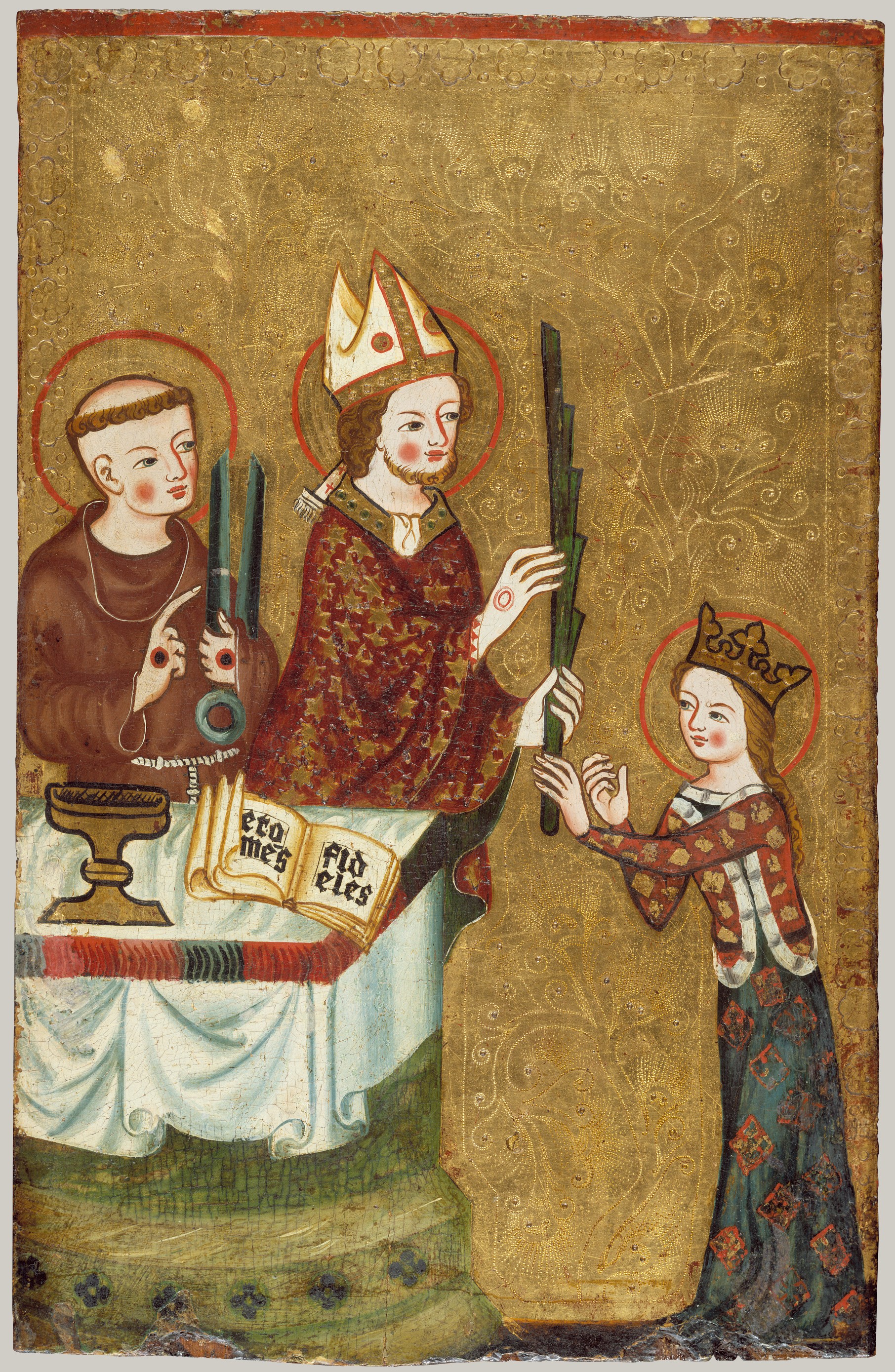
The medieval German oil, gold, and silver on wood panel, The Bishop of Assisi Giving a Palm to Saint Clare, presents an unlikely yet profoundly resonant source code for Zoey Fashion Laboratory’s SS26 avant-garde collection. At first glance, the work is a static tableau of ecclesiastical hierarchy and sacred exchange. Yet, beneath the gilded surface and the rigid iconography of the 13th-century narrative lies a radical blueprint for futuristic silhouettes and structural innovation. This analysis deconstructs the painting not as a historical artifact, but as a living manifesto for garments that challenge gravity, materiality, and the very definition of the body as a vessel for spiritual and temporal power.
I. The Palm as a Structural Fulcrum: Reimagining the Gesture of Giving
The central motif—the bishop’s hand extending the palm frond to Saint Clare—is the collection’s generative axis. In the original panel, the palm is a symbol of martyrdom and purity, a delicate, almost ethereal object. For SS26, Zoey Fashion Laboratory transforms this gesture into a load-bearing architectural element. The palm frond is not merely a decorative print or an appliqué; it becomes a kinetic, cantilevered structure that extends from the shoulder, waist, or hip, mimicking the bishop’s outstretched arm. Imagine a jacket where the sleeve terminates in a rigid, gold-leafed fiberglass fan, articulated to fold and unfurl like a medieval reliquary. The palm’s vertical thrust is reinterpreted as a spine-like exoskeleton that runs along the back of a gown, supporting a halo of silver-threaded organza that floats without visible attachment. This is the structural innovation of the season: garments that perform the act of giving, holding, and offering, rather than merely covering.
II. Gold and Silver on Wood: Material Alchemy for the Digital Age
The painting’s medium—oil, gold, and silver on wood—dictates the collection’s material palette. The gold leaf is not a nostalgic nod to opulence but a functional, reflective surface that interacts with ambient light and digital projection. Zoey Fashion Laboratory’s SS26 pieces will feature laser-cut brass and aluminum alloys, treated with a patina that mimics the cracked, oxidized glow of aged gold. Silver, in the painting, serves as a secondary, cooler accent; in the collection, it becomes the primary structural metal, used in chainmail-like weaves that are both flexible and armor-like. The “wood” of the panel is translated into biodegradable, compressed cellulose composites that are carved, scorched, and laminated into corsets and shoulder plates. The result is a futuristic silhouette that feels both ancient and alien—a hybrid of ecclesiastical vestments and cybernetic exoskeletons.
III. The Bishop’s Mitre and Saint Clare’s Veil: Silhouette as Sacred Architecture
The bishop’s mitre, with its two peaks, and Saint Clare’s wimple and veil are the collection’s primary silhouette references. The mitre’s bifurcated form is exploded into a double-humped shoulder that extends beyond the natural frame, creating a dramatic, asymmetrical top-heavy proportion. This is achieved through inflatable, self-supporting silicone inserts covered in gold-lamé, which can be deflated for transport—a nod to the painting’s portability as a devotional object. Saint Clare’s veil, traditionally a sign of humility and enclosure, is reimagined as a transparent, architectural hood made from hand-painted silicone mesh, suspended from a titanium armature. The veil’s folds are not soft; they are geometric, faceted, and razor-sharp, echoing the angular drapery of the painting’s Gothic style. The overall silhouette is a study in verticality and compression: the waist is cinched with a wide, segmented belt that mimics the bishop’s stole, while the hem flares into a rigid, bell-shaped skirt that stands independently, like a wooden panel on an altar.
IV. The Exchange of the Palm: Narrative as Wearable Performance
The painting’s narrative—a gift of spiritual authority—is embedded into the collection’s interactive, performative elements. The palm frond, as a motif, is repeated in modular, detachable components: a sleeve that can be swapped for a train, a collar that transforms into a headdress. Each garment is designed for ritualistic transformation, allowing the wearer to enact the “giving” gesture. A coat might have a hidden, spring-loaded mechanism that releases a silver palm frond from the shoulder when the arm is raised. This is not mere theatrics; it is structural innovation as storytelling. The garments function as wearable reliquaries, with hidden pockets and compartments that reference the painting’s status as a sacred object. The gold and silver leaf are not just surfaces; they are conductive materials that can trigger haptic feedback or light emissions when touched, creating a dialogue between the wearer and the observer.
V. Futuristic Silhouettes: The Body as a Gilded Fragment
The SS26 collection’s futuristic silhouettes are defined by a radical fragmentation of the human form, inspired by the painting’s use of gold and silver to separate sacred figures from their background. The bishop and Saint Clare are not integrated into a naturalistic space; they are floating, isolated icons. Zoey Fashion Laboratory translates this into garments that detach and reattach the body into discrete, jewel-like units. A gown might consist of a gold-leafed corset, a silver-mesh skirt, and a floating, back-mounted halo—each piece independent yet harmonized by the shared material language. The silhouette is anti-naturalistic, with exaggerated proportions: elongated torsos, compressed waists, and shoulders that extend beyond the silhouette like the wings of an altarpiece. The result is a post-human, sacred geometry that redefines the body as a vessel for light, reflection, and ritual.
VI. Conclusion: The Sacred as the Ultimate Avant-Garde
The Bishop of Assisi Giving a Palm to Saint Clare is not a relic of the past but a prophetic text for the future of fashion. In the hands of Zoey Fashion Laboratory, its gilded surfaces, rigid forms, and sacred gestures become the raw material for a collection that is both structural and spiritual. The palm is no longer a symbol; it is a load-bearing beam. The gold is no longer a luxury; it is a reflective surface for digital interaction. The bishop’s mitre and Saint Clare’s veil are no longer historical costumes; they are architectural prototypes for a new, futuristic silhouette. This SS26 collection is a testament to the idea that the most radical innovation often lies hidden in the most ancient of forms—waiting for a laboratory of visionaries to extract its gold, silver, and wood and forge them into the garments of tomorrow.