Deconstructing the Mantua: A Futurist Blueprint for SS26
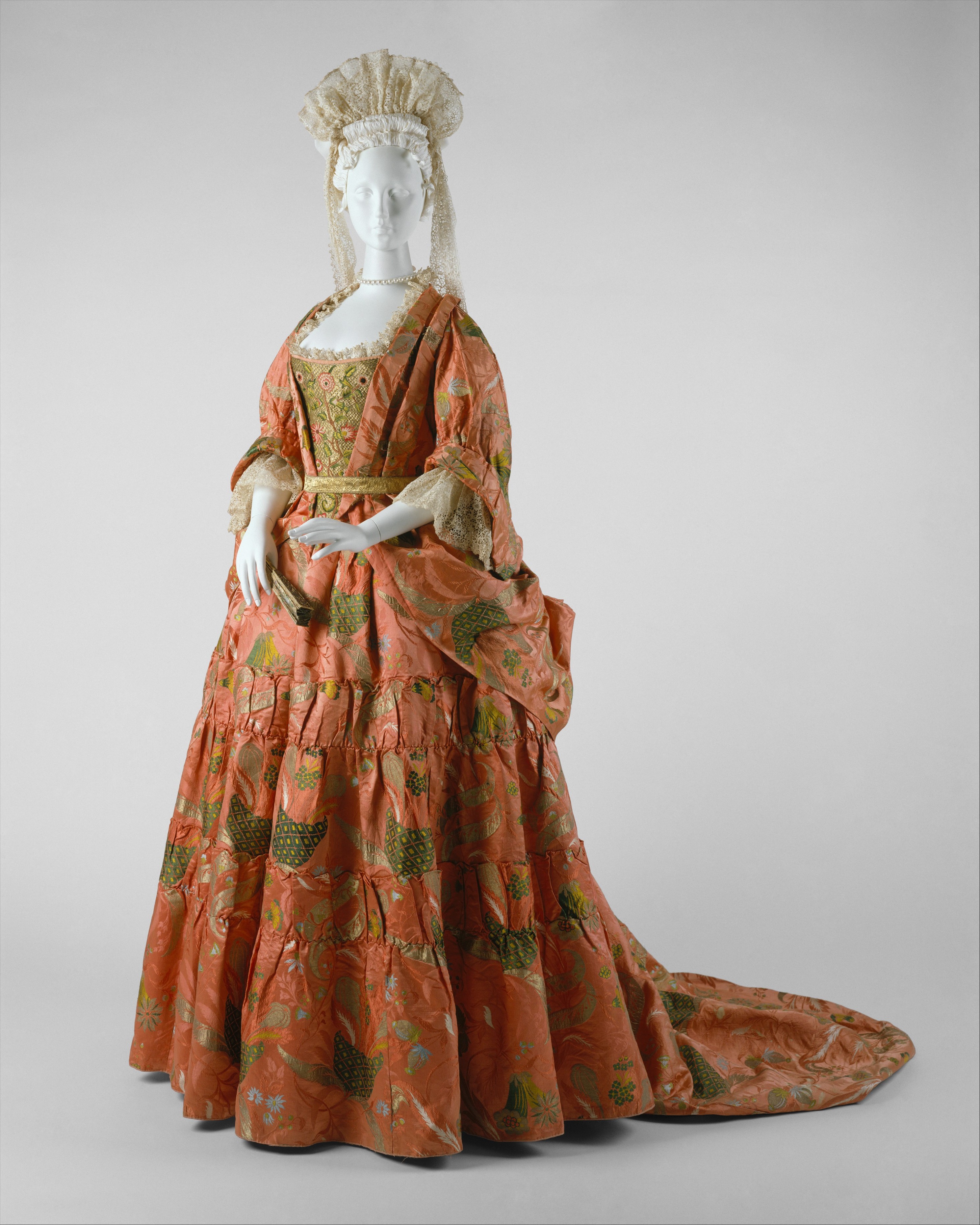
The mantua, a garment born from the opulent courts of 17th-century Britain, is typically consigned to the dusty annals of historical costume—a relic of stiff brocade, whalebone stays, and aristocratic excess. Yet, for the SS26 season, Zoey Fashion Laboratory recontextualizes this architectural garment not as a nostalgic artifact, but as a radical prototype for futuristic silhouette engineering. This analysis dissects the mantua through an avant-garde lens, stripping away its historical drapery to reveal a core of structural innovation that resonates powerfully with contemporary deconstructive aesthetics. By focusing on its British origins, its foundational materials—silk and metal—and its standalone potential, we propose a definitive reinterpretation: the mantua as a modular, kinetic system rather than a fixed, ceremonial shape.
The Historical Mantua: A Study in Architectural Excess
To understand the mantua’s avant-garde potential, one must first recognize its original structural DNA. Originating in the late 1600s as a loose, unboned gown, it evolved into a highly structured ensemble defined by its dramatic train, tight bodice, and the iconic stomacher—a triangular, often jeweled or embroidered panel that sat rigidly over the chest. The British mantua, distinct from its French counterpart, emphasized a more severe, almost militaristic silhouette: a high, conical bust, a cinched waist, and a sweeping, voluminous skirt supported by panniers or a farthingale. This was not mere clothing; it was a statement of power, wealth, and spatial dominance.
The materiality of the British mantua was equally deliberate. Silk, imported at great expense, provided a lustrous, almost liquid surface that caught light and moved with a deliberate, rustling weight. Metal played a crucial supporting role: whalebone (often replaced with steel or iron in later iterations) formed the rigid stays, while metallic threads, gold and silver lace, and gilded buttons added shimmering focal points. The garment’s construction was a feat of engineering, with complex seaming, cartridge pleating, and internal supports that created a self-contained, almost architectural volume. The wearer was transformed into a living sculpture, static yet imposing.
Deconstructive Aesthetics: Unmaking the Mantua for SS26
Zoey Fashion Laboratory’s approach to the mantua for SS26 begins with a deliberate act of deconstruction. We do not replicate the historical form; we unmake it. The goal is to extract its core principles—volume, tension, asymmetry, and structural contrast—and recombine them into a futuristic silhouette that challenges conventional notions of wearability and form.
First, we interrogate the silhouette. The historical mantua’s conical bodice and wide skirt are reinterpreted as modular components, no longer fixed to the body but suspended from a central, metal armature. Imagine a lightweight, brushed-aluminum exoskeleton that traces the spine and flares outward at the hips, creating a dramatic, cantilevered profile. The silk is no longer a continuous fabric but fragmented: panels of raw-edged, deconstructed silk satin and organza are draped asymmetrically across the exoskeleton, secured by magnetic fasteners or articulated joints. The train, once a symbol of courtly status, is reimagined as a detachable, kinetic tail—a sweeping, weighted silk panel that can be removed or rotated via a simple mechanical pivot. This is not a garment that restricts; it is a system that adapts.
Second, we exploit the material dialogue between silk and metal. The historical mantua used metal as hidden infrastructure. In our SS26 iteration, metal becomes an exposed, expressive element. We propose a bodice constructed from laser-cut, oxidized steel scales, each individually riveted to a silk base, creating a flexible yet rigid exoskeleton that mimics the medieval armor aesthetic of the original stomacher. The silk, in contrast, is treated with a liquid-metal finish—a high-shine, almost chrome-like coating that reflects light in fragmented, prismatic patterns. The juxtaposition is deliberate: the cold, industrial metal against the fluid, organic silk produces a tension that is both visually arresting and conceptually rich. The metal provides the structure; the silk provides the breath.
Structural Innovation: The Mantua as Kinetic Architecture
The most radical departure from the historical mantua is our focus on kinetic movement. The original garment was designed for static display, a frozen moment of aristocratic ceremony. For SS26, we engineer the mantua as a dynamic, moving form. The pannier structure is replaced with a series of pneumatic, air-filled chambers integrated into the skirt’s lining. These chambers can be inflated or deflated via a small, wearable pump, allowing the wearer to modulate the volume of the silhouette in real time—from a sleek, columnar shape to a dramatic, bell-like expanse. This is not merely a gimmick; it is a commentary on the performative nature of fashion, where the garment itself becomes an instrument of transformation.
Furthermore, the metal armature incorporates articulated joints at the shoulders, elbows, and hips, allowing for a range of motion previously unimaginable in a mantua. The sleeves, once stiff and restrictive, are now composed of interlocking metal rings (reminiscent of chainmail but far more delicate) that can be expanded or contracted via a tension system. The result is a silhouette that shifts with every gesture—a living, breathing sculpture that redefines the relationship between body and garment. The train, now a modular attachment, can be manipulated via a system of hidden cables, allowing the wearer to raise it into a dramatic, wing-like form or let it trail behind like a liquid shadow.
Futuristic Silhouettes: The Mantua Reimagined for SS26
The final silhouette for Zoey Fashion Laboratory’s SS26 mantua is a study in controlled chaos. The bodice is asymmetrical: one shoulder is bare, while the other is encased in a sculptural, metal-and-silk gauntlet that extends to the wrist. The waist is cinched not by a corset but by a flexible, memory-metal belt that can be adjusted to create a sharp, architectural indent. The skirt is a hybrid of two opposing volumes: a front panel that is sleek and floor-length, and a back panel that explodes into a dramatic, petal-like cascade of layered silk and metal mesh. The overall effect is one of futuristic asymmetry—a silhouette that is simultaneously grounded and airborne, historical and futuristic.
The color palette is deliberate: oxidized gunmetal, liquid silver, and deep, almost black indigo silk. There are no pastels, no nostalgia. This is a garment for a world that has moved beyond historical reference, yet carries the weight of its structural lineage. The mantua is no longer a costume; it is a wearable infrastructure for the 21st-century avant-garde.
Conclusion: A Standalone Avant-Garde Statement
The British mantua, stripped of its courtly trappings, reveals itself as a powerful precursor to contemporary deconstructive fashion. For SS26, Zoey Fashion Laboratory does not merely reference history; it re-engineers it. By exposing the metal armature, fragmenting the silk, and introducing kinetic systems, we transform a static relic into a dynamic, futuristic silhouette. This is not a costume for a period drama; it is a standalone avant-garde statement that challenges the very definition of garment architecture. The mantua, in our hands, becomes a manifesto for the future of fashion—one where structure is not hidden but celebrated, where volume is not fixed but controlled, and where the past is not replicated but deconstructed into a new, radical form.