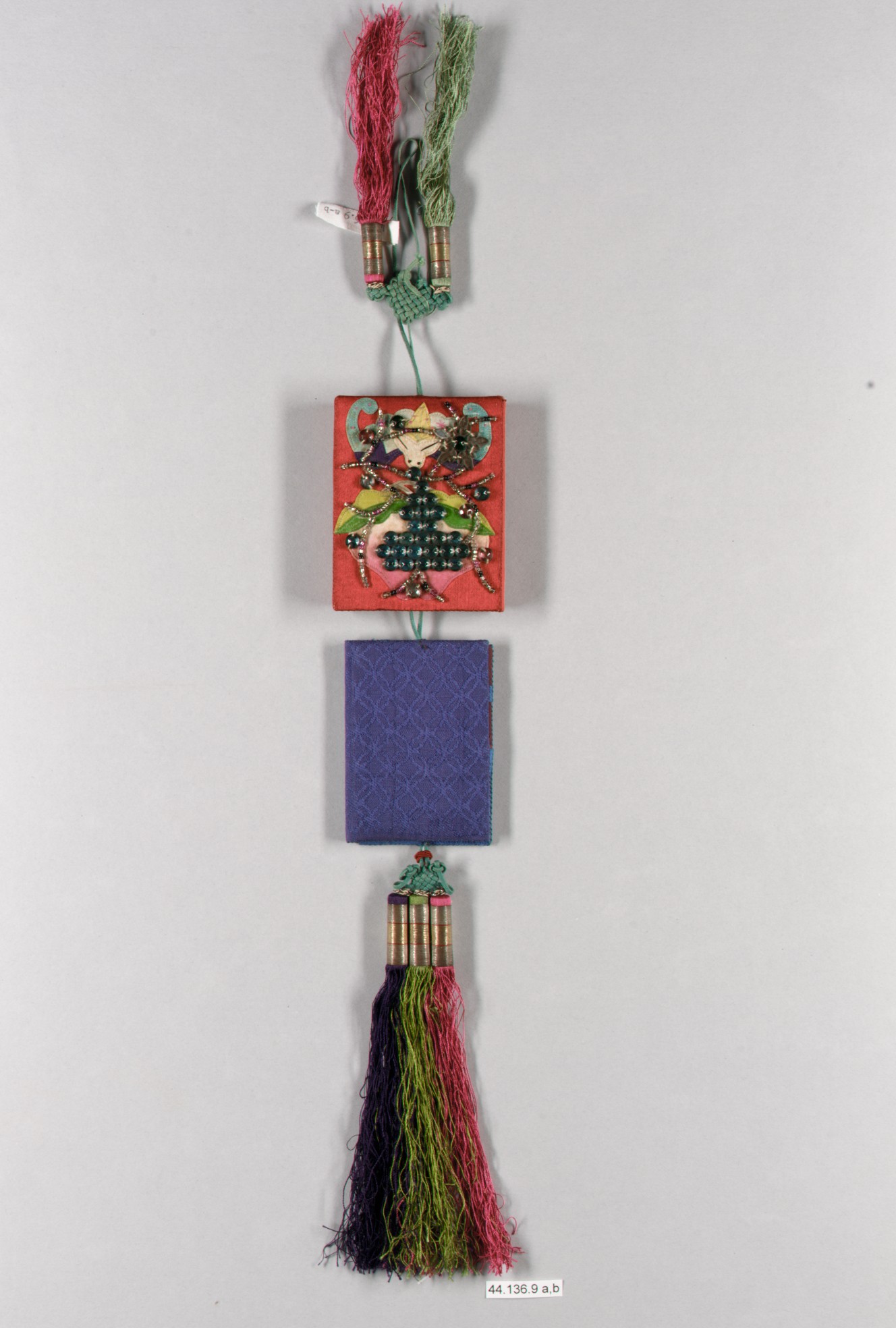
The Dialectic of Reflection and Puncture: A Deconstructive Analysis of the Mirror and Needlecase
In the relentless pursuit of sartorial futurism, the avant-garde designer must often look backward—not for nostalgia, but for the latent potential embedded in historical artifacts. The Mirror and Needlecase, a Chinese artifact of profound material paradox, offers a compelling thesis for SS26. This object, combining the fragile, reflective surface of glass with the piercing, constructive utility of a needlecase, presents a unique dialectic. At Zoey Fashion Laboratory, we interpret this not as a relic, but as a blueprint for a new architectural language of the body. The mirror reflects the self, while the needlecase contains the instrument of alteration; together, they propose a garment that is both a surface of identity and a tool for its perpetual reconstruction.
Material Alchemy: Glass as Structural Skin
The selection of glass and silk as primary materials demands a radical rethinking of garment construction. In our SS26 analysis, glass transcends its traditional role as a decorative embellishment. Instead, we engineer it as a structural skin—a brittle, yet luminous exoskeleton that fractures and reforms around the human silhouette. The silk, meanwhile, serves as the supple, organic underlayer, a memory of the body’s softness. The needlecase, typically a container of steel, is reimagined as a linear framework of silk-wrapped glass rods, their sharp, angular forms echoing the precision of a seamstress’s tool. This is not a garment of comfort; it is a garment of tension and release, where the mirror’s reflective shards are suspended in a web of silk filaments, creating a dynamic interplay between fragility and strength.
The material innovation lies in the controlled breakage of glass. Instead of uniform panes, we deploy irregular, shard-like geometries that catch and distort light. These shards are not sewn, but suspended within a matrix of transparent silk organza, creating a floating, holographic effect. The needlecase is deconstructed into its individual needles, each one a fine, glass-tipped filament that pierces the silk at precise intervals, forming a rhythmic pattern of punctures. This technique, which we call Punctured Reflection, allows the garment to breathe, to move, and to reveal glimpses of the body beneath—a constant reminder of the act of making and unmaking.
Futuristic Silhouette: The Asymmetrical Exoskeleton
The silhouette for SS26 abandons the anthropomorphic symmetry of classical couture. Inspired by the needlecase’s functional asymmetry—the way it holds tools of varying lengths and purposes—we propose a fractured, asymmetrical exoskeleton. The garment’s primary structure is a single, sweeping shoulder that extends into a cantilevered wing of glass shards, mirroring the reflective surface of the artifact. This wing is counterbalanced by a cascade of silk and glass needles that trail down the opposite hip, forming a dynamic, diagonal line that defies gravity. The waist is cinched not by a belt, but by a harness of interconnected glass rings, each one a miniature mirror that captures and multiplies the surrounding environment.
The lower body is a study in negative space. A skirt of layered silk panels is punctuated by large, irregular cutouts, each framed by a border of glass needles. These openings are not merely decorative; they are functional portals for movement and breath, allowing the wearer to step through the garment rather than into it. The overall effect is one of controlled chaos, where the silhouette appears to be in a constant state of formation and dissolution. This is not a static form; it is a living architecture that shifts with every gesture, reflecting the mirror’s ability to both capture and distort reality.
Structural Innovation: The Architecture of Puncture and Reflection
The core innovation of this study lies in the integration of puncture as a structural element. The needlecase is not merely a motif; it is a construction methodology. We introduce a technique termed Needle-Lock Construction, where individual glass-tipped silk filaments are woven through the garment’s primary seams, creating a lattice that is both tensile and compressive. This lattice serves as the garment’s internal skeleton, allowing the glass shards to be anchored without rigid boning. The result is a flexible, yet unyielding structure that adapts to the body’s contours while maintaining its architectural integrity.
Furthermore, the mirror surface is reimagined as a dynamic interface. Each glass shard is coated with a micro-thin layer of reflective material that changes its opacity in response to heat or light, creating a responsive surface that can shift from opaque to translucent. This is not a gimmick; it is a functional dialogue between the wearer and the environment. When the wearer moves, the shards catch and scatter light, creating a cacophony of reflections that obscure and reveal the body in equal measure. The needlecase, meanwhile, is deconstructed into a series of detachable modules, each one a small, silk-wrapped glass capsule containing a single needle. These modules can be repositioned along the garment’s lattice, allowing the wearer to reconfigure the silhouette in real time—a living, breathing artifact of personal expression.
Conclusion: The Garment as a Tool for Becoming
The Mirror and Needlecase is not a static object of beauty; it is a philosophical instrument that challenges the very notion of garment as a finished product. In our SS26 avant-garde analysis, this artifact becomes a catalyst for a new sartorial paradigm—one where the garment is a tool for self-construction, a surface for reflection, and a container for the instruments of change. The fusion of glass and silk, of reflection and puncture, yields a silhouette that is both futuristic and deeply rooted in the tactile, visceral act of making. At Zoey Fashion Laboratory, we do not simply dress the body; we architecture the self. The Mirror and Needlecase is our manifesto: a garment that is never complete, always becoming, and forever reflecting the infinite possibilities of the human form.