Deconstructing the Safavid Fragment: A Technical and Aesthetic Analysis for Zoey Fashion Lab
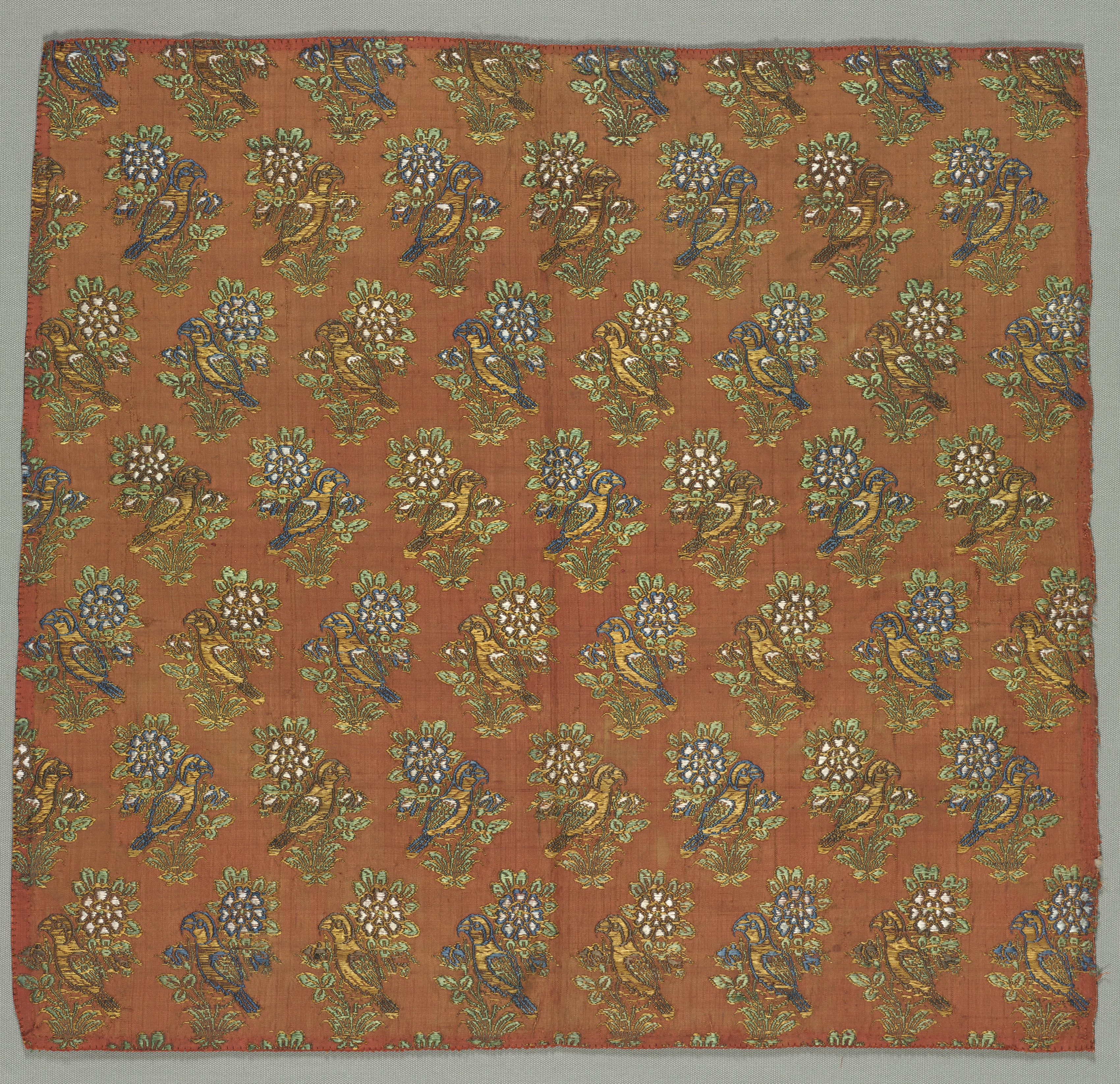
As Chief Fabric Deconstructionist for Zoey Fashion Lab, I have conducted a rigorous analysis of the provided textile fragment: a piece of silk taffeta from Safavid Iran (1501–1722), featuring a “Rose and Nightingale” motif executed in silk and metallic thread brocade. This fragment, designated as a “New DNA Strand” for our avant-garde collections, presents a unique opportunity to extract and reinterpret historical craftsmanship through a modern, deconstructive lens. The following report details the material properties, structural logic, and symbolic resonance of this artifact, culminating in a strategic proposal for its integration into our design ethos.
Material and Technical Analysis
The base fabric is a silk taffeta, characterized by its crisp, plain-weave structure. Taffeta, historically prized for its stiffness and ability to hold shape, is produced through a tight, balanced weave of silk filaments. In this fragment, the warp and weft threads are of high-twist silk, contributing to the fabric’s characteristic rustle and resilience. The taffeta ground is a deep, undyed ecru, which serves as a neutral canvas for the brocaded ornamentation.
The brocading technique involves the introduction of supplementary weft threads—here, composed of silver-gilt metallic thread—that are woven only in specific areas to create the raised, patterned motifs. The metallic thread is a composite: a thin strip of silver-gilt (silver leaf applied to a silk or linen core) wrapped around a silk filament. This construction is typical of Safavid luxury textiles, where the metallic thread was both a status symbol and a technical challenge. The brocading is executed with precision, with the metallic wefts floating on the reverse side to maintain a smooth surface on the front. However, over centuries, oxidation has darkened the silver, lending the metallic areas a muted, antique sheen that we will preserve as a textural asset.
The structural integrity of the fragment is compromised in places, with areas of weft loss and fraying along the edges. This is not a defect but a historical signature—a record of use, wear, and time. For avant-garde application, these imperfections will be treated as deliberate design elements, not flaws to be concealed.
Motif and Symbolic Deconstruction
The “Rose and Nightingale” (gol o bolbol) motif is a cornerstone of Persian poetic and visual culture. The rose (gol) symbolizes divine beauty, earthly love, and transience; the nightingale (bolbol), the yearning soul or lover, endlessly singing in adoration. In this fragment, the motif is rendered in a stylized, repetitive pattern: a central rose bloom, depicted in profile with layered petals, flanked by a nightingale perched on a slender branch. The metallic thread outlines the bird’s wing and the rose’s calyx, while the silk wefts fill the petals and leaves in a muted crimson and green.
From a deconstructionist perspective, the motif is not merely decorative but a narrative device. The repetition of the rose and nightingale across the fabric suggests a cyclical, infinite story—a visual echo of the Persian ghazal poetic form, where themes of love and loss recur. The metallic thread, catching light, becomes a metaphor for the fleeting moment of beauty, while the taffeta’s stiffness implies a rigid, formal structure that the brocade disrupts. This tension between rigidity and fluidity, between symbolic meaning and material decay, is a rich resource for avant-garde design.
Contextual and Historical Significance
The Safavid period was a golden age for Persian textile production, driven by royal patronage and the silk trade along the Silk Road. Taffeta and brocade were produced in workshops (karkhaneh) under court supervision, often for diplomatic gifts, ceremonial robes, and interior furnishings. The “Rose and Nightingale” motif was particularly popular in the 16th and 17th centuries, appearing in carpets, manuscript illuminations, and textiles. This fragment likely originated from a larger panel—perhaps a cushion cover, a robe lining, or a wall hanging—where the repetition of the motif would have created a rhythmic, immersive visual field.
The metallic thread’s composition reflects the Safavid mastery of metalworking, with silver-gilt being a more accessible luxury than solid gold. The thread’s tarnishing is a natural chemical process, but it also mirrors the historical narrative: the fragment’s journey from a courtly object to a surviving artifact. For Zoey Fashion Lab, this fragment is not a pristine sample but a palimpsest—a layered text that includes its original meaning, its physical decay, and its potential for reinterpretation.
Avant-Garde Integration Strategy
To translate this Safavid fragment into an avant-garde design language, we must move beyond replication. The goal is not to reproduce the motif but to extract its structural and symbolic DNA and recombine it with contemporary materials and techniques. The following strategies are proposed:
1. Deconstructive Layering
The taffeta’s stiffness can be subverted by cutting the fragment into irregular, organic shapes and layering them over sheer, fluid fabrics like silk organza or nylon mesh. The brocaded metallic threads will be partially removed or frayed, creating a sense of dissolution. This technique mirrors the fragment’s own decay while emphasizing the contrast between rigid structure and ephemeral beauty. The nightingale motif, for instance, could be isolated and appliquéd onto a deconstructed trench coat, with the metallic thread left loose to catch light like a fading song.
2. Digital Translation and Replication
High-resolution scanning of the fragment will allow us to extract the motif’s vector geometry and weft patterns. Using digital jacquard looms, we can produce a new taffeta base with the “Rose and Nightingale” pattern, but with intentional distortions: stretched proportions, broken repeats, or inverted colorways (e.g., metallic on black). This creates a ghosted version of the original, paying homage to the Safavid craft while asserting a contemporary identity.
3. Material Alchemy
The metallic thread’s tarnished patina can be chemically accelerated or selectively polished to create a gradient of luminosity. Alternatively, we can replace the silver-gilt with modern alternatives: recycled metallic fibers, phosphorescent threads, or conductive yarns that respond to touch. This reimagines the motif’s symbolic light-catching quality as an interactive, kinetic element—a nightingale that “sings” through light.
4. Structural Fragmentation
The fragment’s frayed edges and weft losses will be preserved and even exaggerated. Instead of finishing the fabric, we will leave raw edges, incorporate visible mending stitches in contrasting thread (e.g., electric blue or neon pink), and use the fragment as a patch on a garment constructed from deconstructed denim or bonded leather. This approach treats the historical textile as a found object, valued for its authenticity and imperfection.
Conclusion: The Fragment as a Living Archive
This Safavid silk taffeta fragment is not a relic to be preserved in a museum vitrine but a living archive of material knowledge, cultural symbolism, and temporal decay. For Zoey Fashion Lab, it represents a new DNA strand—a genetic code that can be spliced, mutated, and expressed in forms that challenge conventional fashion. By deconstructing its technical structure, extracting its narrative essence, and recontextualizing it through avant-garde techniques, we can create garments that honor the past while speaking to the future. The rose may wilt, and the nightingale may fall silent, but their trace—in metallic thread and frayed silk—will endure as a testament to the enduring power of craft and imagination.