The Deconstructive Gastronomy of Form: Feeding Bowl as SS26 Avant-Garde Architecture
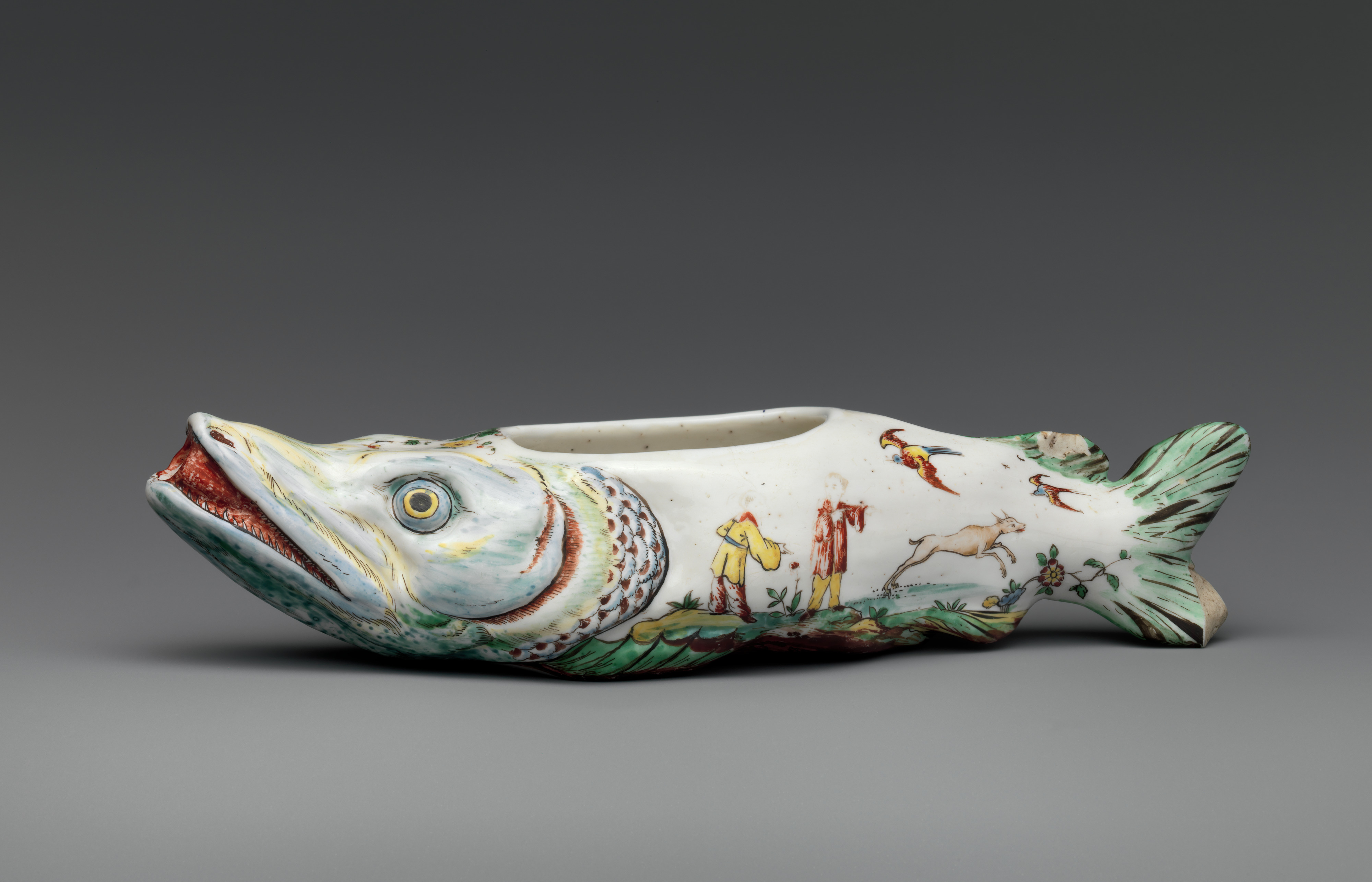
In the rarefied ecosystem of high-concept couture, the mundane object often serves as the most potent catalyst for radical innovation. For Zoey Fashion Laboratory’s SS26 collection, the subject of analysis is the feeding bowl—a vessel of primal sustenance, reimagined through the lens of avant-garde deconstruction. This is not a nostalgic nod to domesticity, but a surgical extraction of its structural DNA. Sourced from the Global Frontier—a conceptual territory where material culture meets speculative design—this feeding bowl is crafted from tin-glazed soft-paste porcelain, adorned with polychrome enamels. Its historical resonance as a utilitarian artifact is deliberately subverted. Here, we dismantle its geometry, its surface tension, and its ritualistic function to propose a new vocabulary for futuristic silhouettes and structural innovation.
Material Alchemy: Porcelain as a Second Skin
The choice of tin-glazed soft-paste porcelain is not arbitrary; it is a deliberate provocation against the weight of tradition. In the context of SS26, this material is reimagined not as rigid ceramic but as a pliable, almost epidermal membrane. The feeding bowl’s polychrome enamels—those vivid, almost gaudy floral arabesques—are extracted and reinterpreted as digital prints that map directly onto the body’s topography. The glaze’s characteristic crackling, known as “crazing,” becomes a textural leitmotif: a lattice of fine, fractured lines that evoke both geological strata and cybernetic circuitry. This is porcelain as a living surface, one that breathes with the wearer’s movement.
The structural innovation lies in the inversion of weight. Traditional porcelain is heavy, static, and fragile. In our SS26 vision, it is transformed into a series of modular, lightweight composites—porcelain-infused bio-resins that retain the chromatic depth of polychrome enamels while achieving the flexibility of haute couture fabrics. These are not mere garments; they are wearable architectural fragments. The bowl’s concave interior becomes a sculptural bustier, its rim a cantilevered collar that frames the face like a halo of glazed light. The polychrome motifs—peonies, phoenixes, or abstracted flora—are deconstructed into pixelated overlays, printed on sheer organza or laser-cut into porcelain-layered leather.
Deconstructive Silhouettes: The Bowl as Bodily Prosthesis
The feeding bowl’s geometry—a shallow, circular basin with a gently undulating rim—is the foundation for a radical rethinking of the human silhouette. For SS26, we propose a deconstructive approach that fragments and reassembles this form into a series of asymmetrical, kinetic structures. The bowl is not worn; it is inhabited. Its concave shape is translated into a negative-space corset, where the torso appears to be nested within a porcelain crater. The rim, often scalloped or fluted, becomes a series of articulated panels that flare outward from the hips or shoulders, creating a silhouette that is both protective and provocative.
Consider the “Feeding Bowl Gown”: a floor-length sheath constructed from overlapping porcelain shards, each piece hinged with micro-milled titanium joints. The garment’s surface is a mosaic of polychrome enamel fragments, their glossy finish contrasting with matte, unglazed edges. The silhouette is futuristic yet archaic—a homage to the feeding bowl’s origins in ritual feasting, but rendered in the language of space-age armor. The bowl’s interior, often adorned with a central motif, is reimagined as a circular train that trails behind the wearer, its enameled surface catching light like a stained-glass window in motion.
For a more avant-garde proposition, the “Porcelain Avian” ensemble deconstructs the bowl into a series of wing-like appendages. The rim is elongated and sharpened into blade-like epaulets, while the concave basin is split into two halves, each forming a cupped shoulder piece. The polychrome enamels are stripped of their floral imagery and replaced with geometric abstracts—concentric circles, radiating lines—that mimic the bowl’s original decorative logic but in a purely modernist idiom. The silhouette is aggressive, angular, and distinctly non-human, suggesting a hybrid of porcelain vessel and predatory bird.
Structural Innovation: The Engineering of Fragility
The true avant-garde breakthrough lies in the structural logic of fragility. Porcelain is inherently brittle, but in SS26, we weaponize this vulnerability. Each garment is engineered with breakaway seams and magnetic closures that allow the porcelain elements to detach and reattach, creating a dynamic, ever-changing form. The feeding bowl’s glaze, with its characteristic crazing, is mimicked through a surface-layer technique where a thin film of enameled glass is fused onto a flexible substrate. When the wearer moves, the glass cracks in controlled patterns, producing a sonic and visual experience—a symphony of tiny fractures that echo the bowl’s original material history.
The polychrome enamels are not merely decorative; they are structural markers. Each color—cobalt blue, iron red, copper green—corresponds to a specific stress point or articulation. A deep crimson enamel, for instance, might indicate a hinge joint, while a pale celadon glaze marks a flexible membrane. This is chromatic engineering, where color becomes a functional language. The bowl’s original floral motifs are abstracted into load-bearing patterns: petals become tensile webs, leaves become stabilizing ribs. The result is a garment that is as much a feat of engineering as it is a work of art.
Ritual and Praxis: The Feeding Bowl as Performance
Finally, the feeding bowl’s ritualistic context—its role in the act of feeding—is reimagined as performative couture. For SS26, the garments are designed to be activated through gesture. A dress with a bowl-like skirt can be tilted to pour a cascade of porcelain discs, each one a miniature enameled ornament. A jacket with scalloped shoulder panels can be folded inward to create a vessel shape, transforming the wearer into a living sculpture of sustenance. The polychrome enamels, when viewed up close, reveal hidden narratives: micro-printed texts of global culinary histories, or QR codes that unlock digital feasts. This is fashion as interactive anthropology, where the feeding bowl becomes a portal to a future where clothing is both armor and ritual object.
In conclusion, the feeding bowl from the Global Frontier is not a relic of the past but a blueprint for the future. Through deconstructive aesthetics, futuristic silhouettes, and structural innovation, Zoey Fashion Laboratory transforms this humble vessel into a manifesto for SS26. The porcelain is no longer static; it is alive, fractured, and re-assembled into a new form of wearable architecture. This is avant-garde couture at its most radical—a feeding bowl that feeds not the body, but the imagination.