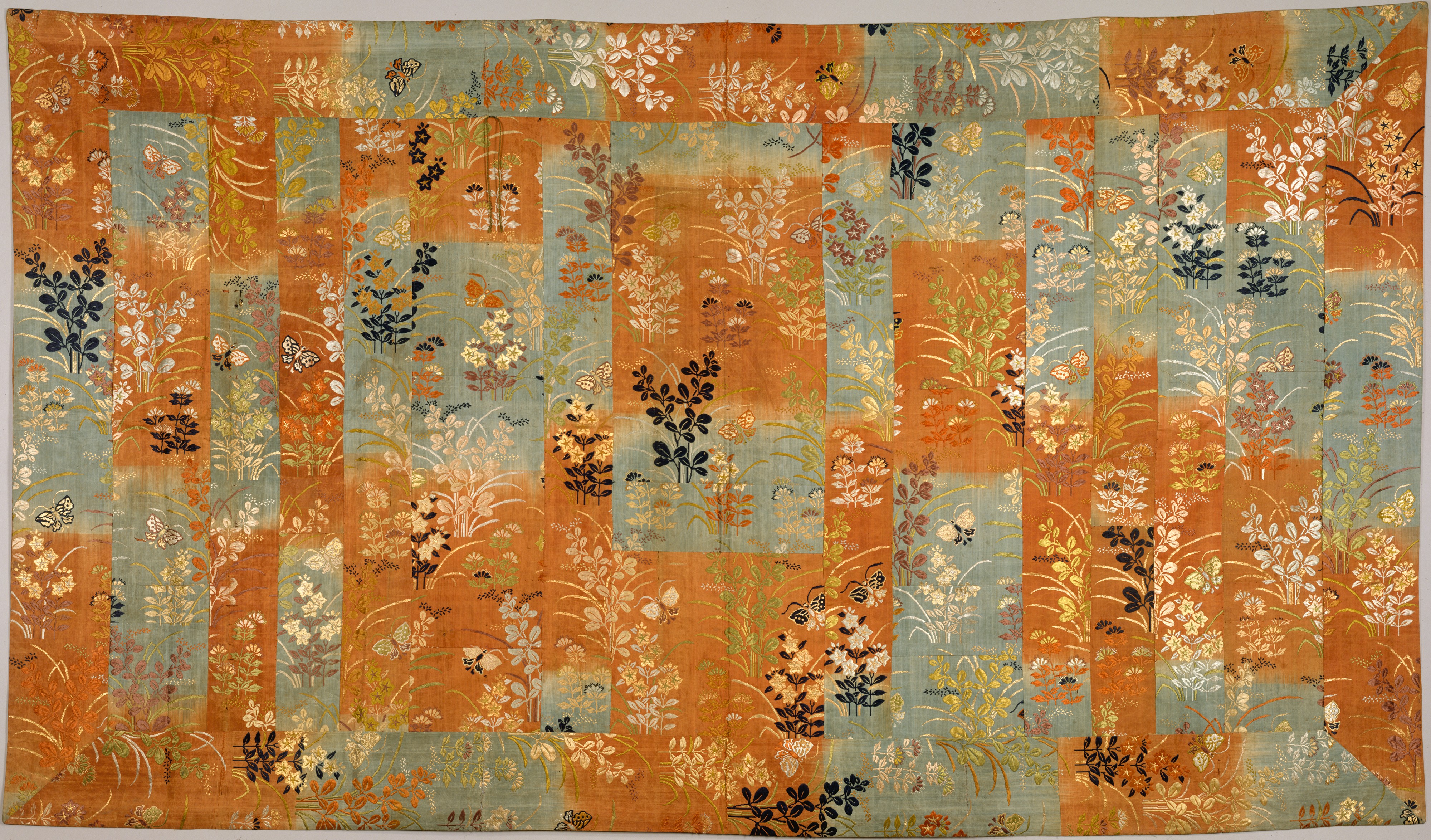
Deconstructing Sanctity: The Kesa as Avant-Garde Armature
The garment before us is not merely an object but a palimpsest of profound cultural codes. Its origin as a Noh theater karaori—a brocaded costume symbolizing the ephemeral beauty and tragic depth of female characters—layers it with narratives of performance, illusion, and transience. Its subsequent transformation into a Buddhist kesa, the patched robe denoting monastic renunciation and enlightenment, inscribes a second text of spirituality, austerity, and detachment. Zoey Fashion Laboratory’s intervention does not simply reference these histories; it deconstructs their very semiotics to forge a new sartorial language for SS26. This analysis posits the piece as a foundational study in architectural spirituality, where historical weight is not a burden but a kinetic energy harnessed for futuristic silhouette innovation.
Structural Dialectics: The Rigid Grid Versus the Organic Flow
The kesa’s traditional construction is a masterpiece of geometric intentionality—a grid of field (den) and patches (shippe) representing rice fields and humility, assembled with a precise, flat architecture. The Noh karaori, in contrast, is a fluid, enveloping form, its lavish brocade (nishiki) designed for dynamic movement under stage lights. Our SS26 interpretation engages in a radical structural dialectic between these two principles. We propose dissolving the flat grid into a three-dimensional, exoskeletal armature. Imagine the traditional rectangular "fields" of the kesa extruded into rigid, minimalist polycarbonate panels, worn as an external framework. These panels, however, are not opaque shells; they serve as anchoring points and windows through which the lavish, deconstructed karaori fabric erupts.
The silk brocade, with its autumn grasses and butterflies—motifs of impermanence (mujō)—is liberated from its original garment form. It is sliced, draped, and tensioned within and against the rigid armature, creating a dynamic interplay of compression and release. A cascade of brocaded butterflies may be caught in a transparent resin "patch," while streams of grass-motif silk appear to be pulled through geometric apertures in the exoskeleton, as if nature is reclaiming the rigid structure. This creates a silhouette that is simultaneously architecturally severe and organically fluid—a walking contradiction that embodies the avant-garde ethos. The silhouette is no longer defined by the body’s shape but by the spatial relationship between this engineered framework and the poetic, fragmented textile it hosts.
Material Alchemy & Temporal Collapse
The original material—twill-weave silk brocaded with silk and metallic thread—is treated not as a relic but as a raw element for alchemical transformation. For SS26, we engage in a process of temporal collapse, fusing historical craft with speculative technology. The brocade may be embedded within bio-resin sheets, preserving its beauty while rendering it structurally rigid for panel construction. Metallic threads are extracted and rewoven with optical fibers or conductive yarns, allowing the autumn grass pattern to emit a subtle, programmable glow, echoing the Noh stage’s otherworldly ambiance.
Furthermore, the kesa’s symbolic patches are reimagined through additive manufacturing. Scans of the original, worn brocade texture are used to 3D-print "patches" in lightweight, sintered titanium or bioplastic, creating a tactile dialogue between the historical textile and its futuristic imprint. The concept of "rag" cloth, central to the kesa’s ethos, is translated into engineered non-woven composites made from recycled silk filaments and aerogel, creating ultra-light, insulating sections that contrast with the dense, historical brocade. This material dialogue creates a garment that speaks of both past and future, its very substance a site of innovation.
Silhouette as Spiritual Architecture for SS26
The ultimate expression of this study is a series of silhouettes that re-contextualize the garment’s purpose. It moves from ritual vestment to personal sanctuary architecture. One proposed silhouette features a unilateral, cantilevered frame extending from the shoulder, creating an asymmetrical, non-binary form that challenges traditional garment balance. The brocade flows from this anchor point in a calculated torrent, its length and volume modulated by magnetic closures and tension wires within the exoskeleton. Another iteration presents a modular, segmented kesa, where the wearer can assemble the rigid panels and textile components in various configurations—a commentary on the constructed nature of both identity and sanctity.
The act of wearing—once a ritual of monastic dressing—becomes a performative act of self-assembly and architectural engagement. The silhouette often obscures and reveals the body in unexpected ways, playing with concepts of modesty and exposure inherent in both source garments. It creates a space, a volume, around the wearer that is both protective and declarative. This is not fashion as clothing, but fashion as portable, psychospiritual habitat—a direct response to the SS26 zeitgeist’s demand for meaning, protection, and radical self-definition.
In conclusion, this study transcends cultural appropriation to achieve cultural transmutation. By subjecting the kesa-karaori hybrid to the rigorous principles of deconstructive aesthetics and structural innovation, Zoey Fashion Laboratory extracts its core DNA—impermanence, geometry, and transformative symbolism—and re-codes it for a future-facing context. The result is a profound avant-garde proposition: that the most radical silhouettes are born not from a rejection of history, but from its deepest, most respectful, and most fearless re-imagination. This garment is a blueprint for a new couture, where spirituality is worn as architecture, and history is the most innovative material in the laboratory.