Deconstructing the Amulet: Wax, Gold, and the Architecture of Protection for SS26
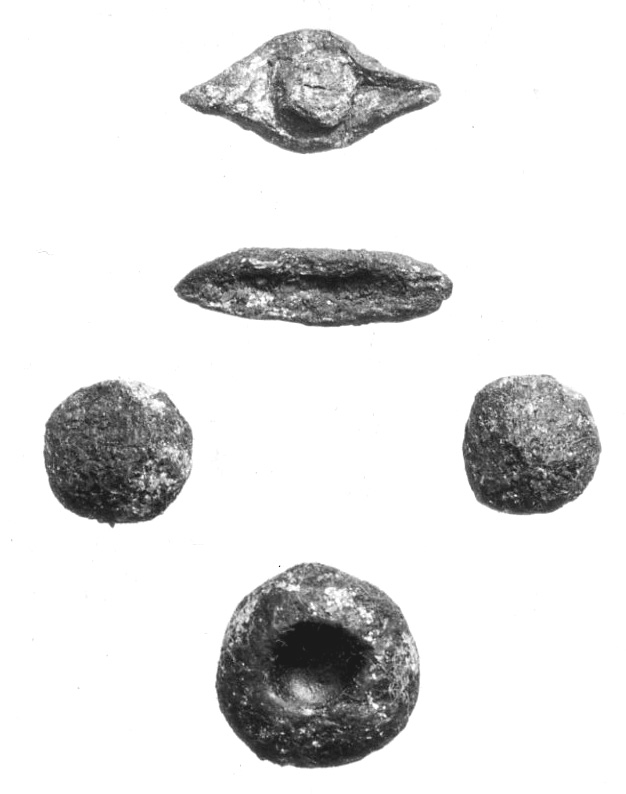
The avant-garde, by its very nature, exists in a state of perpetual rebellion against the familiar. For Zoey Fashion Laboratory’s SS26 collection, the subject of inquiry is not a garment in the traditional sense, but a set of amulets—objects of talismanic power reimagined as structural prototypes for a new frontier in couture. Sourced from the Global Frontier, a conceptual territory where material culture dissolves into pure form, these amulets are forged from two paradoxically opposed elements: wax, a medium of mutable impermanence, and gold leaf, a signifier of eternal value and fragility. This analysis deconstructs how this binary materiality informs a radical new silhouette, one that redefines the body as a vessel for protective, yet ephemeral, architecture.
The Material Dialectic: Wax as Memory, Gold as Future
At the core of this study is the dialectical tension between wax and gold leaf. Wax, in its raw state, is a material of organic memory—it retains the imprint of touch, heat, and time. It is a substance that yields to the body, suggesting a garment architecture that is not imposed but negotiated. Conversely, gold leaf is a material of absolute surface, a shimmering membrane that resists deformation. When applied to a wax substrate, it creates a paradox of permanence: the gold leaf renders the wax’s inherent fragility into a luminous, almost armored skin. This is not a simple layering; it is a fusion of the transient and the eternal. For SS26, the amulet becomes a microcosm of this fusion—a wearable object that functions as both a protective talisman and a structural node. The wax base, molded into organic, almost cellular forms, absorbs the body’s energy, while the gold leaf reflects it outward, creating a dialogic exchange between wearer and environment. This is not decoration; it is a material system that dictates the garment’s future silhouette.
Structural Innovation: The Amulet as Architectural Node
The traditional amulet is a pendant, a ring, a discrete object. Zoey Fashion Laboratory’s avant-garde vision repositions the amulet as a structural node—a point of articulation that generates the entire silhouette. Imagine a network of wax-gold amulets, each approximately five to eight centimeters in diameter, linked by fine, almost invisible chains of oxidized silver. These nodes are not applied to a garment; they are the garment. The body’s movement—the rotation of a shoulder, the flexion of a hip—activates the amulets, causing them to shift and realign. This creates a living, kinetic architecture. The silhouette is no longer a fixed form but a fluid topology. For example, a cluster of amulets at the clavicle can expand into a protective collar that rises and falls with breath, while a constellation at the waist can morph from a rigid corset into a flowing, undulating hip drape. This is structural innovation at its most radical: the garment is not cut or sewn; it is assembled through magnetic and gravitational relationships between amulets. The wax base allows for slight deformation, so each node molds slightly to the body’s contours, while the gold leaf maintains a pristine, reflective surface that captures and fragments light. The result is a silhouette that is simultaneously armored and ethereal, a protective shell that breathes.
Futuristic Silhouettes: The Body as a Field of Protection
The SS26 silhouette, born from this amulet architecture, rejects conventional draping and tailoring. Instead, it envisions the body as a field of protective forces. The amulets are positioned at key energy centers—the solar plexus, the temples, the spine, the joints—creating a visual and functional map of vulnerability and strength. The silhouette is asymmetrical by design, with denser clusters on the dominant side of the body, suggesting a shield or a carapace. The wax-gold nodes range in size from small, bead-like elements to larger, palm-sized discs. When clustered, they form a ribbed, almost exoskeletal structure that follows the body’s natural lines but amplifies them. For instance, a column of amulets descending the spine creates a futuristic, vertebrae-like tail that sways with movement. At the shoulders, larger, flatter amulets extend outward like architectural cantilevers, mimicking the protective wings of a cybernetic being. The palette is minimal: the warm, organic ivory of the wax against the cold, reflective yellow of the gold leaf, punctuated by the dark, matte silver of the linking chains. This is not a collection of colors but a study in light and shadow, where the gold leaf catches ambient light and the wax absorbs it, creating a dynamic, living surface.
Contextualizing the Amulet within Avant-Garde Couture
This set of amulets is not a mere accessory; it is a paradigm shift for how we conceive of garment construction. In the context of SS26, where sustainability and ephemerality are becoming critical, the wax-gold amulet offers a radical solution: the garment is infinitely reconfigurable. The wearer can add or remove amulets, change their arrangement, or allow them to wear down over time, with the wax developing patina and the gold leaf flaking to reveal the core beneath. This is couture as a living process, not a fixed product. The amulet set from the Global Frontier is a standalone study in how protective symbolism can be translated into structural logic. It challenges the notion that protection must be heavy or rigid; here, protection is light, reflective, and mutable. The wax base, which can be softened and reformed with body heat, allows for a perfect fit that evolves with the wearer, while the gold leaf provides a psychological armor of value and rarity. This is not fashion for the masses; it is avant-garde couture for the cognoscenti, a meditation on the intersection of material science, ritual, and future-facing design.
Conclusion: The Amulet as a Manifesto for SS26
Zoey Fashion Laboratory’s set of amulets, crafted from wax and gold leaf and rooted in the Global Frontier, is a definitive statement for SS26. It dismantles the boundary between object and garment, between protection and adornment, between the transient and the eternal. The structural innovation lies in the amulet’s role as a node, generating a silhouette that is both personalized and universal. The futuristic silhouette is not a shape but a system—a field of protective, luminous nodes that respond to the body’s every gesture. This is not a collection to be worn; it is a philosophy to be inhabited. For the avant-garde curator, this study offers a blueprint for how couture can evolve beyond fabric and thread, into a realm where material, meaning, and movement are one. The wax and gold amulet is the new frontier, and it is already here.