Deconstructing the Pommel Plate: An Avant-Garde Analysis for Zoey Fashion Lab
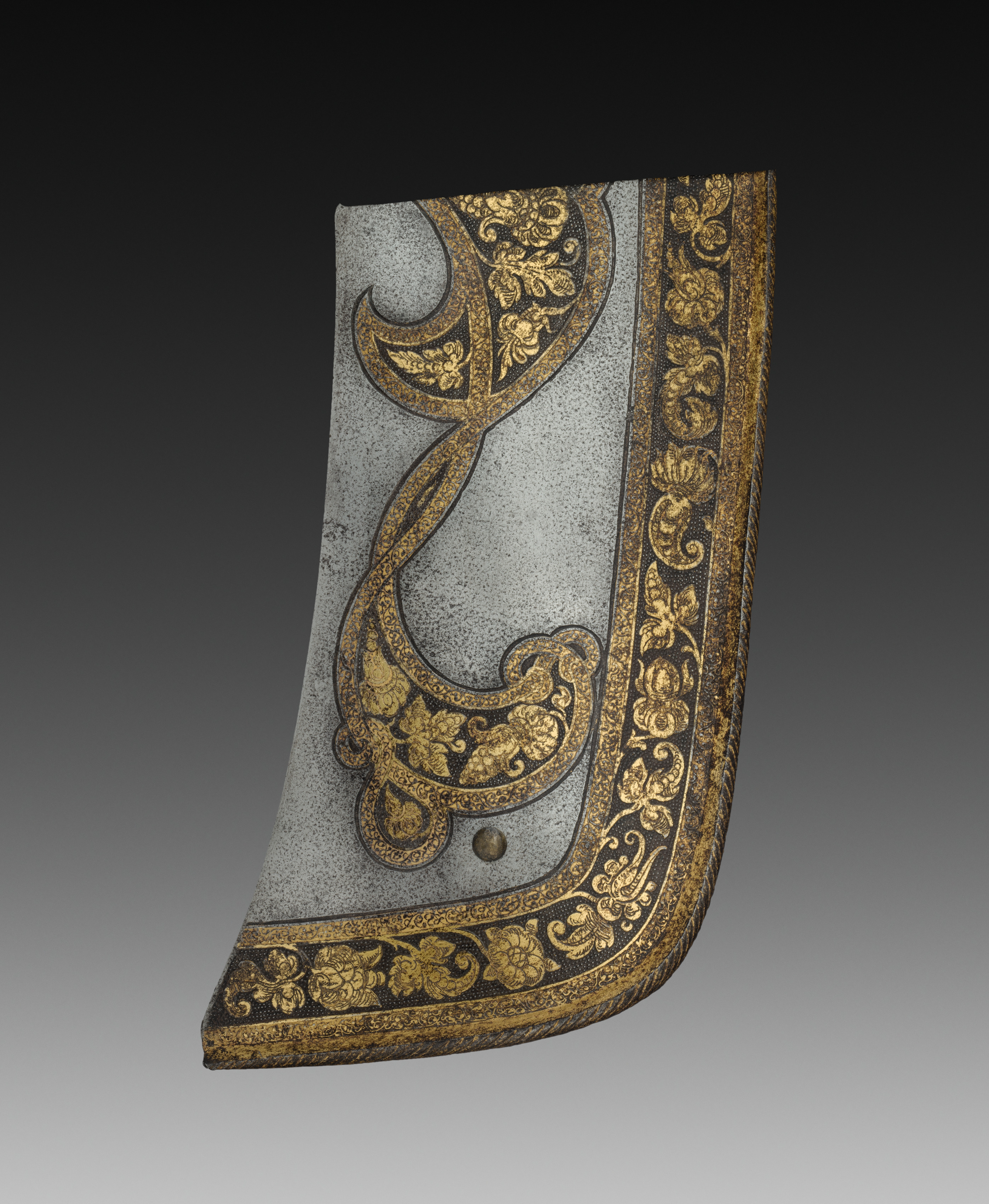
As the Chief Fabric Deconstructionist for Zoey Fashion Lab, my role is to dissect historical artifacts not as relics, but as blueprints for radical textile innovation. The subject of this analysis—the Pommel Plate of a Saddle from the Garniture of Rudolf II, crafted in Augsburg, Germany, from blued, etched, and gilded steel—offers a profound departure from conventional fabric studies. This piece, a functional yet ornamental component of a ceremonial horse saddle, embodies a paradox: it is rigid, metallic, and martial, yet its decorative language is fluid, organic, and regal. For Zoey Fashion Lab, this artifact is not a historical curiosity but a new DNA strand—a genetic code for avant-garde fashion that challenges the very definition of textile and garment construction.
Technical Alchemy: Blued, Etched, and Gilded Steel as Textile Metaphor
The technical execution of this pommel plate—bluing, etching, and gilding—transforms steel into a surface that mimics the depth and texture of luxurious fabric. Bluing, a heat-induced oxidation process, creates a deep, lustrous black-blue patina that evokes the iridescence of silk velvet or the sheen of beetle-wing embroidery. This is not a passive color; it is a dynamic, light-responsive surface that shifts from midnight to sapphire, much like the play of light on a high-twist silk satin. For Zoey Fashion Lab, this suggests a new approach to digital textile printing and reactive dye technology, where color is not applied but induced through material transformation. Imagine a fabric that changes hue based on body heat or ambient light—a living textile that breathes with the wearer.
Etching, achieved through acid-resist techniques, carves intricate patterns into the steel. These are not mere decorations; they are structural cuts that create negative space, depth, and relief. In textile terms, this parallels laser-cut leather or burnout velvet, where fabric is selectively removed to reveal underlying layers. The pommel plate’s etched motifs—scrollwork, arabesques, and mythological scenes—are not flat; they are three-dimensional, with shadows that change as the viewer moves. For avant-garde fashion, this suggests garments where pattern is not printed but physically carved into the material, creating a tactile, sculptural experience. Zoey Fashion Lab could explore metallic organza or coated mesh that is laser-etched with geometric or organic patterns, allowing the body to become a living canvas of light and shadow.
Gilding—the application of gold leaf or gold amalgam—introduces a luminous contrast to the dark blued steel. This is not uniform; it is selective, highlighting specific elements of the etched design. The gold catches light, drawing the eye to focal points, much like goldwork embroidery or metallic thread in haute couture. For Zoey Fashion Lab, this suggests a new language of embedded luminosity—where precious metals are not just applied but integrated into the textile matrix. Consider a fabric woven with micro-thin gold filaments that only appear when the fabric is twisted or draped, creating a hidden opulence that reveals itself in movement.
Structural Paradox: Rigidity as a Foundation for Fluid Design
The pommel plate is inherently rigid—it is armor, not clothing. Yet its placement on a saddle, which is itself a structure of tension and support, suggests a paradox: rigidity can enable fluidity. In the context of the saddle, the pommel plate protects the rider’s hand and provides structural integrity to the seat. For Zoey Fashion Lab, this translates into architectural fashion where rigid elements—such as boning, corsetry, or exoskeletal frames—are not constraints but liberators. They create a silhouette that is both protective and expressive, allowing the body to move within a defined space.
This is a direct challenge to the traditional bias of fabric as supple and yielding. Instead, the pommel plate inspires a new category: hard textiles. These are materials that are not woven or knitted but cast, molded, or forged. Think of carbon fiber mesh, 3D-printed polymers, or thermoplastic-coated fabrics that can be shaped into complex, three-dimensional forms. The pommel plate’s curvature—designed to fit the hand and the saddle’s pommel—suggests ergonomic tailoring, where the garment is not draped but engineered. Zoey Fashion Lab could explore body-mapped armor for the avant-garde runway, where rigid panels are articulated with flexible joints, creating a second skin that is both protective and expressive.
Narrative Embellishment: Mythological Scenes as Textile Storytelling
The etched and gilded scenes on the pommel plate are not random; they are narrative, depicting mythological and allegorical figures that reinforce the emperor’s power and virtue. This is wearable storytelling—a concept Zoey Fashion Lab can translate into digital embroidery or jacquard weaving that embeds complex imagery into fabric. The pommel plate’s narrative density—where every inch of surface is charged with meaning—suggests a return to ornamentation as communication. In an age of minimalism, this is a radical act: clothing that demands to be read, not just seen.
For Zoey Fashion Lab, this could manifest as interactive textiles where patterns shift based on viewer proximity or touch, using conductive threads and micro-LEDs. Imagine a garment that displays a different mythological scene depending on the angle of light or the wearer’s movement—a living tapestry that is never the same twice. Alternatively, the pommel plate’s narrative could inspire digital print series that reinterpret its motifs—scrolls, beasts, and figures—in a contemporary, abstracted language. The key is not to copy but to deconstruct the narrative impulse, making the garment a site of storytelling that is both personal and universal.
Avant-Garde Synthesis: The Pommel Plate as a New Textile Paradigm
To synthesize this analysis into actionable design for Zoey Fashion Lab, the pommel plate offers three core principles: material alchemy, structural paradox, and narrative density. The first challenges us to treat fabric as a reactive, transformative surface—not passive but alive. The second invites us to embrace rigidity as a tool for liberation, creating garments that are both armor and art. The third demands that clothing speak, that it carry meaning in every thread and seam.
In practice, this could lead to a collection where garments are cast from liquid metal-infused resins that mimic the blued steel’s depth, then selectively gilded with gold leaf. These pieces would be modular, with rigid panels that can be detached and reattached, allowing the wearer to reconfigure the silhouette. The narrative element could be embedded through laser-engraved patterns that tell a story of the wearer’s own mythology—a custom, digital narrative that evolves with the garment.
Ultimately, the Pommel Plate of Rudolf II is not a historical artifact for Zoey Fashion Lab; it is a provocation. It forces us to reconsider what fabric can be—not just soft, but hard; not just draped, but carved; not just worn, but read. This is the new DNA strand for avant-garde fashion: a fusion of the martial and the decorative, the rigid and the fluid, the ancient and the futuristic. For Zoey Fashion Lab, the pommel plate is not a reference; it is a beginning.