Executive Summary: The Alchemy of Light and Shadow
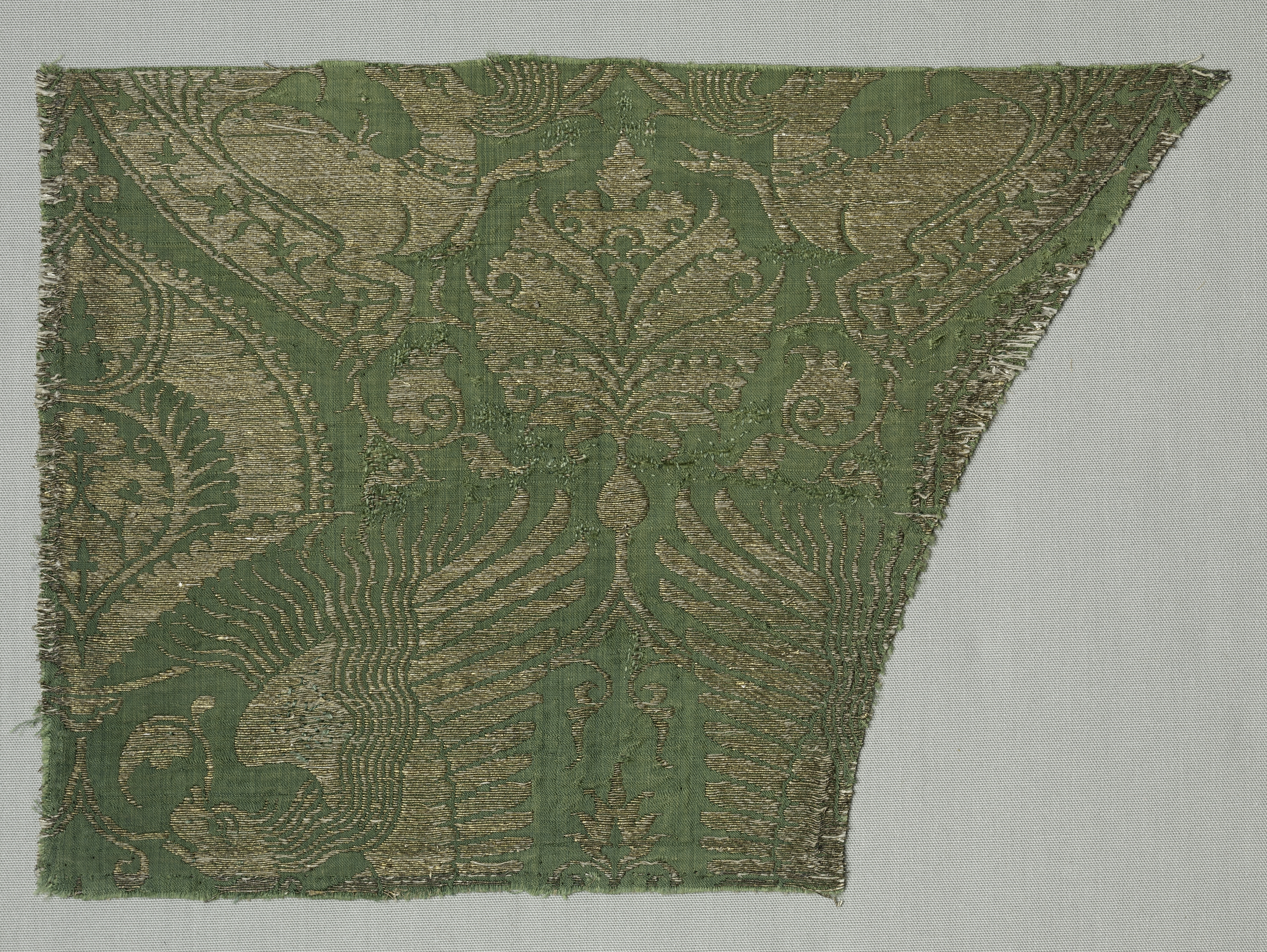
Zoey Fashion Lab presents an in-depth analysis of an extraordinary textile: Exotic Gold-patterned Silk, originating from Venice, Italy. This fabric is not merely a material; it is a manifesto of avant-garde design, a dialogue between historical opulence and contemporary deconstruction. Composed of silk and gold thread, and engineered through a sophisticated combination of 2/1 twill and 1/3 twill—a structure known as lampas—this textile embodies a paradox. It is both luminous and somber, intricate and raw. The reference point, Archive Resonance: "一面是光洁银镜上以黄金镶嵌的纷繁棕叶纹,另一面是冰冷石棺板上以浮雕诉说的生命叙事", translates to "on one side, a smooth silver mirror inlaid with intricate gold palm leaf patterns; on the other, a cold stone sarcophagus lid telling a life story through relief." This duality is the core of our deconstruction.
Technical Deconstruction: The Architecture of Lampas
Weave Structure: 2/1 Twill and 1/3 Twill in Harmony
The genius of this fabric lies in its compound weave structure. Lampas is a figured weave where a pattern, often in a contrasting color or material, is created by an additional warp or weft system. Here, the combination of 2/1 twill and 1/3 twill is not arbitrary; it is a deliberate engineering of surface tension. The 2/1 twill, typically a warp-faced weave, provides a dense, stable foundation. It offers a matte, almost velvety ground that absorbs light. Conversely, the 1/3 twill, a weft-faced structure, allows the gold thread—introduced as an extra weft—to float across the surface, creating lustrous, raised motifs. This interplay of weave angles (2/1 vs. 1/3) produces a subtle optical vibration, a shimmer that shifts with movement.
Material Composition: Silk and Gold Thread
The silk base is of exceptional quality, likely filament silk from the Veneto region, known for its long, continuous fibers and high luster. The gold thread is not a simple metallic foil but a complex construction: a thin strip of gold leaf or gold-alloy wrapped around a silk or synthetic core. This technique, perfected in Renaissance Venice, ensures flexibility and durability while retaining a brilliant, non-tarnishing finish. The weight of the gold thread is significant; it adds a tactile density, a slight stiffness that resists draping, forcing the fabric into architectural shapes. This is a textile that does not yield—it commands.
Visual and Symbolic Analysis: The Mirror and the Sarcophagus
The Silver Mirror: Light, Opulence, and Illusion
The "smooth silver mirror" is a metaphor for the fabric’s surface when viewed under direct light. The 1/3 twill floats of gold thread create intricate palm leaf patterns—palmette motifs—that seem to float on a reflective ground. This is the Avant-garde twist: the mirror is not a passive reflector but an active participant. The gold patterns are not simply applied; they are woven into the very structure, creating a trompe-l'œil effect. The viewer sees both the pattern and the ground simultaneously, a visual paradox that challenges traditional figure-ground relationships. The palm leaf, a symbol of victory and eternity in ancient cultures, is here rendered in gold, suggesting a triumph over time, but the mirror's surface hints at vanity and the fleeting nature of beauty.
The Stone Sarcophagus: Weight, Memory, and Decay
Conversely, the "cold stone sarcophagus lid" emerges when the fabric is viewed from an angle or in shadow. The 2/1 twill ground, with its dense, warp-faced structure, absorbs light, creating a deep, somber tone. This is the deconstructionist element: the fabric reveals its own mortality. The gold patterns, once brilliant, now read as relief carvings on a tomb. The palm leaf becomes a funerary symbol, a narrative of life and death. This duality is a direct reference to the Archive Resonance prompt—the fabric is both a celebration of life (the mirror) and a meditation on death (the sarcophagus). It is a textile that embodies the memento mori philosophy, reminding the wearer of the transient nature of opulence.
Avant-Garde Application: Deconstruction and Recontextualization
Fabric Manipulation: Cutting Against the Grain
For Zoey Fashion Lab, this fabric demands radical intervention. The avant-garde approach is not to preserve its pristine surface but to deliberately fracture it. Consider laser-cutting along the 1/3 twill floats, releasing the gold threads to create a fringe that mimics the "split-leaf" reference. The "Mirror with Split-Leaf" suggests a rupture, a break in the perfect surface. By cutting into the fabric, we expose the underlying 2/1 twill, revealing the "stone" beneath the "mirror." This is a literal deconstruction of the weave structure, turning the pattern into a scar, a narrative of damage and repair.
Silhouette and Draping: Architectural Rigidity
The fabric's inherent stiffness, due to the gold thread, is an asset. It should be used for structured, sculptural forms—corsets, shoulder pads, and asymmetrical hems that defy gravity. The 2/1 twill ground can be pleated into sharp, geometric folds, while the 1/3 twill gold areas are left flat to catch light. This creates a visual rhythm: the matte, dark pleats (the sarcophagus) interrupted by luminous, flat panels (the mirror). The silhouette should be both regal and unsettling, like a Renaissance armor reimagined for a dystopian future.
Color and Contrast: Monochromatic Opulence
The fabric's natural palette—deep black or dark indigo silk with gold thread—is already a study in contrast. However, an avant-garde interpretation might introduce subversive color accents. Imagine a lining of electric blue or blood red, visible only when the garment moves, referencing the "life narrative" hidden within the sarcophagus. Alternatively, the gold could be chemically patinated to create a verdigris effect, turning the precious metal into a sign of decay. This is a direct challenge to the traditional value of gold, recontextualizing it as a symbol of entropy.
Conclusion: A Fabric of Contradictions
The Exotic Gold-patterned Silk from Venice is a masterclass in textile paradox. Its technical brilliance—the lampas weave combining 2/1 and 1/3 twill—creates a surface that is both reflective and absorptive, opulent and somber. The Archive Resonance of the mirror and the sarcophagus is not a mere poetic allusion; it is a structural reality. The fabric is a living archive, holding within its threads the dual narratives of celebration and mourning. For Zoey Fashion Lab, this textile is not a material to be used but a medium to be challenged. By deconstructing its weave, cutting its gold threads, and recontextualizing its motifs, we transform it from a relic of Venetian luxury into a statement of avant-garde defiance. It is a fabric that asks the wearer: Are you the mirror, reflecting the world's beauty, or the sarcophagus, carrying the weight of history? The answer, like the fabric itself, is both.