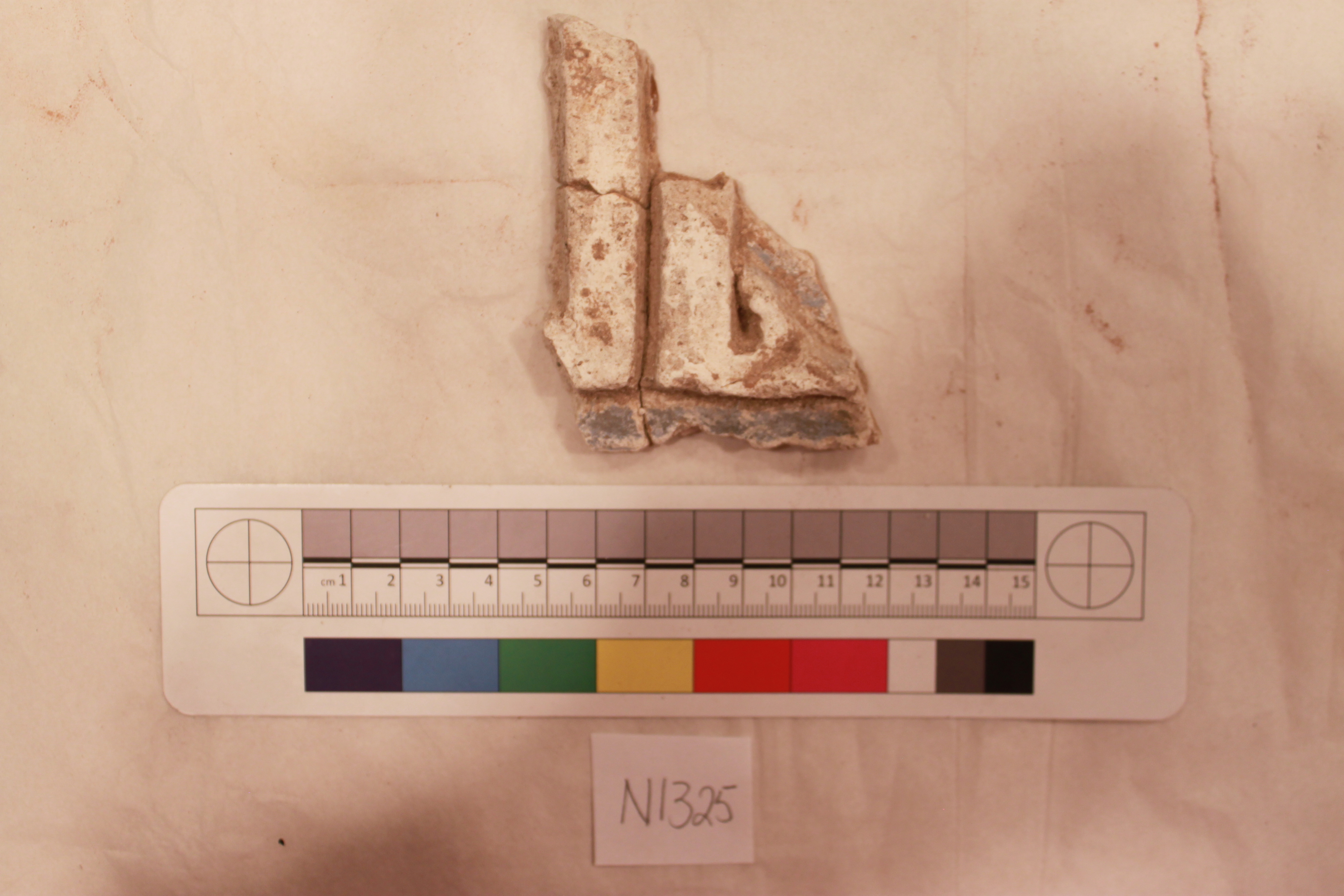
The Stucco Fragment: An Avant-Garde Lexicon for SS26 Structural Innovation
In the relentless pursuit of architectural transcendence within fashion, Zoey Fashion Laboratory turns its gaze to the Stucco Fragment—a relic of the Global Frontier, where the raw, calcified residue of mortar meets the deliberate hand of carving and pigment. This is not a mere artifact of antiquity; it is a manifesto for SS26. The fragment, with its layered, eroded surface and geometric incisions, presents a radical departure from the fluid, organic draping that has dominated recent seasons. Instead, it demands a re-examination of futuristic silhouettes through the lens of structural decay, compression, and resurrection. This analysis dissects how the Stucco Fragment informs a new lexicon of garment architecture, where the garment is not worn but inhabited as a second, fossilized skin.
Deconstructing the Fragment: From Mortar to Membrane
The Stucco Fragment’s essence lies in its paradoxical materiality. Stucco, a composite of lime, sand, and water, is inherently brittle yet capable of bearing immense compressive loads. Its carved surfaces reveal a history of applied pressure, chisel marks, and pigment stratification. For SS26, this translates into a fabrication strategy that prioritizes rigid, molded panels over woven textiles. We propose a new material composite: a bio-ceramic resin infused with calcium carbonate and fine aggregate, allowing for the creation of fossilized-looking, lightweight armatures. These are not soft garments; they are wearable fragments that articulate the body’s architecture through negative space and cantilevered forms.
The painted surface of the fragment—often ochre, sienna, or faded ultramarine—dictates a chromatic restraint that is both primal and futuristic. Pigment is not applied as a finish but as a geological layer, suggesting weathered patina and terrestrial decay. In SS26, color becomes a narrative of erosion: gradients of rust, chalk, and ash, with occasional bursts of oxidized copper or lapis lazuli, applied through digital printing on rigid substrates or hand-painted resin finishes that mimic the fragment’s fissures.
Futuristic Silhouettes: The Architecture of Compression and Cantilever
The Stucco Fragment’s carved geometry—sharp edges, concave depressions, and angular recesses—directly informs a new silhouette vocabulary. Futuristic silhouettes for SS26 are not about aerodynamic sleekness but about structural monumentality and fragmented mass. We envision shoulder structures that mimic the fragment’s load-bearing corbels, projecting outward in sharp, trapezoidal planes. These are not padded; they are molded, self-supporting shells that create a negative space between the body and the garment, evoking the fragment’s hollowed interior.
The torso is reimagined as a compressed core. Drawing from the fragment’s stratification, we introduce layered corsetry that is not laced but snapped together using magnetic or interlocking ceramic components. This creates a modular, adjustable exoskeleton that compresses the waist while expanding the hips and shoulders, producing a silhouette of controlled distortion. The lower body follows suit: cargo pants are replaced by asymmetric, sculptural skirts that are cut from single, folded sheets of the bio-ceramic composite, with seams that mimic the fragment’s carved lines. The hem is not soft but broken, jagged, and irregular, as if the garment has been chipped from a larger monolith.
Structural Innovation: The Carved Seam and the Mortar Joint
Traditional garment construction relies on stitching, which is a linear, tensile connection. The Stucco Fragment demands a compressive, monolithic logic. For SS26, Zoey Fashion Laboratory pioneers the Carved Seam—a method where garment panels are not sewn but chemically fused at the edges, creating a raised, ridged join that resembles the fragment’s tool marks. This is achieved through ultrasonic welding of the bio-ceramic composite, allowing for seamless, watertight connections that are both structural and decorative.
Further innovation lies in the Mortar Joint—a flexible, grout-like polymer that fills the gaps between rigid panels, allowing for articulation without compromising the garment’s monolithic appearance. This material, a hybrid of silicone and crushed marble, is applied via 3D-printed extrusion, creating organic, undulating seams that echo the fragment’s fissures. The result is a garment that moves like armor but breathes like a second skin, challenging the dichotomy between rigidity and flexibility.
Case Studies: Three Archetypes of the Stucco Fragment
1. The Corbelled Shoulder: A jacket constructed from overlapping, trapezoidal panels of bio-ceramic, each carved with a single, continuous line that spirals from the collar to the hem. The shoulder extends into a cantilevered shelf, supported by a hidden carbon-fiber armature. This piece is a direct translation of the fragment’s load-bearing geometry, creating a silhouette of mass and void.
2. The Stratified Corset: A torso piece composed of 12 interlocking, wedge-shaped segments, each painted with a gradient of ochre to sienna. The segments are connected via the Mortar Joint, allowing for a compressed, hourglass form that is both rigid and adjustable. The corset’s surface is carved with shallow, parallel grooves, mimicking the fragment’s tool marks, and the closure is a single, central clasp that resembles a stone pin.
3. The Chipped Hem Skirt: A floor-length, A-line skirt cut from a single sheet of the bio-ceramic composite, with a hem that is deliberately broken and jagged, as if chiseled from a larger block. The skirt’s surface is painted with a faded ultramarine pigment, with areas of exposed aggregate that create a textured, weathered finish. The waistband is a rigid, carved band that sits on the hips, creating a negative space between the garment and the body.
Conclusion: The Fragment as a Blueprint for the Future
The Stucco Fragment is not a relic; it is a blueprint for a new fashion paradigm. In SS26, Zoey Fashion Laboratory rejects the ephemeral in favor of the monumental, the soft in favor of the rigid, the continuous in favor of the fragmented. By translating the fragment’s compressive logic, carved geometry, and weathered patina into wearable architecture, we propose a future where garments are not made but excavated—each piece a fossil of a world yet to come. This is not a collection; it is a geological event, a testament to the power of structural innovation to redefine the very boundaries of the body and the garment. The Stucco Fragment stands as a definitive, avant-garde study for the avant-garde curator, a challenge to the industry to build not with thread, but with stone.