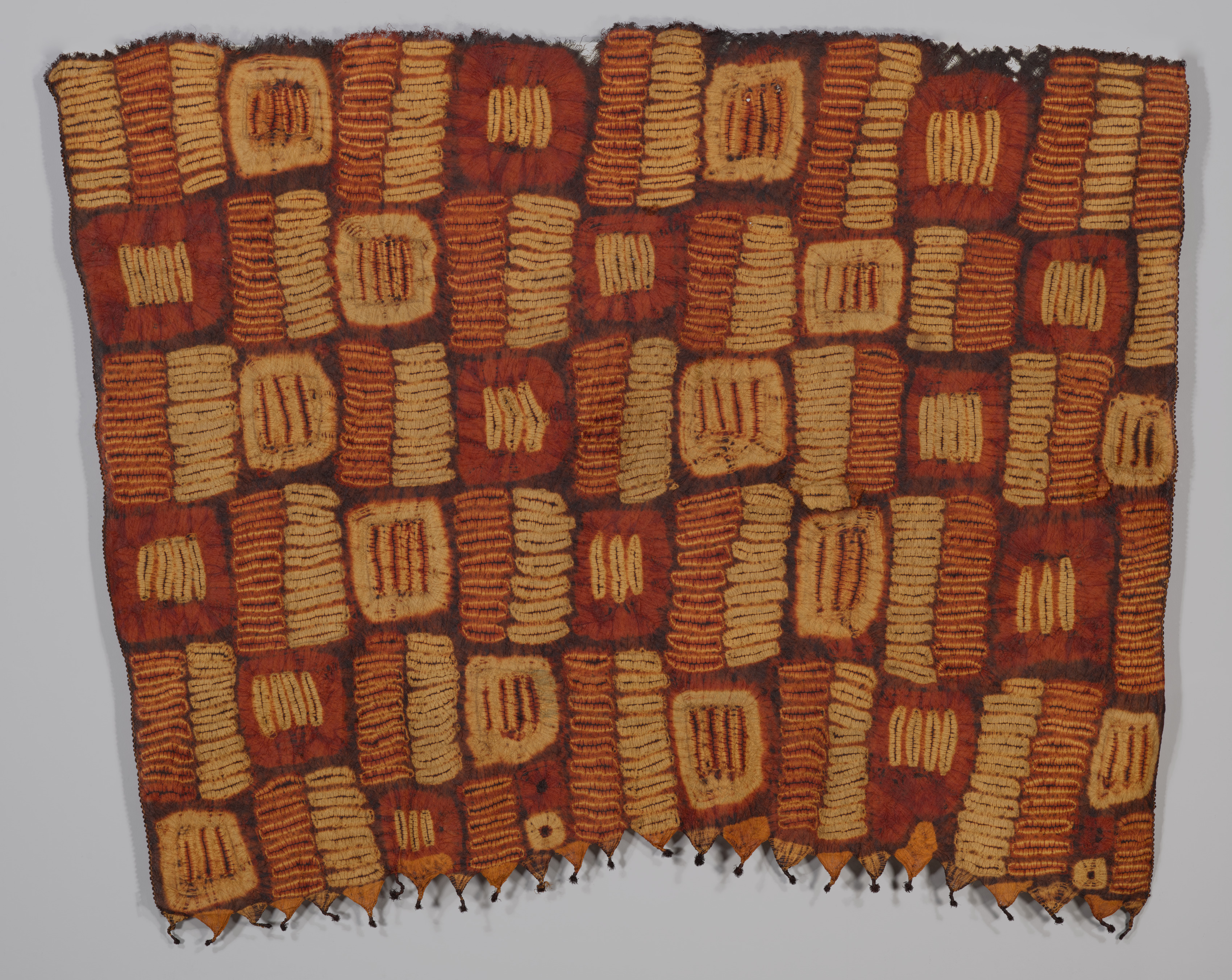
Fabric Deconstruction Analysis: The Dida Raffia Garment as Avant-Grade Catalyst
In the ongoing pursuit of redefining textile boundaries, Zoey Fashion Lab turns its analytical gaze toward a singular artifact: a man’s garment from the Dida people of Côte d’Ivoire, West Africa. Constructed from raffia palm fiber (Raphia ruffia or R. vinifera) and natural dye, this piece is not merely a historical curiosity but a living blueprint for avant-garde innovation. Our deconstruction reveals a material and conceptual architecture that challenges Western garment norms, offering a radical rethinking of structure, texture, and cultural resonance.
Material Substrates: Raffia as a Structural Anomaly
Raffia palm fiber, harvested from the leaves of Raphia ruffia or R. vinifera, is a material of extreme duality. In its raw state, it is brittle, fibrous, and prone to splitting—properties that would typically disqualify it from conventional garment construction. Yet the Dida weavers and dyers have transformed this fragility into a design advantage. The fiber is split into fine, ribbon-like strips, then twisted or braided to create a supple yet resilient yarn. This process introduces a deliberate irregularity: each strand retains a natural variation in thickness, color, and tensile strength, resulting in a fabric that breathes, moves, and ages with an organic unpredictability.
For the avant-garde designer, raffia’s inherent instability is a feature, not a flaw. Unlike the uniform synthetic fibers of mass production, raffia resists standardization. It demands a handcrafted approach, where the garment’s surface becomes a record of its making—every knot, twist, and dye penetration tells a story of human labor and ecological specificity. This aligns with our lab’s core principle: material agency, where the fiber itself dictates the form, rather than being subjugated to a predetermined pattern.
Dye as Narrative: The Alchemy of Plant-Based Chromatics
The dye used in this garment is derived from local plant sources, likely including indigo, bark, or mud. The Dida technique involves a resist-dye process, where sections of the raffia are bound or stitched before immersion, creating geometric patterns that are both decorative and symbolic. The resulting palette is muted yet profound: deep indigos, earthy ochres, and charcoal blacks that absorb and reflect light differently than synthetic dyes. This is not color as decoration, but color as temporal marker—the dye fades, shifts, and bleeds over time, creating a living patina that documents the garment’s journey through wear and exposure.
In an avant-garde context, this dye behavior is a radical departure from the fast-fashion imperative of colorfastness. We propose a new design philosophy: chromatic entropy. The garment is designed to evolve, its hues softening and merging as the wearer interacts with the environment. This challenges the consumer to embrace impermanence, to see the garment not as a static object but as a collaborative process between maker, wearer, and nature.
Structural Deconstruction: The Dida Garment as Anti-Tailoring
Conventional menswear relies on tailored seams, darts, and structured silhouettes. The Dida garment subverts this entirely. It is typically a rectangular or trapezoidal panel, woven to shape on a horizontal loom, then folded and secured with raffia ties or knots. There are no armholes, no collars, no buttons. The garment is worn by draping, wrapping, or pinning—a system of kinetic attachment that adapts to the wearer’s body and movement.
This construction method is a direct challenge to the Western canon of fit. Instead of forcing the body into a pre-determined shape, the Dida garment yields to the body, creating an ever-changing silhouette. For Zoey Fashion Lab, this is a foundational principle for avant-garde menswear: form as negotiation. We propose a series of garments that use raffia’s natural stiffness to create architectural volumes—shoulder extensions, exaggerated collars, asymmetrical drapes—that are not sewn but tied, looped, or knotted. The wearer becomes a co-designer, adjusting the garment’s configuration throughout the day.
Cultural Resonance: Archive as Avant-Garde Source Code
Our reference, Archive Resonance, speaks to the “silent witness” of cultural collision in objects from the 16th to 17th centuries. The Dida garment, though likely from a later period, embodies this same principle. It is a product of trade, migration, and adaptation—raffia fibers traded from coastal regions, dyes sourced from inland forests, weaving techniques passed through generations. This hybridity is its power.
In the avant-garde, we often look to the future for inspiration, but the Dida garment reminds us that the future is already embedded in the past. Its construction techniques—twisting, knotting, resist-dyeing—are proto-industrial methods that anticipate contemporary concerns with sustainability, zero-waste, and modularity. By deconstructing this garment, we are not appropriating but recontextualizing a lineage of innovation. We are translating its logic into a new material language: raffia blended with biodegradable polymers, dye processes that use bacterial pigments, and digital fabrication that mimics the irregularity of hand-weaving.
Avant-Garde Application: The Zoey Fashion Lab Prototype
Based on this analysis, we propose a capsule collection titled “Raphia Reckoning.” Each garment will be constructed from raffia fibers sourced from certified sustainable cooperatives in Côte d’Ivoire, ensuring ethical labor and ecological stewardship. The dye process will use locally foraged pigments, with a focus on indigo and iron-based mud dyes that produce a range of deep, shifting tones.
Key design elements include:
- Modular knotting systems that allow the wearer to adjust sleeve length, neckline, and hemline without scissors or sewing.
- Architectural drapes that use raffia’s natural stiffness to create sculptural silhouettes, inspired by the Dida garment’s rectangular panels.
- Chromatic gradients achieved through sequential dye baths, where the garment is partially immersed to create ombré effects that mimic the fading of natural dyes.
- Wearable patina—the garments will be designed to age gracefully, with intentional fraying and color shifts that enhance their aesthetic over time.
This collection is not a reproduction but a translation. It honors the Dida weavers’ mastery while pushing their techniques into new territory. It is a dialogue between the archive and the avant-garde, where the past is not a relic but a catalyst for radical innovation.
Conclusion: The Garment as Living Archive
The Dida raffia garment is more than a textile artifact; it is a manifesto for a new kind of fashion—one that embraces imperfection, impermanence, and cultural dialogue. For Zoey Fashion Lab, deconstructing this garment has revealed a blueprint for avant-garde practice: material agency, chromatic entropy, kinetic attachment, and recontextualized heritage. As we move forward, we carry this knowledge into every design, every stitch, every dye bath. The future of fashion is not in the lab alone—it is woven into the fibers of the past.