Deconstructing the Mamluk Cap: An Avant-Garde Analysis for Zoey Fashion Lab
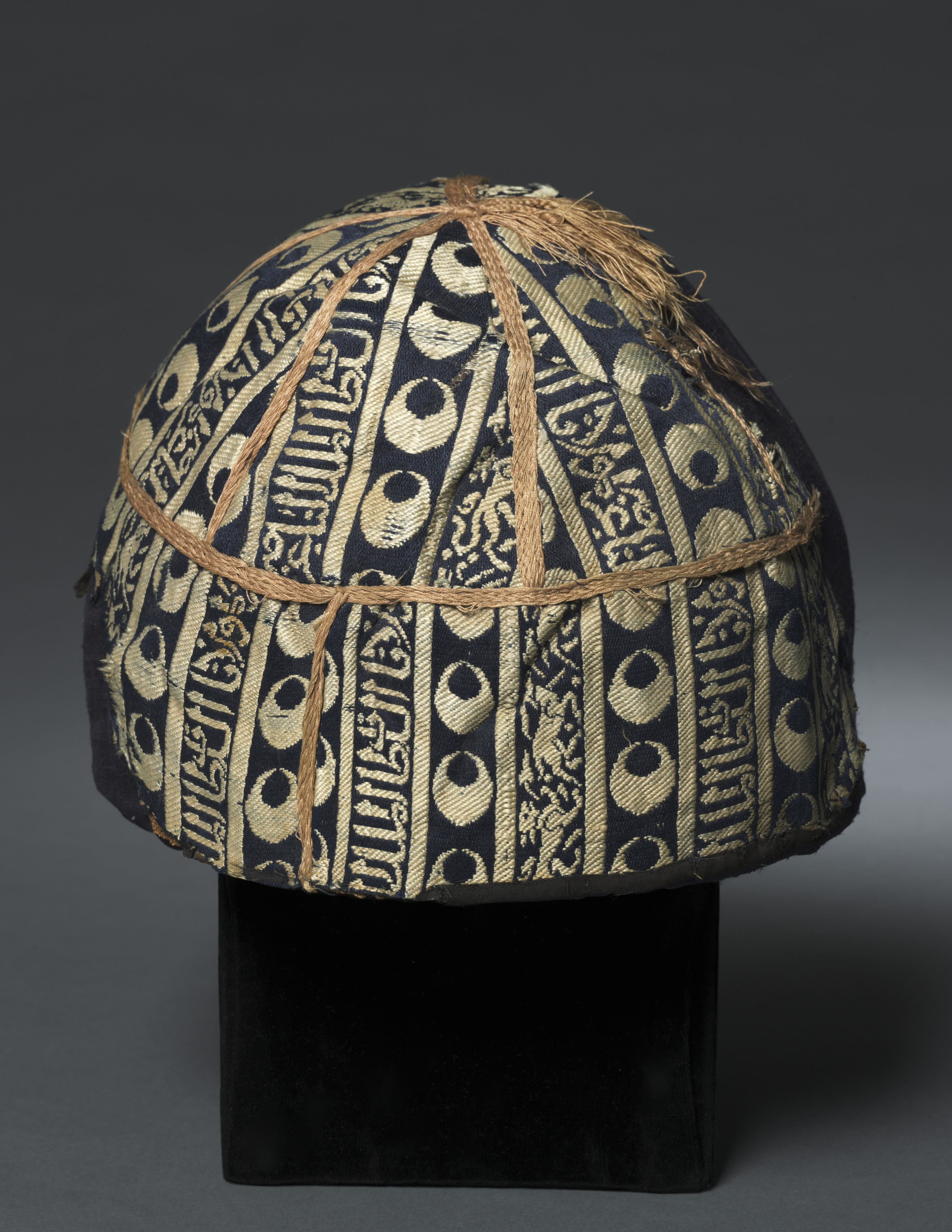
At Zoey Fashion Lab, our mission is to unearth the radical potential embedded within historical artifacts. The subject of this analysis—a Cap with Striped Inscribed Silk from the Mamluk Sultanate (Egypt or Syria, circa 16th–17th century)—is not merely a textile relic. It is a sophisticated manifesto of power, trade, and aesthetic intelligence. Crafted from silk, this object transcends its functional origins as headwear. Through the lens of our Archive Resonance framework, which posits that objects and paintings are "silent witnesses to cultural collision and aesthetic fusion," we will deconstruct this cap to reveal its avant-garde DNA. The Mamluk cap, with its precise geometry and luxurious materiality, offers a blueprint for contemporary design that challenges linear time and conventional fashion narratives.
Materiality and the Politics of Silk
The choice of silk is the first radical statement. In the 16th–17th century Mamluk world, silk was not a neutral fiber; it was a geopolitical currency. The Mamluk Sultanate, controlling key trade routes between the East and the Mediterranean, was a nexus of global commerce. Silk from China and Persia, often woven in Syrian or Egyptian workshops, represented the fusion of distant cultures into a single, wearable object. For the avant-garde, this materiality is a provocation. The cap’s silk is not soft or fluid in a conventional sense; it is structured, almost architectural. The stripes and inscriptions are not printed but woven into the very fabric, a technique that embeds meaning into structure. This challenges the contemporary fashion industry’s reliance on surface-level decoration. The Mamluk cap insists that material is message. In a Zoey Fashion Lab context, we would reimagine this by using modern technical silks—perhaps blended with metallic threads or recycled polymers—to echo the original’s tension between luxury and resilience. The cap’s silk is a testament to the power of material as a carrier of history, a concept that aligns with our lab’s interest in sustainable storytelling through fabric.
Stripes as Radical Geometry
The striped pattern of this cap is far from arbitrary. In Mamluk visual culture, stripes—particularly those in contrasting colors like white, blue, or gold—were often associated with military rank and spiritual authority. The tiraz tradition, where inscribed bands of text or geometric motifs adorned garments, transformed clothing into a declaration of allegiance and identity. For the avant-garde, the stripe is a tool of visual disruption. It creates optical tension, a shimmering effect that destabilizes the viewer’s perception of form. The cap’s stripes are not passive; they are active, guiding the eye in a rhythmic dance. This is a proto-Op Art strategy, centuries before the 1960s. In our deconstruction, we see the stripe as a code—a visual language that communicates without words. The Mamluk cap uses this code to assert presence. For Zoey Fashion Lab, we would amplify this by introducing asymmetry or unexpected color breaks within the stripe sequence, creating a dissonant harmony that mirrors the original’s balance of order and opulence. The stripe becomes a metaphor for the collision of cultures: it is both a barrier and a bridge, a line that separates and connects.
Inscribed Silk: Text as Texture
Perhaps the most avant-garde element of this cap is the inscribed silk. The inscriptions, likely in Arabic script, are not merely decorative. They are woven into the fabric, often featuring religious blessings, the sultan’s name, or poetic verses. This transforms the cap into a wearable manuscript. In the Mamluk context, text on clothing was a form of public piety and political propaganda. For the contemporary designer, this is a radical act: making language a tactile, kinesthetic experience. The inscription is not read in a linear fashion; it is experienced as a pattern, a rhythm, a texture. This challenges the primacy of the visual in fashion, introducing a textual dimension that engages the wearer and observer on multiple levels. At Zoey Fashion Lab, we would explore this by integrating micro-texts—perhaps fragments of historical trade routes or modern political slogans—into the weave using digital jacquard technology. The inscription becomes a hidden narrative, visible only up close, rewarding the attentive gaze. This aligns with the avant-garde principle of concealment as revelation. The Mamluk cap’s inscribed silk is a precursor to conceptual fashion, where the garment is a vessel for meaning beyond its utility.
Cultural Collision and Temporal Disruption
The Mamluk Sultanate was a crucible of cultures: Turkic, Arab, Persian, and European influences converged in its art and architecture. This cap embodies that collision. The striped pattern echoes Persian textiles, while the inscription style is distinctly Arabic. The silk itself might have originated from Chinese or Italian sources. This is not a pure, isolated artifact; it is a hybrid. For the avant-garde, hybridity is a core value. The cap refuses to be pinned down to a single origin or meaning. It is a temporal disruptor, connecting the medieval Islamic world to the globalized present. In our Archive Resonance framework, we see this as a call to break free from linear fashion history. The Mamluk cap is not a historical curiosity; it is a contemporary proposition. It suggests that fashion can be a time machine, collapsing centuries into a single fiber. For Zoey Fashion Lab, this means designing pieces that reference multiple eras simultaneously—a silhouette from the 16th century, a material from the 21st, a pattern from the future. The cap’s cultural collision is a blueprint for a fashion that is glocal: rooted in specific histories but speaking to a global audience.
Avant-Garde Applications: From Archive to Runway
How do we translate this analysis into actionable design? First, the cap’s structural integrity must be preserved. Its form—likely a tall, cylindrical shape—is architectural. We would reinterpret this as a modern headpiece or even a sculptural collar, using 3D-printed silk or laser-cut fabric. Second, the striped inscription can be abstracted: the text becomes a barcode or a QR code woven into the fabric, linking the wearer to the cap’s historical context. Third, the material politics of silk can be updated by sourcing ethically produced silk or developing a lab-grown alternative that mimics the original’s luster. Finally, the cap’s cultural hybridity should be celebrated by collaborating with contemporary calligraphers or weavers from the Middle East, creating a dialogue between past and present. The Mamluk cap is not a relic to be copied; it is a catalyst for new forms of expression. At Zoey Fashion Lab, we see it as a challenge: to create fashion that is as intellectually rigorous, materially sophisticated, and culturally resonant as this 400-year-old artifact.
Conclusion: The Cap as a Silent Witness
The Cap with Striped Inscribed Silk from the Mamluk Sultanate is a masterpiece of cultural engineering. It is a silent witness to the flows of trade, power, and beauty that shaped the early modern world. For Zoey Fashion Lab, it is not a historical footnote but a living text. Its stripes speak of order and disruption; its silk speaks of global connections; its inscriptions speak of faith and authority. In deconstructing this cap, we uncover principles that are deeply relevant to the avant-garde: material as message, pattern as language, and hybridity as strength. This analysis is an invitation to designers to look beyond the surface, to treat archives not as museums but as laboratories. The Mamluk cap is a radical object. It is our job to make it radical again.