Deconstructing the Barbute: An Avant-Garde Analysis for Zoey Fashion Lab
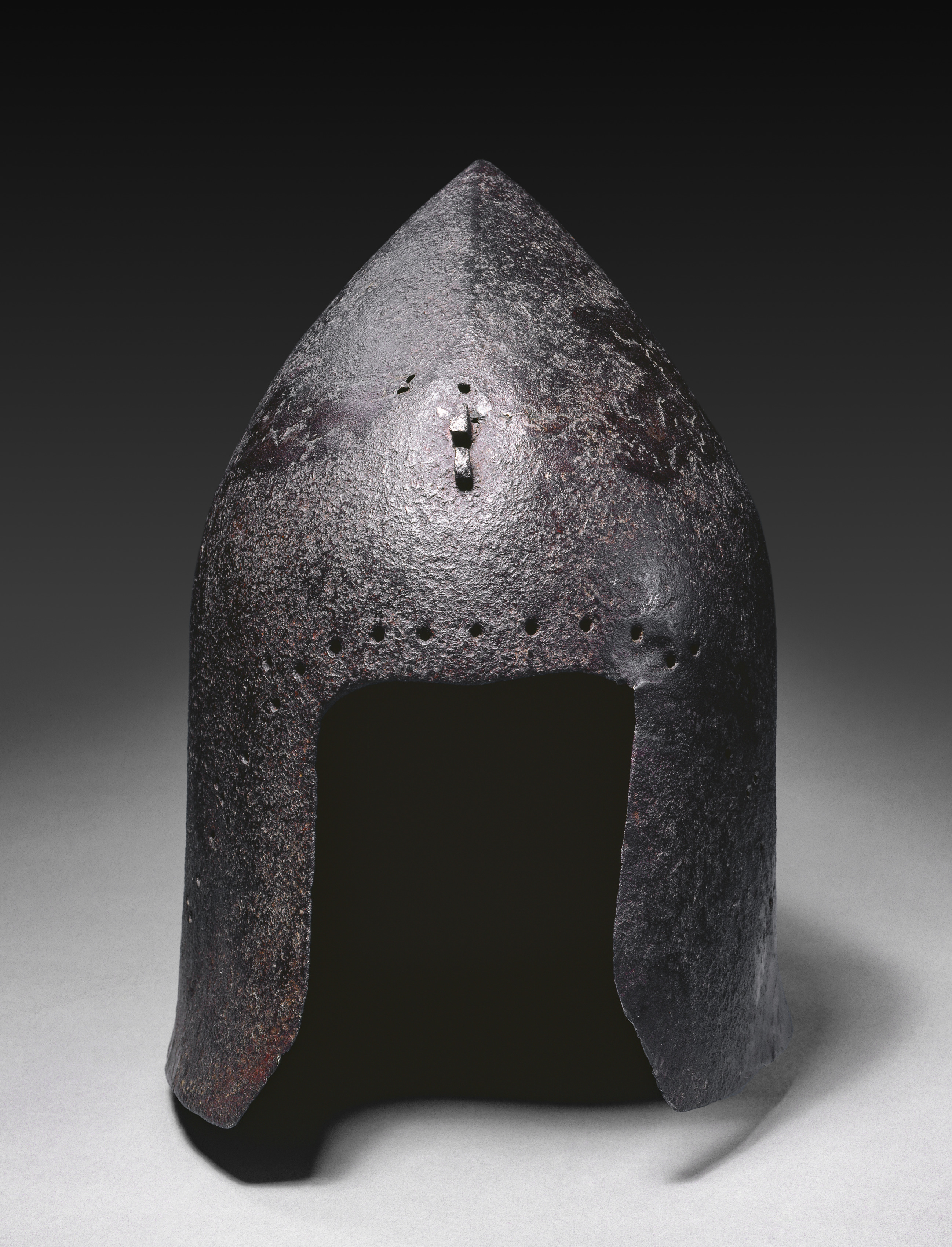
At Zoey Fashion Lab, our mission is to unravel the historical and material DNA of garments and artifacts, transforming them into avant-garde expressions that challenge contemporary fashion norms. The subject of this analysis—the Barbute from the Venetian Garrison at Chalcis, a North Italian iron helmet dating to the 14th-15th century—presents a profound opportunity for deconstruction. This object is not merely a relic of medieval warfare; it is a New DNA Strand waiting to be spliced into the genetic code of modern design. By examining its form, function, materiality, and cultural resonance, we can extract a lexicon of avant-garde principles that redefine silhouette, protection, and identity.
Historical Context and Material DNA
The Barbute, as recovered from the Venetian Garrison at Chalcis (a key stronghold in the Aegean), represents a pinnacle of late medieval armor technology. Crafted from iron—a material synonymous with strength, rigidity, and historical weight—this helmet was designed for maximum protection with minimal obstruction to vision and breathing. Its distinctive T-shaped or Y-shaped face opening (often resembling classical Corinthian helmets) allowed the wearer to see and breathe while deflecting blows. For Zoey Fashion Lab, the Barbute’s material DNA is not static; it is a code that can be translated into non-traditional mediums. The iron’s cold, unyielding surface suggests a dialogue with industrial textiles, such as metallic-coated nylon, carbon fiber weaves, or laser-cut steel mesh. The patina of age—rust, wear, and battle scars—becomes a narrative of time, which we can mimic through distressed finishes, oxidized coatings, or even digital prints that evoke corrosion.
The Avant-Garde Silhouette: From Armor to Armature
The Barbute’s silhouette is a masterclass in geometric abstraction. Its domed crown, flared neck guard, and clean, angular visor create a form that is both protective and sculptural. In an avant-garde context, this helmet can be deconstructed into a wearable armature that redefines the human head as a canvas for architectural expression. Consider a helmet-inspired hood crafted from rigid, molded leather or thermoplastic, with the T-shaped opening exaggerated into an asymmetrical cutout that reveals the face in fragments. The neck guard can be reinterpreted as a collar structure that extends down the shoulders, merging with a jacket or bodice to create a continuous line of defense. This approach aligns with the avant-garde tradition of deconstruction and reconstruction, where historical forms are broken down and reassembled into new, provocative shapes. The Barbute’s silhouette is not merely copied; it is fragmented—the dome becomes a detached visor, the visor becomes a mask, and the neck guard becomes a rigid cape that moves with the body.
Functional Deconstruction: Protection as Performance
In medieval warfare, the Barbute’s primary function was protection. For Zoey Fashion Lab, we reimagine protection as performance and psychological armor. The avant-garde garment does not shield the body from swords but from societal gaze, environmental elements, or emotional exposure. The iron’s weight and opacity can be translated into layered, opaque fabrics that obscure and reveal, such as heavy wool bonded with metallic foils, or transparent polycarbonate panels that distort the face. The T-shaped opening, originally for breath and sight, becomes a keyhole for voyeurism—a cutout that invites scrutiny while maintaining distance. This duality of exposure and concealment is central to avant-garde fashion, as seen in the works of designers like Rei Kawakubo or Rick Owens. The Barbute’s functional DNA thus mutates into a wearable statement about vulnerability and strength, where the wearer is both protected and exposed.
Texture and Surface: The Patina of Time
The surface of the Barbute—rough, pitted, and darkened by centuries—offers a rich palette for textural experimentation. The avant-garde fashion lab can replicate this patina through chemical treatments on fabrics, such as rust-dyeing, acid-washing, or using iron filings to create oxidation patterns on textiles. Alternatively, the surface can be digitally printed with high-resolution scans of the original helmet, creating trompe-l’oeil effects that blur the line between armor and cloth. The contrast between the smooth, polished areas (where the helmet was once burnished) and the rough, corroded zones can be translated into mixed-media garments that combine polished leather with raw, unfinished edges, or satin with distressed metal studs. This textural dialogue speaks to the avant-garde’s fascination with imperfection and decay as markers of authenticity and time.
Cultural Resonance: The Warrior as Muse
The Barbute from Chalcis is not just an object; it is a symbol of Venetian militarism, colonialism, and the Crusader spirit. For Zoey Fashion Lab, this cultural DNA can be deconstructed into themes of power, conquest, and hybrid identity. The avant-garde collection might explore the tension between the individual and the collective, the protector and the aggressor. The helmet’s association with the Venetian Garrison evokes a sense of occupation and defense, which can be mirrored in garments that feel both fortified and transient. For example, a deconstructed Barbute-inspired shoulder piece might incorporate elements of Venetian architecture—arches, columns, or mosaic patterns—woven into the armor’s structure. The result is a fusion of historical narrative and contemporary critique, where the wearer becomes a living monument to past conflicts and future possibilities.
Conclusion: A New DNA Strand for Zoey Fashion Lab
The Barbute from the Venetian Garrison at Chalcis is more than a historical artifact; it is a New DNA Strand that, when deconstructed and recombined, yields a radical avant-garde vocabulary for fashion. By translating its iron materiality, geometric silhouette, functional protection, textured patina, and cultural symbolism, Zoey Fashion Lab can create garments that are architectural, performative, and deeply resonant. This analysis serves as a blueprint for a collection that defies categorization—where armor becomes fashion, history becomes future, and the wearer becomes a guardian of time. The Barbute is not a relic to be preserved; it is a code to be rewritten, one avant-garde stitch at a time.