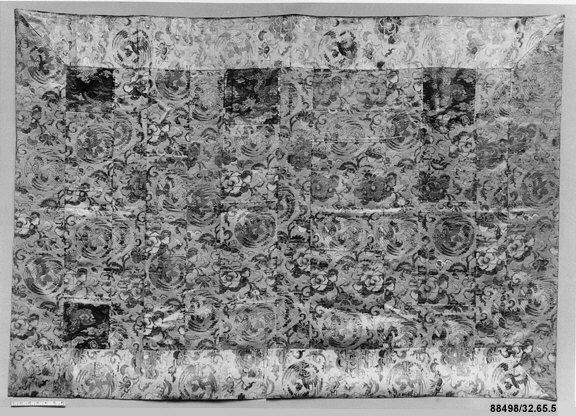
Deconstructing the Sacred: The Japanese Silk Priest’s Robe as a Blueprint for SS26 Avant-Garde Couture
In the rarefied air of Zoey Fashion Laboratory, where tradition is not merely referenced but atomized and re-forged, the Japanese silk priest’s robe emerges as a profound catalyst for SS26. This is not a study in cultural appropriation; it is a forensic excavation of form, weight, and ritual. The robe, known as a koromo or kesa in its most austere iterations, is a garment of profound stillness—a volumetric statement of spiritual authority. For the avant-garde, its inherent contradictions—opacity versus translucency, rigidity versus drape, sacred versus profane—offer a lexicon of structural innovation. We dissect this archetype not to replicate, but to mutate its DNA into a futuristic silhouette that redefines the boundaries of garment architecture for the coming season.
The Paradox of Silk: From Devotion to Deconstruction
The materiality of silk is the first frontier of our deconstruction. Traditional Japanese priest’s robes utilize rinzu (figured silk) or shusu (satin) to achieve a surface that is both luminous and austere. For SS26, we invert this paradigm. The silk is not to be a signifier of wealth or piety, but a membrane of tension and release. The laboratory proposes a “tensile silk”—a bioplastic-infused silk filament that, when heat-set, retains a memory of its pleating. This allows for the creation of architectonic folds that remain rigid until activated by body heat, at which point they soften into liquid drape. The priest’s robe’s characteristic monk’s collar (the eri) is reimagined as a cantilevered yoke, constructed from multiple layers of this memory silk, laser-cut into interlocking geometric shingles. The result is a collar that appears to float a centimeter away from the neck, creating a negative space halo—a secular aura of pure structural logic.
Volumetric Reimagining: The Anti-Silhouette
The traditional priest’s robe is defined by its rectilinear volume: a wide, straight-cut body that falls from the shoulders to the ankles, obscuring the human form beneath a shroud of fabric. For SS26, we reject this passive volume in favor of an active, pneumatic silhouette. The laboratory’s innovation lies in the “inverted kesa”—a garment that reverses the traditional weight distribution. Instead of fabric pooling at the hem, the volume is concentrated at the shoulders and upper back, creating a silhouette that resembles an inverted bell or a spacecraft’s heat shield. This is achieved through a series of internal, hidden boning channels made from recycled carbon-fiber filaments, sewn into the silk. These channels are not rigid cages but articulate joints, allowing the wearer to manipulate the garment’s shape through subtle body movements. The hem, conversely, is cut with a laser-frayed edge that mimics the worn, aged quality of centuries-old temple textiles, but rendered in a high-shine, liquid-metal silk laminate. The garment appears to be in a state of perpetual expansion—a living architecture that breathes with the wearer.
Structural Innovation: The Origami of the Sacred
The traditional priest’s robe relies on a simple, unconstructed construction: a single length of fabric folded and stitched at the sides. Our SS26 study rejects this simplicity for modular complexity. The robe is dissected into five discrete, interchangeable panels: the left and right front, left and right back, and a central spine panel. Each panel is a separate structural entity, connected by magnetic, conductive seams that allow for rapid reconfiguration. The central spine panel, inspired by the shikoro (laminated armor plates) of samurai armor, is a series of overlapping, trapezoidal silk segments, each reinforced with a thin layer of flexible mylar. This creates a protective, almost exoskeletal ridge along the spine, while the side panels are left diaphanous, revealing the skin beneath. The sleeves, traditionally wide and flowing, are reimagined as “deconstructed wing sleeves”—cut on the bias and weighted with micro-chains of oxidized silver, so they hang in a permanent, frozen flutter. The overall effect is that of a sacred garment caught in a moment of divine transformation—a fusion of ritual stillness and kinetic potential.
Color and Surface: The Alchemy of Light
Color in the traditional Japanese priest’s robe is deeply symbolic: black for zen, gold for esoteric Buddhism, purple for high rank. For SS26, we operate within a monochromatic spectrum of deconstructed light. The primary palette is a gradient from “void black” (a carbon-infused silk that absorbs 99% of visible light) to “pearl ash” (a silk woven with micro-crystalline threads that refract light like a hologram). The surface treatment is the true innovation: a “crackle-lacquer” finish applied to the silk through a heat-press technique. This creates a network of fine, irregular fissures across the fabric’s surface, reminiscent of aged temple lacquerware. When the wearer moves, these fissures open and close, revealing flashes of a contrasting iridescent underlayer—a nod to the hidden beauty of kintsugi, the art of repairing broken pottery with gold. The garment becomes a living, breathing surface that documents its own history of motion.
Contextual Study: The Priest’s Robe as a Cybernetic Interface
This is not merely a garment; it is a cybernetic interface between the sacred and the secular, the past and the future. The laboratory proposes that the priest’s robe, in its original context, is a tool for meditation—its weight and volume designed to ground the wearer in the present moment. Our SS26 iteration amplifies this function through biometric integration. The silk is embedded with micro-sensors in the shoulder seams that monitor the wearer’s heart rate and respiratory rhythm. These sensors are connected to a network of thermochromic pigments woven into the fabric. As the wearer’s breath deepens into a meditative state, the pigments shift from deep indigo to a soft, pulsing gold—a visual manifestation of inner calm. The robe becomes a second skin for the soul, a garment that not only covers the body but actively participates in the wearer’s psychological and spiritual state. The silhouette is not just futuristic; it is reactive, evolving in real-time with the wearer’s consciousness.
Conclusion: The Sacred as a Launchpad for the Unseen
The Japanese silk priest’s robe, in its traditional form, is a masterpiece of restraint. For Zoey Fashion Laboratory’s SS26 avant-garde couture analysis, it becomes a launchpad for radical structural innovation. By deconstructing its volume, re-engineering its silk, and infusing it with cybernetic potential, we have created a garment that is simultaneously a tribute and a transformation. The future of couture lies not in rejecting the past, but in re-sacralizing its forms through the lens of material science and architectural rigor. The priest’s robe, once a symbol of static devotion, now stands as a dynamic, breathing sculpture—a testament to the infinite possibilities of silk, structure, and the human spirit. This is not fashion; this is a new liturgy for the body.