Deconstructing the Frontier: The Sampler as a Structural Manifesto for SS26
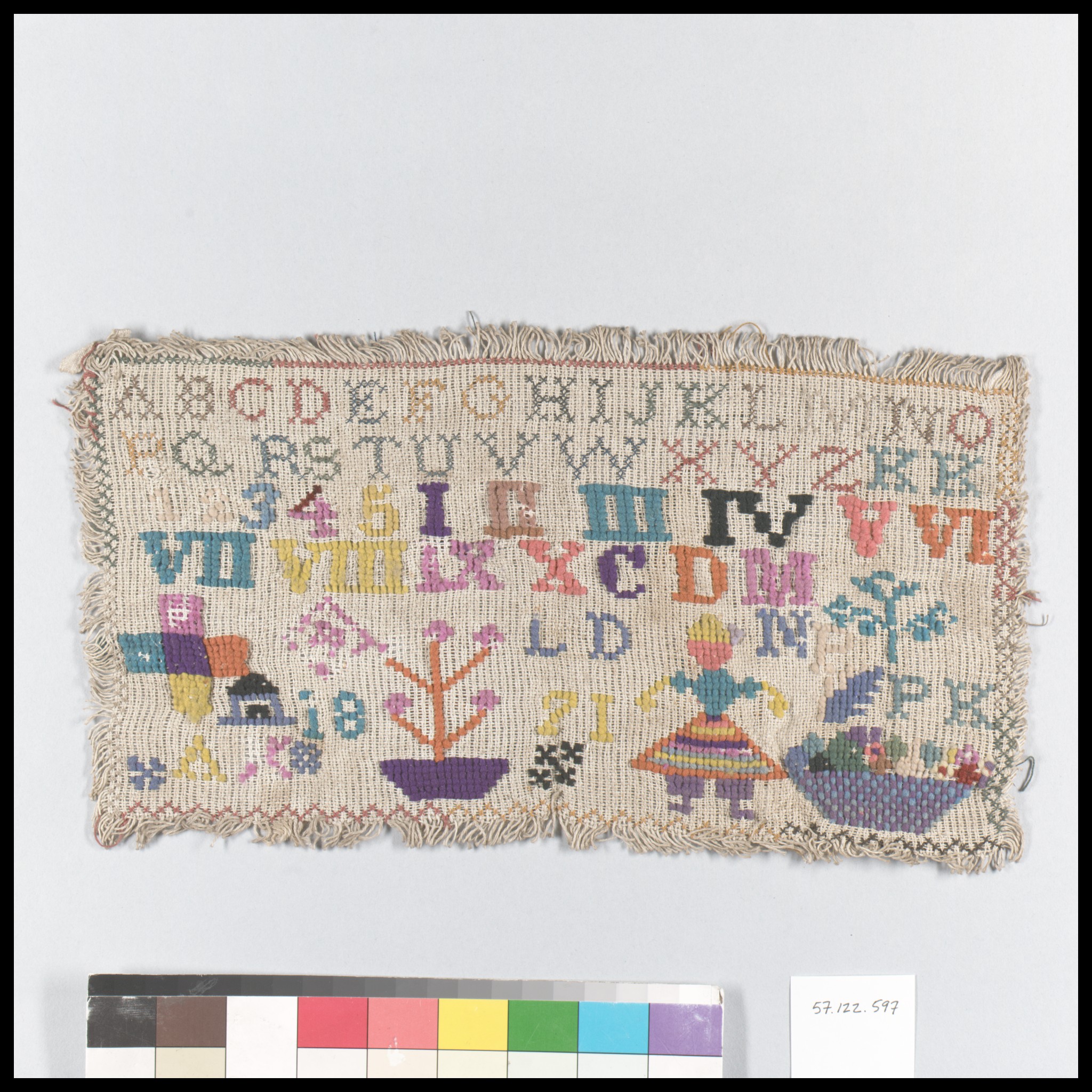
The avant-garde landscape for Spring/Summer 2026 demands a radical departure from the narrative of mere clothing. At Zoey Fashion Laboratory, we do not design garments; we engineer wearable propositions. Our latest standalone study, the Sampler, originating from the nebulous Global Frontier, is not a textile—it is a cartographic document of future construction. Executed on a hybrid substrate of cotton and wool on canvas, this piece transcends the binary of soft versus hard, proposing a new taxonomy of silhouette where memory and material collide.
Material Dialectics: The Canvas as a Living Archive
The choice of cotton and wool on canvas is a deliberate act of architectural rebellion. Cotton provides the tensile strength of a primary structure—a skeleton that refuses to drape passively. Wool, conversely, introduces a volatile, organic memory; it breathes, compresses, and expands with the wearer’s thermal signature. Layered onto a dense canvas base, this composite creates a dual-phase textile: rigid enough to hold a structural fold, yet porous enough to suggest a second skin. The Global Frontier context is not a geographic location but a conceptual one—a liminal zone between the industrial and the organic. The Sampler’s surface is not printed; it is inscribed with the logic of sampling itself: fragments of traditional weaving patterns, digital pixelation, and hand-stitched error codes. This is not decoration; it is data.
Futuristic Silhouette: The Exoskeletal Drape
For SS26, we reject the fluid, ethereal draping of conventional spring collections. The Sampler proposes a futuristic silhouette defined by asymmetric tension and volumetric collapse. Imagine a shoulder line that begins at the clavicle with a sharp, cantilevered projection—a wool-and-canvas blade that extends 12 centimeters beyond the body, then dissolves into a cascade of cotton fringing that mimics digital glitch. The waist is not cinched but articulated via a series of internal tension cables (invisible to the eye) that pull the canvas into a negative-space hourglass. The result is a silhouette that appears to be in a constant state of computational calculation—a garment that is never fully static, always resolving its own geometry.
The lower half of the Sampler introduces the “inverted pyramid” concept: a skirt-like structure that flares from the hip with extreme rigidity, then suddenly truncates at mid-thigh, exposing a secondary, translucent wool underlayer. This is not a hemline; it is a structural breakpoint, a deliberate rupture in the narrative of the garment. The silhouette is simultaneously armored and exposed, referencing the tension between digital surveillance and physical vulnerability—a core theme of the Global Frontier.
Structural Innovation: The Modular Seam and the Algorithmic Pleat
The true innovation of the Sampler lies not in its form but in its construction logic. Traditional couture relies on linear seams that follow the body’s contours. The Sampler employs a modular seam matrix: each seam is a separate, detachable unit held together by a series of magnetic, laser-cut canvas tabs. This allows the garment to be reconfigured in real-time—the wearer can remove a sleeve, alter the shoulder projection, or collapse the entire lower structure into a compact geometric block. This is not a design feature; it is a functional manifesto for nomadic luxury. The Global Frontier wearer is a perpetual traveler through data streams and physical landscapes; their garment must adapt without hesitation.
Furthermore, we introduce the Algorithmic Pleat. Unlike traditional accordion or knife pleats, these are generative—created by a custom machine that reads a digital algorithm and translates it into physical, non-repeating folds. The cotton and wool blend is subjected to a heat-set process that locks these pleats into a permanent state of controlled chaos. From a distance, the pleating appears uniform; up close, each fold is unique, a micro-architecture of light and shadow. This technique allows the Sampler to capture and refract ambient light, creating a kinetic surface that shifts with every movement.
The Standalone Avant-Garde Study: A Critique of Seriality
This analysis is not part of a collection. The Sampler exists as a standalone avant-garde study—a singular artifact that critiques the very notion of serial production. In an industry obsessed with “drops” and “seasons,” the Sampler proposes a counter-narrative of singularity. It is a prototype for a garment that cannot be replicated, because its construction logic is inherently tied to the specific tension of its canvas, the humidity of its creation, and the algorithm that generated its pleats. The Global Frontier is not a market; it is a laboratory. The Sampler is its first successful experiment.
The final silhouette is a paradox: it is both monumental and ephemeral. The cotton and wool canvas holds its shape with the authority of sculpture, yet the modular seams and algorithmic pleats suggest a constant state of becoming. The wearer does not simply put on the Sampler; they activate it. It is a garment that demands participation, that rewards the eye with new structural discoveries at every angle. For SS26, this is the definitive statement: the future of couture is not about covering the body, but about uncovering the potential of structure itself.
Conclusion: The Sampler as a Blueprint for Tomorrow
Zoey Fashion Laboratory’s Sampler is more than a garment—it is a provocation. It challenges the industry to abandon the tyranny of the seasonal must-have and embrace the radical specificity of the singular object. The cotton and wool on canvas are not materials; they are data carriers. The futuristic silhouette is not a shape; it is a hypothesis. The structural innovation is not a technique; it is a philosophy. As we move toward SS26, let this study serve as a reminder: the avant-garde is not a style—it is a method of seeing the invisible structures that hold our world together. The Sampler is the first stitch in that new fabric.