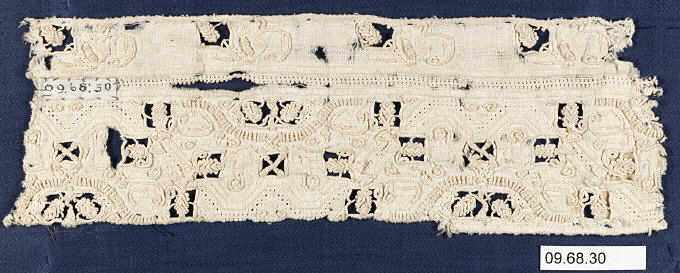
Fragment: The Architecture of Absence in SS26 Avant-Garde Couture
The concept of Fragment in avant-garde couture for SS26 is not a narrative of loss or incompletion, but a deliberate, surgical intervention into the very definition of garment structure. At Zoey Fashion Laboratory, we approach the fragment not as a remnant, but as a foundational unit—a cellular, architectural element that redefines silhouette through strategic absence. This season, the fragment becomes a tool of liberation, a method of deconstructing the body’s expected envelope to reveal a new, futuristic anatomy of form. The cutwork, sourced from the Global Frontier—a conceptual space where traditional craftsmanship meets algorithmic precision—serves as the primary medium for this exploration. The result is a collection that challenges the viewer to see the void as a constructive force, not a negative space.
The Fragment as Structural Imperative
In traditional couture, the fragment suggests decay or an incomplete narrative. In our SS26 analysis, we invert this trope. The fragment is the primary structural unit, a deliberate excision that creates tension, volume, and direction. Consider a gown where the bodice is not a continuous sheath but a series of interlocking, asymmetrical panels of laser-cut leather and organza. Each panel is a fragment of a larger geometric pattern, separated by precise gaps of air. These voids are not accidental; they are engineered to create a dynamic silhouette that shifts with movement. The cutwork becomes a map of negative space, where the body is both concealed and revealed through a lattice of absence. The futuristic silhouette here is not about volume or draping alone; it is about the relationship between solid and void, a dialogue between what is present and what is deliberately omitted.
The structural innovation lies in the material logic of these fragments. Using a hybrid of bio-fabricated cellulose and recycled metallic fibers, each fragment is pre-stressed to hold its shape independently. When assembled, they form a kinetic architecture that responds to the wearer’s breath and stride. The cutwork—executed via a combination of hand-guilloché and robotic precision—creates edges that are both raw and refined, echoing the tension between organic growth and industrial fabrication. This is not deconstruction for its own sake; it is a reconstruction of the garment’s fundamental grammar, where the fragment becomes the sentence.
Global Frontier: Material Narratives from the Edge
The Global Frontier origin of these fragments is critical to their avant-garde identity. This is not a geographic location but a conceptual horizon where disparate material cultures converge. We source cutwork patterns from three distinct traditions: the intricate chikankari of India, reimagined in laser-etched mylar; the brutalist perforations of Japanese sashiko stitching, scaled to monumental proportions; and the algorithmic lace of digital weaving from the Netherlands. Each fragment carries a trace of its origin, but they are reassembled into a new, borderless syntax. The result is a garment that speaks a universal language of structural innovation, yet retains the tactile memory of its disparate roots.
This material hybridity is essential for SS26. The futuristic silhouette is not monolithic; it is a collage of temporal and cultural fragments. A jacket, for instance, might feature a sleeve constructed from interlocking, perforated aluminum scales—each scale a fragment of a larger armor—paired with a back panel of hand-embroidered, transparent silk organza. The cutwork here is not merely decorative; it is load-bearing. The voids in the metal scales reduce weight while maintaining structural integrity, while the silk panel’s cutwork allows the garment to breathe and move. This is a structural innovation that prioritizes both form and function, where the fragment is the solution to the perennial problem of how to make avant-garde couture wearable without sacrificing its conceptual rigor.
Cutwork as a Language of Light and Shadow
The cutwork in this collection is not a technique but a lexicon. Each perforation, each slit, each void is a deliberate mark in a larger visual language. For SS26, we explore three primary cutwork typologies: linear fragmentation, where parallel slits create a ribbed, almost skeletal structure; radial excision, where circular voids radiate from a central point, evoking cellular division or astronomical phenomena; and geometric tessellation, where repeating polygonal cuts form a lattice that can be stretched or compressed. These typologies are not applied arbitrarily; they are chosen to respond to the body’s biomechanics. For instance, linear fragmentation along the spine allows for unprecedented flexibility, while radial excision over the shoulder blades creates a halo of light and shadow that amplifies movement.
The futuristic silhouette emerges from this cutwork logic. A dress might appear as a solid column from the front, but a 360-degree rotation reveals a back entirely composed of radial cutworks, creating a negative-space cape that floats away from the body. The silhouette is not static; it is a dynamic architecture that changes with the viewer’s perspective. This is the ultimate expression of the fragment: a garment that is never fully present, always partially absent, inviting constant re-evaluation. The cutwork becomes a form of structural innovation that defies the binary of covered and uncovered, proposing a third state—the presence of absence.
Conclusion: The Fragment as Future Memory
In this standalone avant-garde study for Zoey Fashion Laboratory, the fragment is not a relic of the past but a blueprint for the future. The cutwork from the Global Frontier is a method of encoding memory into material, where each excision is a mark of intention. The futuristic silhouettes of SS26 are not about predicting trends but about proposing a new relationship between the body and its covering—one where absence is as meaningful as presence, where the fragment is the whole. This is the structural innovation that defines our season: a couture that builds by taking away, that creates by leaving out, that remembers by forgetting. The fragment is complete in its incompleteness, and in that paradox, we find the future of avant-garde fashion.