Deconstructing the Crossbow: An Avant-Garde Analysis for Zoey Fashion Lab
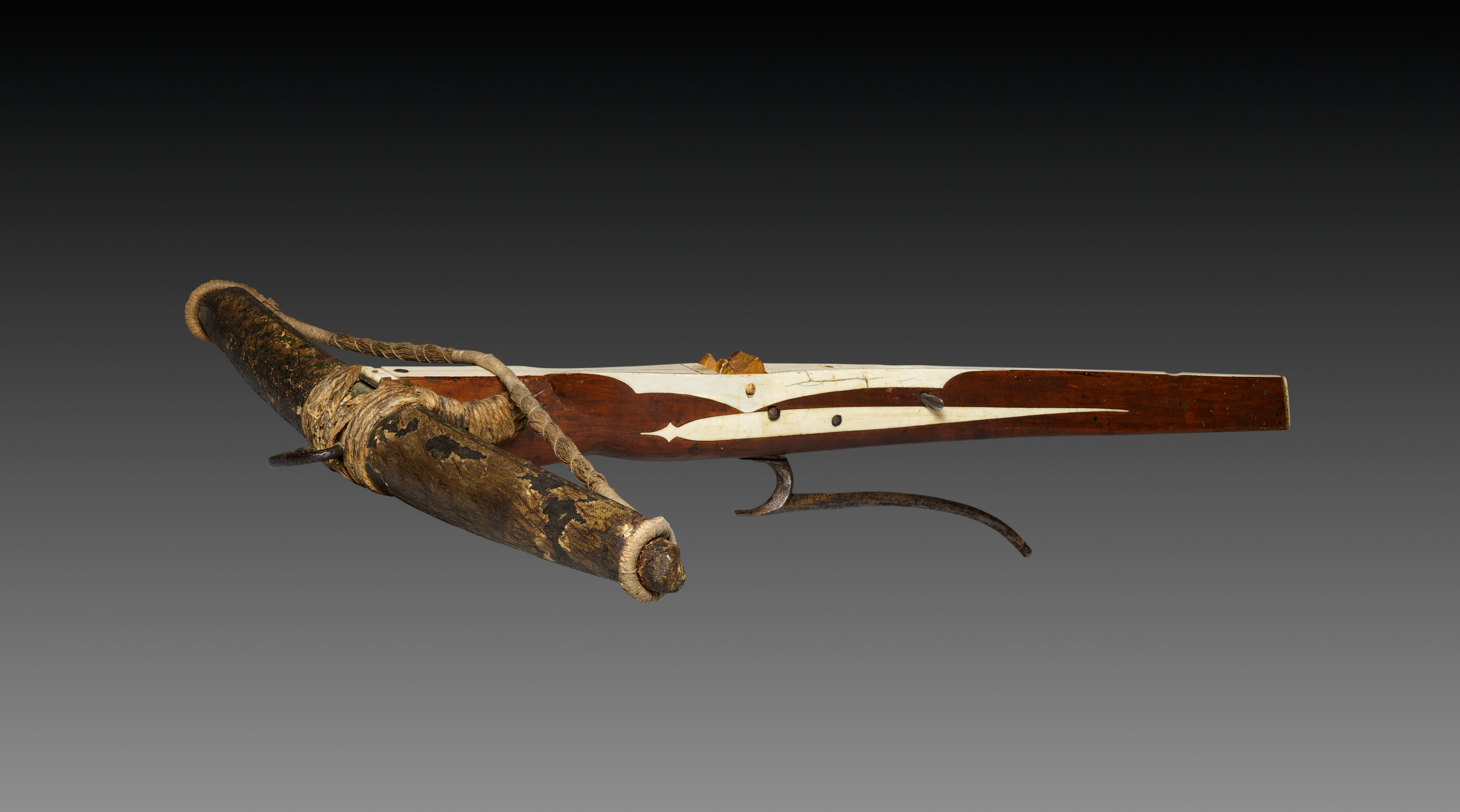
At Zoey Fashion Lab, we do not merely observe artifacts; we dissect their material DNA to extract the genetic code of future fashion. The subject of this analysis—a German crossbow, circa 16th century, constructed from walnut wood, inlaid bone, horn, iron, and steel, with a composite bow of horn and parchment—presents a paradox of brutal utility and exquisite craftsmanship. To the untrained eye, it is a weapon. To the Chief Fabric Deconstructionist, it is a blueprint for tension, precision, and layered material storytelling. Our task is to translate this mechanical relic into an avant-garde fashion narrative, using the crossbow’s components as a new strand of design DNA.
Material Archaeology: The Core Components
The crossbow’s anatomy is a study in contrasts. The stock, likely carved from European walnut (Juglans regia), provides a warm, organic base. Its grain is a record of growth, now interrupted by precise inlays of bone—perhaps from cattle or deer—creating geometric patterns that speak to both ritual and function. The composite bow is the heart of the weapon: layers of horn (from water buffalo or goat) and parchment (animal skin) are glued under immense pressure, creating a spring that stores kinetic energy. The iron and steel elements—the lock, the trigger, the prod—are cold, hard, and unforgiving. They are the skeleton that makes the organic materials perform.
This juxtaposition of soft/hard, organic/inorganic, and decorative/functional is the first thread we pull for Zoey Fashion Lab. The crossbow does not hide its construction; it celebrates the seams. The bone inlays are not merely decorative—they reinforce the wood. The horn and parchment are not hidden; they form the visible, curved arc of power. This is a lesson in structural honesty, a principle we can apply to garments that reveal their engineering rather than concealing it.
The Avant-Garde Lens: Tension as Silhouette
In avant-garde fashion, silhouette is not static; it is a dialogue with the body. The crossbow’s defining feature is tension. The bow is drawn back, held in a state of potential energy, waiting for release. This tension can be translated into fabric through strategic gathering, corsetry, and cantilevered structures. Imagine a jacket where the shoulders are built like the prod—layers of stiffened fabric (horn-like in texture) that curve forward, held in place by a central buckle (the trigger mechanism). The garment would literally “hold” the wearer in a state of poised readiness.
The composite bow inspires a new textile technique: laminated panels. We can fuse layers of leather (representing horn) with silk organza (representing parchment) using a heat-bonding process that creates a flexible yet rigid material. This composite fabric would be used for sleeves or bodices that curve away from the body, echoing the bow’s arc. The seams would be exposed, stitched with metallic thread (iron) to mimic the crossbow’s metal fittings.
DNA Strand: The Inlay as Pattern
Reference: New DNA Strand. In biological terms, DNA is a double helix of information. In the crossbow, the bone inlays function as a visual and structural code. They are not random; they follow the grain of the wood, reinforcing weak points and creating a rhythmic pattern. For Zoey Fashion Lab, this translates into pattern cutting as genetic sequencing. We can design garments where the seams—normally hidden—are elevated to the surface, inlaid with contrasting materials.
Consider a dress where the bone inlays become laser-cut leather appliqués applied over a base of walnut-dyed wool. The pattern would follow the body’s natural tension lines: along the spine, across the shoulders, down the ribs. This is not decoration; it is structural reinforcement. The “DNA” of the crossbow—its logic of tension and support—is woven into the garment’s very construction. The wearer becomes a living artifact, a fusion of medieval engineering and futuristic tailoring.
Iron and Steel: Hardware as Haute Couture
The crossbow’s iron and steel components—the nut, the trigger, the stirrup—are not mere fasteners; they are the pivots of action. In fashion, hardware is often an afterthought. Here, it becomes the focal point. We propose oversized, functional hardware that mimics the crossbow’s mechanisms. A coat might close with a large, hand-forged iron buckle that requires a deliberate motion to fasten—a ritual of dressing that echoes the cocking of the bow. Sleeves could be cinched with steel rings that slide along leather straps, adjusting tension like a bowstring.
The stirrup—the iron loop at the front of the crossbow used to brace the weapon while drawing—inspires a new footwear concept: a boot with a rigid, iron-reinforced toe that curves upward, allowing the wearer to hook and pull. This is not practical; it is performative armor. The avant-garde is about pushing the body into new postures, and the crossbow’s hardware offers a vocabulary of mechanical gestures.
Horn and Parchment: Texture and Translucency
The composite bow’s materials—horn and parchment—are rich in textural contrast. Horn is dense, polished, and warm to the touch. Parchment is thin, translucent, and brittle. Together, they create a gradient of opacity. For Zoey Fashion Lab, this suggests a layering system where outer garments are opaque and structured (horn-like), while inner layers are sheer and fragile (parchment-like). A cape made of stiffened, resin-coated leather (horn) could be worn over a dress of raw silk organza (parchment), with the outer layer cut away to reveal the inner “bow” of the garment.
The parchment also evokes a sense of age and history. We can treat fabrics with a crackled finish using a combination of wax and heat, creating a surface that resembles aged vellum. This texture would be used for panels that are deliberately fragile, hinting at decay and preservation—a commentary on the ephemeral nature of both weapons and fashion.
The Avant-Garde Collection: “Cocked and Ready”
From this analysis, we propose a collection titled “Cocked and Ready.” The key pieces include:
- The Walnut Bodice: A corset constructed from walnut-dyed leather, with bone-inlaid channels that follow the ribcage. The lacing is replaced by a series of steel triggers that can be adjusted to change the fit.
- The Composite Coat: A long coat with sleeves that curve into a fixed arc, created by laminated horn and parchment panels. The coat cannot be worn flat; it forces the wearer into a posture of tension.
- The Stirrup Boot: A knee-high boot with a steel toe cap and a heel that mimics the crossbow’s stirrup, allowing the wearer to hook the boot onto a bar or belt.
- The Parchment Dress: A floor-length gown of crackled silk organza, with iron rings sewn into the hem to weigh it down, creating a sound like a bowstring being drawn.
Conclusion: The Weapon as Wardrobe
The German crossbow is not a source of inspiration; it is a material manifesto. Its DNA—tension, layering, structural honesty, and mechanical precision—offers a new language for avant-garde fashion. At Zoey Fashion Lab, we do not replicate the past; we re-sequence its code. The crossbow becomes a coat, a boot, a gesture. The wearer becomes both the archer and the arrow, held in a state of perpetual readiness. This is fashion as weaponry, and weaponry as art.