Deconstructing the Roundel: A Futuristic Silhouette for SS26
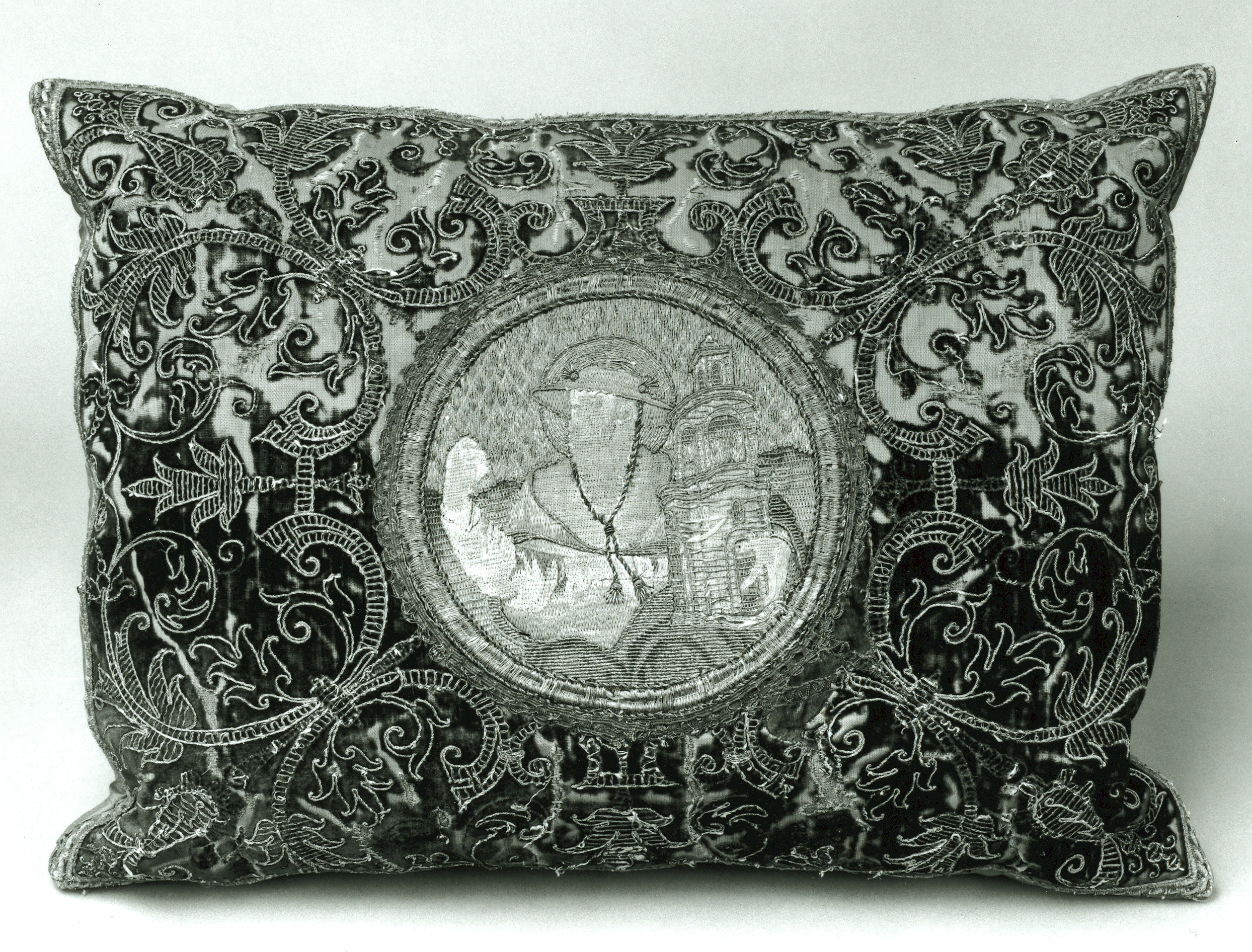
The Roundel, a historical emblem of heraldic precision and medieval pageantry, undergoes a radical transformation in the hands of Zoey Fashion Laboratory. Originating from the Italian and Spanish Renaissance, this circular motif—traditionally rendered in linen, silk, and gilt metal thread appliquéd to silk cut velvet—is no longer a static ornament. For SS26, it becomes the architectural core of a new avant-garde silhouette, where structural innovation and futuristic aesthetics converge. This analysis dissects the Roundel’s evolution from a decorative artifact into a dynamic, wearable sculpture, redefining the boundaries of high-concept fashion.
Material Alchemy: Reimagining Heritage Textiles
The original Roundel’s material palette—linen, silk, and gilt metal thread—was emblematic of opulence and labor-intensive craftsmanship. The padded couching and couching of gilt metal strips created a tactile, almost architectural surface, reminiscent of armor or ceremonial regalia. For SS26, Zoey Fashion Laboratory deconstructs these elements to forge a new material language. Linen, once a humble foundation, is laser-cut into micro-geometric lattices that mimic digital grids. Silk cut velvet is stripped of its plushness, then re-engineered into translucent, heat-bonded panels that float like second skin. The gilt metal thread is liberated from its embroidered confines, transformed into conductive filaments that weave through the fabric, creating a circuit-like pattern that glows under UV light. This is not mere appliqué; it is a synthesis of heritage and hyper-modernity, where the padded couching technique is digitized into 3D-printed silicone nodules, offering a futuristic tactile experience.
Silhouette as Architecture: The Circular Paradigm
The Roundel’s circular form is the genesis of a new silhouette for SS26. Instead of a flat disk, the motif is inflated into a three-dimensional, toroidal structure—a ring that orbits the body. This futuristic silhouette is achieved through a combination of carbon-fiber boning and memory-foam padding, allowing the garment to hold its shape while remaining lightweight. The Roundel appears as a suspended halo around the shoulders, a gyroscopic hoop at the waist, or a cantilevered discus projecting from the hip. Each iteration disrupts the natural human form, creating a deconstructive aesthetic that challenges conventional proportion. The body is no longer the container; it is the axis around which the garment revolves. This structural innovation echoes the work of architects like Zaha Hadid, where fluid, circular forms defy gravity and logic.
Padded Couching Reimagined: From Thread to Structure
The historical technique of padded couching—where gilt metal strips are raised over a soft underlayer—is reinterpreted as a load-bearing system. In the SS26 Roundel, these padded elements are extruded into tubular, pneumatic channels that run along the garment’s seams. When inflated via a micro-pump (concealed in the lining), these channels expand, transforming the garment’s silhouette in real-time. This kinetic architecture allows the wearer to modulate their presence—from a sleek, minimal profile to an exaggerated, almost alien form. The couching of gilt metal strips is replaced by liquid metal alloys that are electroformed directly onto the fabric, creating a shimmering, reflective surface that shifts with movement. The result is a garment that is both a historical homage and a speculative object, a dialogue between the artisan’s hand and the machine’s precision.
Contextualizing the Roundel in Avant-Garde Fashion
Standalone studies of the Roundel often treat it as a relic of decorative arts. Zoey Fashion Laboratory positions it as a high-concept garment architecture for the post-human era. The SS26 collection explores how circular motifs can disrupt the linear, vertical flow of traditional tailoring. The Roundel becomes a silhouette generator: when placed asymmetrically, it creates a counterweight that forces the wearer into a new posture; when multiplied, it forms a chain of interlocking rings that cascade down the back like a mechanical spine. This is not about adornment but about structural innovation—the garment dictates the body’s movement, not the other way around.
Futuristic Silhouettes: The SS26 Manifesto
In the SS26 context, the Roundel embodies a futuristic vision where fashion is a form of wearable technology. The gilt metal thread is replaced by fiber-optic cables that pulse with light, turning the garment into a living canvas. The silk cut velvet is laser-perforated with circular patterns, creating a moiré effect that distorts the viewer’s perception. The linen base is treated with a hydrophobic coating, allowing the garment to repel water and dirt, making it functional for urban environments. This fusion of deconstructive aesthetics and structural innovation positions the Roundel as a prototype for future fashion: garments that are responsive, adaptive, and sculptural.
Conclusion: The Roundel as a Portal
The Roundel, in its original Italian or Spanish form, was a symbol of eternity and power. For Zoey Fashion Laboratory, it becomes a portal to a new dimension of design. By reimagining its materials—linen, silk, gilt metal—through a lens of futuristic silhouettes and high-concept garment architecture, the Roundel transcends its historical roots. It is no longer a static emblem but a dynamic, structural element that redefines the human silhouette. In SS26, the Roundel is not just worn; it is inhabited. This analysis confirms that the standalone avant-garde study of the Roundel is not an exercise in nostalgia but a blueprint for the future of fashion—a future where the past is deconstructed, re-engineered, and launched into orbit.